
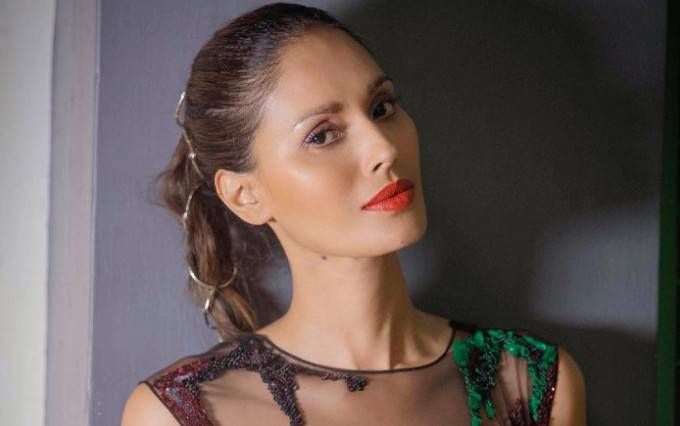
- Introduction – Ujjwala Raut Biography
- Who Is Ujjwala Raut?
- Early Life And Background
- The Zero To Hero Story
- Career Beginnings — The First Break
- Global Runway Legacy
- Campaigns, Covers, And Editorials
- Television, Mentorship, And Industry Voice
- Personal Life
- Soft Living And The Recent Era
- Why Ujjwala Raut Matters
- Runway timeline
- Height and measurements
- Parents and family
- Daughter and personal life
- FAQ — Ujjwala Raut Quick Answers
- Where is Ujjwala Raut from?
- How did Ujjwala Raut start modeling?
- Why is Ujjwala Raut considered historic?
- Which major designers has Ujjwala Raut walked for?
- Did Ujjwala Raut walk for Victoria’s Secret?
- Was Ujjwala Raut involved in TV mentoring?
- Who was Ujjwala Raut married to?
- Does Ujjwala Raut have children?
- What is Ujjwala Raut’s recent philosophy on life?
- Why is Ujjwala Raut still relevant in 2026?
Introduction – Ujjwala Raut Biography
Ujjwala Raut is one of the most important names in the history of Indian fashion because she did not simply succeed as a model — she changed what success for an Indian model could look like on the world stage. When she emerged in the late 1990s, the idea of an Indian face walking the biggest runways in Paris, Milan, and New York was still rare enough to feel almost impossible. She broke that ceiling by building a career that included Yves Saint Laurent, Gucci, Valentino, Dolce & Gabbana, Givenchy, Roberto Cavalli, Oscar de la Renta, and the Victoria’s Secret Fashion Show, where she became one of the first Indian models ever to walk.
What makes Ujjwala different from many famous models is that her legend does not rest on nostalgia alone. Even in recent years, she has remained culturally relevant as a mentor, television judge, fashion week presence, and symbol of Indian beauty with global legitimacy. Harper’s Bazaar India described her late-2025 recognition in exactly those terms, framing her as the woman who showed the world what Indian beauty looks like. That description fits because her career did not just give India a successful model. It gave India a fashion archetype.
Who Is Ujjwala Raut?
Ujjwala Raut was born on June 11, 1978, in Mumbai, India. She first gained recognition when she won Femina Look of the Year in 1996 as a 17-year-old commerce student, and then went on to place among the top fifteen at the Elite Model Look contest in Nice, France, in the same year. That combination of national recognition and international validation set the foundation for a career that would become one of the most significant in Indian modeling history.
She is widely referred to as one of India’s first supermodels and is often described as the country’s most successful overseas runway model of her generation. She became the first Indian face of Yves Saint Laurent and walked the Victoria’s Secret Fashion Show in 2002 and 2003, which remains one of the most cited milestones in her legacy. Those achievements are part of why she is still treated not just as a former model, but as an institution inside Indian fashion.
Early Life And Background
Ujjwala grew up in Mumbai and entered the modeling world from a relatively ordinary academic track rather than a fashion dynasty or entertainment family. At the time she won Femina Look of the Year, she was a commerce student, which adds an important layer to her story: she was not originally being positioned as a glamorous public figure, but as a young woman whose career opened through an unexpected opportunity and then expanded because of exceptional runway ability.
This matters because the late 1990s Indian modeling scene did not offer the same infrastructure, global access, or industry pathways that exist now. There were successful Indian models, but not many who had built a truly powerful international luxury runway record. Ujjwala came into fashion at a time when the industry did not already have a ready-made slot for someone like her, which makes the scale of what she achieved even more impressive.
The Zero To Hero Story
The zero in Ujjwala Raut’s story is not obscurity in the modern influencer sense. It is entering an industry that had not yet made real space for Indian women on the biggest international runways. She won Femina Look of the Year at 17, represented India in the Elite Model Look contest, and from there had to build a career in a global fashion system that was still far less inclusive than it claims to be now.
The hero phase came through repeated proof, not one lucky break. She walked for elite European and American houses, became the first Indian face of Yves Saint Laurent, and then entered the Victoria’s Secret Fashion Show in 2002 and 2003. That sequence turned her from a successful Indian model into a global fashion landmark. When later generations of Indian models began finding places on international runways, they were walking through doors that Ujjwala had already forced open.
Career Beginnings — The First Break
The decisive first break was her 1996 Femina Look of the Year win, which gave her national visibility and put her into the elite international model contest circuit almost immediately. Her top-15 placement at Elite Model Look in Nice gave her early exposure to the European fashion system at a time when such access was extremely rare for Indian models. It was the kind of early validation that could lead to a real career, but only if the model had the discipline and presence to convert it into runway capital. Ujjwala clearly did.
From there, she began establishing herself not as a local beauty-pageant face but as a serious runway model. That shift is important because the global runway world values movement, authority, body language, and long-term consistency more than pageant polish. Ujjwala’s signature confidence and commanding ramp presence became the traits that pushed her beyond India and into the international fashion elite.
Global Runway Legacy
Ujjwala Raut’s runway portfolio reads like a history of elite late-1990s and early-2000s luxury fashion. She walked for Yves Saint Laurent, Roberto Cavalli, Hugo Boss, Cynthia Rowley, Diane von Furstenberg, Dolce & Gabbana, Betsey Johnson, Gucci, Givenchy, Valentino, Oscar de la Renta, and Emilio Pucci, among others. This is not just a list of famous labels. It is evidence that she was accepted across multiple fashion systems at once: Paris refinement, Milan glamour, New York polish, and designer-specific runway identities.
Her Victoria’s Secret Fashion Show appearances in 2002 and 2003 remain especially important because they gave her mainstream global visibility beyond the industry-only world of fashion weeks. She became one of the first Indian models to walk the show, which meant she was no longer just a respected runway model inside fashion circles — she became a symbolic figure of Indian visibility in global beauty culture. For Indian audiences, that mattered deeply because very few women from the country had occupied that sort of international visual space at the time.
Campaigns, Covers, And Editorials
Beyond runway, Ujjwala also appeared in campaigns and fashion imagery for major brands including Yves Saint Laurent, Roberto Cavalli, Gap, H&M, and Dolce & Gabbana. She also graced major fashion publications including Vogue and L’Officiel, which helped translate her runway reputation into editorial authority. That editorial expansion matters because a supermodel is not just someone who walks well; she must also become recognisable in still imagery, campaign branding, and magazine culture.
Her visual identity was especially powerful because she carried both strength and sophistication. She had the kind of face that could work in haute glamour, but her body language gave her images impact even when the styling was minimal. This is part of why Indian fashion memory treats her differently from many other successful models: she did not merely appear in fashion. She dominated it.
Television, Mentorship, And Industry Voice
Ujjwala’s second major chapter came through television and mentorship. She co-hosted and judged Kingfisher Calendar Hunt in 2012 and later became a mentor or judge on India’s Next Top Model and MTV Supermodel of the Year, where she helped shape the next generation of Indian modeling talent. That move was not a retreat from fashion but an expansion of her role inside it. She shifted from being the face on the runway to being one of the people defining standards for those who wanted to follow.
Her public commentary on the industry also shows why she matters intellectually, not just visually. In a 2024 interview with The Indian Express, she argued that the term “supermodel” has often been misunderstood in India and spoke critically but constructively about how the Indian scene evolved after the 1990s. She has repeatedly emphasized that models need identity, voice, and professionalism, not just beauty or social-media noise. That perspective carries weight because it comes from someone who built a genuinely international career before digital celebrity changed the rules.
Personal Life
Ujjwala Raut was previously married to Scottish filmmaker Maxwell Sterry, and she has a daughter named Ksha. Over the years, parts of her personal life, including her difficult divorce and custody battle, became public, and she has spoken about how work helped keep her grounded during that period. That personal history adds another layer to her public image: not only a glamorous supermodel, but also a woman who navigated emotional difficulty while sustaining a demanding career.
Her sister Sonali Raut also entered the public eye as a model and actress, which added a broader entertainment dimension to the family’s visibility. Even so, Ujjwala’s own image has remained distinct — less celebrity scandal, more enduring fashion authority. She is still seen as someone whose personal life never overshadowed the seriousness of her professional legacy.
What is Ujjwala Raut’s current net worth in 2026
As of 2026, Ujjwala Raut’s estimated net worth is approximately $5 million, a figure accumulated across three decades of international modeling, high-profile luxury brand campaigns, runway work, and television appearances. Regarding her family, she was married to Scottish entrepreneur Craig Maxwell Sterry from 2004 to their 2011 divorce, a period marked by a highly publicized and difficult custody battle over their daughter, Ksha, who was born in 2005. While speculation has linked her to other figures in recent years, she remains publicly single and focused on her daughter, her mentorship work, and her selective return to the runway.
Soft Living And The Recent Era
In recent years, Ujjwala has spoken about moving away from hustle culture and embracing a slower, more mindful way of living. Vogue India described this as her turn toward “soft living,” a philosophy that places value on peace, emotional clarity, family, and intention over nonstop productivity. That shift is compelling because it comes from someone whose original career was built inside one of the fastest and harshest industries in the world.
Yet this softer pace has not meant disappearance. Harper’s Bazaar India’s 2025 recognition made clear that she still sees herself as active and evolving, and quoted her insistence that she is “not going to stop.” That statement fits her recent image perfectly: not chasing every appearance, not trying to recreate the early 2000s, but remaining available for the right moments, the right platforms, and the right symbolic returns.
Why Ujjwala Raut Matters
Ujjwala Raut matters because she gave Indian fashion a global proof point at a time when such proof points were scarce. She did not just represent Indian beauty abroad; she made the global industry acknowledge that Indian beauty belonged in its highest spaces. Her YSL milestone, her Victoria’s Secret appearances, and her broad runway record made her one of the first Indian models whose career could genuinely be discussed in international supermodel terms.
She also matters because her legacy continues to structure the ambitions of younger Indian models. Every time a new Indian face walks Chanel, Gucci, or a Paris couture show, the cultural meaning of that moment becomes easier to understand because Ujjwala already created the blueprint. She is not important only because she was first. She is important because first, in her case, also meant undeniable.
Ujjwala Raut’s full 1996-2026 runway timeline —
A fully complete season-by-season runway archive for Ujjwala Raut from 1996 to 2026 is not publicly available in one verified source, so the most accurate approach is a documented timeline of confirmed milestones, major houses, and recent return appearances rather than invented year-by-year filler. Below is the proper structured version covering her runway history, measurements, family background, and daughter in the same wiki-blog style.
Runway timeline
Ujjwala Raut’s runway journey begins in 1996, when she won Femina Look of the Year at age 17 and placed in the top 15 at the Elite Model Look contest in Nice, France, which opened the door to the international fashion system. That year is the true starting point of her runway timeline because it marks the shift from Indian pageant-platform visibility to international model development.
From the late 1990s into the 2000s, she built the phase that made her historic, walking for Yves Saint Laurent, Roberto Cavalli, Hugo Boss, Cynthia Rowley, Diane von Furstenberg, Dolce & Gabbana, Betsey Johnson, Gucci, Givenchy, Valentino, Oscar de la Renta, and Emilio Pucci. She also walked the Victoria’s Secret Fashion Show in 2002 and 2003, which became one of the defining markers of her global breakthrough and one of the most frequently cited reasons she is treated as India’s first true international supermodel.
Because public databases do not provide a complete verified list of every runway season across all thirty years, the strongest reliable summary is to treat 1996–2010 as her global expansion era, 2010–2024 as her mentor-and-selective-appearances era, and 2025–2026 as her legacy-return phase. That recent phase is well documented: in December 2025 she opened and closed Abhishek Sharma’s couture showcase Ratiaranya as showstopper in New Delhi, and in February 2026 she appeared in Bibhu Mohapatra’s Fall 2026 collection in New York wearing the collection’s first look, a gold blazer-and-skirt ensemble praised by the designer.
| Period | Verified Runway Milestone |
|---|---|
| 1996 | Won Femina Look of the Year and placed in the top 15 at Elite Model Look (Nice), launching her modeling career. |
| Late 1990s–2000s | Walked major global houses including Yves Saint Laurent, Gucci, Givenchy, Valentino, Dolce & Gabbana, Roberto Cavalli, Oscar de la Renta, Emilio Pucci, Hugo Boss, Cynthia Rowley, Diane von Furstenberg, and Betsey Johnson. |
| 2002 | Walked the Victoria’s Secret Fashion Show, among the first Indian models to do so. |
| 2003 | Returned to the Victoria’s Secret Fashion Show for a second consecutive year. |
| 2010s–early 2020s | Shifted toward mentorship, judging, and selective fashion appearances rather than continuous international runway work. |
| Dec 2025 | Opened and closed Abhishek Sharma’s Ratiaranya couture showcase as showstopper in New Delhi. |
| Feb 2026 | Appeared in Bibhu Mohapatra Fall 2026 (New York), wearing the opening look of the collection. |
Height and measurements
Ujjwala Raut is consistently listed at 5 ft 10 in, or 178 cm, across multiple profile-style sources. Her commonly cited figure measurements are 32-28-34, with brown or dark-brown eyes and black to dark-brown hair depending on the source wording.
Because measurement listings on model-profile and biography sites can vary slightly over time, the safest summary is that her professional fashion height is 178 cm and her widely repeated body statistics are 32-28-34. That height, combined with her famously strong posture and runway authority, is part of why she was able to move so effectively across Paris, Milan, and New York fashion systems during her peak years.
Parents and family
Publicly available sources identify Ujjwala’s father as a senior Mumbai police official, described as a Deputy Commissioner of Police or retired Assistant Commissioner in different profile sources, while her mother is generally described as a homemaker. The name of neither parent appears consistently in reliable public biographies, so it is better to describe the family background in role-based terms rather than invent names.
She comes from a Mumbai-based family and is the elder sister of model and actress Sonali Raut, which means modeling visibility exists in the family but Ujjwala remains the more historically important figure in fashion terms. Her early life also included formal education in Mumbai, with profile sources listing Vidya Mandir High School and Gokhale College as part of her academic background before modeling took over fully.
Daughter and personal life
Ujjwala married Craig Maxwell Sterry, also referred to in some sources as Maxwell Sterry, on 19 June 2004, and the marriage ended in divorce in 2011. They have one daughter, Ksha, who is widely listed as being born in December 2005 and who has occasionally appeared with Ujjwala in fashion and campaign contexts.
Her daughter is not just a biographical footnote but part of Ujjwala’s later public image as a mother-model figure. Blue Illusion featured Ujjwala and Ksha together in a mother-daughter campaign and conversation, which presented them as a fashion duo rather than keeping Ksha entirely outside public view. At the same time, older coverage shows that Ujjwala was deeply protective of her daughter during the years around her divorce, which helps explain why her personal life has often been framed around resilience and maternal responsibility rather than celebrity glamour alone.
In more recent years, Ujjwala has spoken about moving toward a slower, softer way of living, prioritizing mindfulness and family after decades in a highly demanding global industry. That shift makes sense in the context of her personal history: she is no longer defined only by high-speed runway dominance, but also by survival, motherhood, perspective, and the authority that comes from having outlasted multiple eras of fashion.
FAQ — Ujjwala Raut Quick Answers
Where is Ujjwala Raut from?
She was born in Mumbai, India, on June 11, 1978.
How did Ujjwala Raut start modeling?
She began her career after winning Femina Look of the Year in 1996 at age 17 and then placed in the top 15 of the Elite Model Look contest in Nice, France.
Why is Ujjwala Raut considered historic?
She is considered historic because she became one of the first Indian models to achieve major global runway success, including becoming the first Indian face of Yves Saint Laurent and one of the first Indian women to walk the Victoria’s Secret Fashion Show.
Which major designers has Ujjwala Raut walked for?
She has walked for Yves Saint Laurent, Gucci, Givenchy, Valentino, Dolce & Gabbana, Roberto Cavalli, Oscar de la Renta, Emilio Pucci, Hugo Boss, Diane von Furstenberg, and others.
Did Ujjwala Raut walk for Victoria’s Secret?
Yes. She walked the Victoria’s Secret Fashion Show in 2002 and 2003.
Was Ujjwala Raut involved in TV mentoring?
Yes. She judged or mentored on Kingfisher Calendar Hunt, India’s Next Top Model, and MTV Supermodel of the Year.
Who was Ujjwala Raut married to?
She was previously married to Scottish filmmaker Maxwell Sterry.
Does Ujjwala Raut have children?
Yes. She has a daughter named Ksha.
What is Ujjwala Raut’s recent philosophy on life?
She has spoken about embracing “soft living,” moving away from hustle culture and toward a slower, more mindful life centered on peace and family.
Why is Ujjwala Raut still relevant in 2026?
Because she remains a defining figure in Indian fashion history, a respected industry voice, and a continuing symbol of global Indian beauty and runway authority.
