
-
NPS vs Pension Plans — Which Is Better for Retirement in India
NPS vs Pension Plans: Architecture and Details India has a retirement planning crisis hiding in plain sight. The organised sector — government employees, corporate employees, workers in large companies — has some structured retirement saving through EPF, NPS, or gratuity. But a vast portion of India’s working population — the self-employed, the informally employed, the contractual workers, the small business owners — approaches retirement with little beyond whatever personal savings they have managed to accumulate. Even for those in the organised sector, the amounts accumulated are frequently inadequate for 25 to 30 years of post-retirement living. The two most widely discussed retirement income solutions in India are the National Pension…
-
How to Build a ₹2 Crore Education Fund for Your Child in India
How to Build a ₹2 Crore Education Fund for Your Child Two crore rupees for your child’s education. Read that number and your first reaction is probably one of two things: either “that’s an impossibly large amount” or “by the time my child is 18, even ₹2 crore might not be enough.” Both reactions contain truth. ₹2 crore is indeed a large number. And education inflation in India running at 10 to 12% per year means that today’s costs look very different in 15 to 18 years. The purpose of this guide is to show you that ₹2 crore as an education fund target is not just achievable — for…
-
Pawan Kalyan is Tollywood’s Power Star — Biography, Movies & Deputy CM | पवन कल्याण कौन हैं? Actor से Deputy CM तक की पूरी कहानी
Pawan Kalyan is Tollywood’s Power Star & Andhra Pradesh Deputy CM. Full biography, blockbuster films, 3 marriages, Jana Sena Party & untold life story. Pawan Kalyan — పవన్ కళ్యాణ్: Actor, Politician, Power Star — तीन ज़िंदगियाँ, एक इंसान Pawan Kalyan (born Konidela Kalyan Babu, September 2, 1971, Bapatla, Andhra Pradesh) is perhaps the only person in modern Indian public life who has simultaneously been a cinema superstar, a political party founder, a martial artist, a karate black belt, a Hindustani classical music devotee, and the elected Deputy Chief Minister of Andhra Pradesh — all within a single lifetime, and largely on his own, self-willed terms. He is the younger brother…
-
Dream Bihar Debut Sakib Hussain का 4-Wicket IPL Entry जिसने RR को चौंका दिया
Sakib Hussain का जन्म 14 दिसंबर 2004 को Gopalganj, Bihar में हुआ। Laborer family से आने वाले इस right-arm medium-fast bowler ने cricket के सफर में हर कदम पर struggle देखा। साकिब हुसैन ने 13 अप्रैल 2026 की रात सिर्फ IPL debut नहीं खेला, बल्कि Sunrisers Hyderabad के लिए एक ऐसा बयान दिया जिसे लंबे समय तक याद रखा जाएगा। Bihar के Gopalganj से आए इस right-arm medium-fast pacer ने Rajasthan Royals के खिलाफ 4/24 के शानदार आंकड़े दर्ज किए और अपनी पहली ही IPL appearance में match-turning impact छोड़ दिया। यह performance सिर्फ wickets की कहानी नहीं थी, बल्कि संघर्ष, मौके और बड़े मंच पर खुद को साबित करने…
You May Also Like
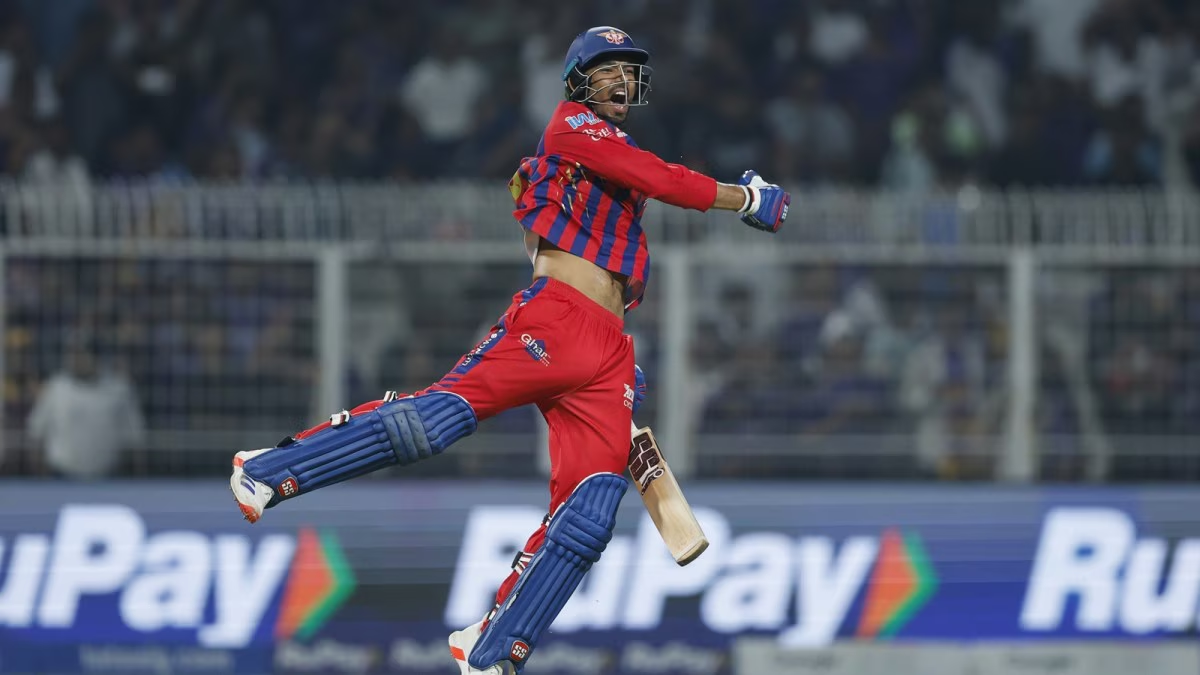
Mukul Choudhary — IPL Stats, Biography, Records | मुकुल चौधरी — झुंझुनू का वो Finisher जिसने IPL 2026 में दुनिया को चौंकाया
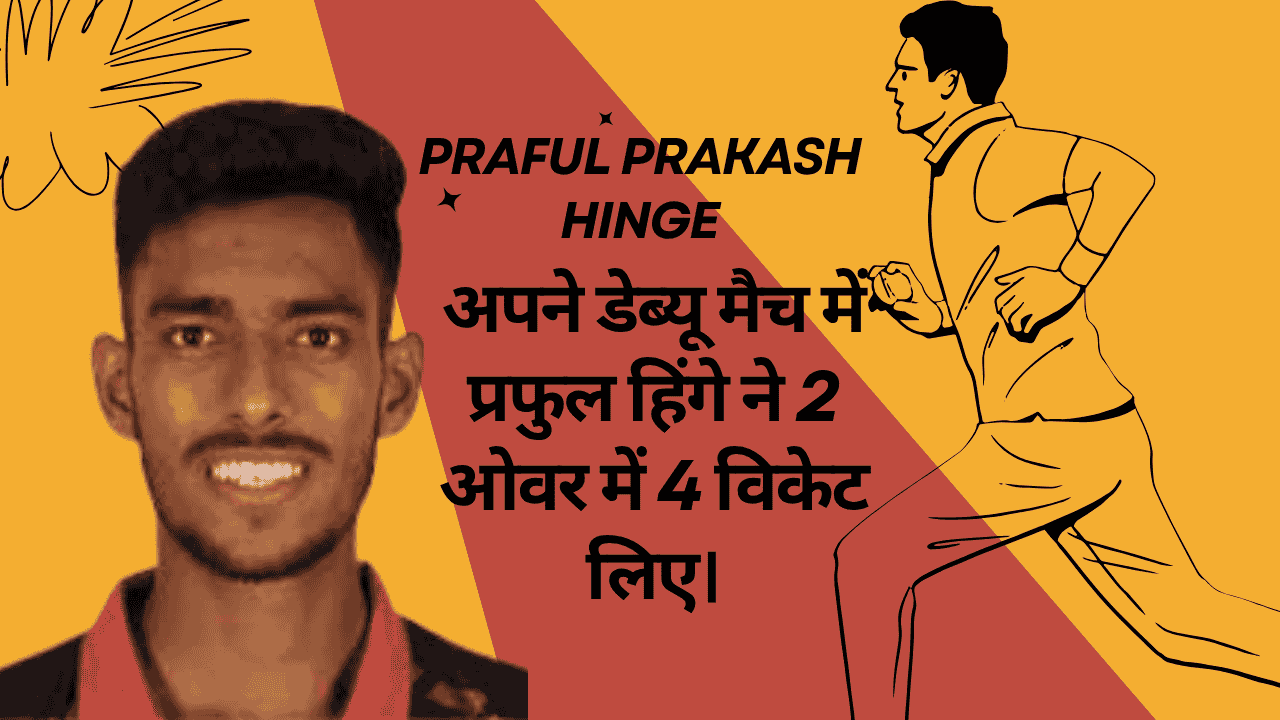
Praful Prakash Hinge, On Debut For SRH, Takes 4 Wickets In 2 Overs
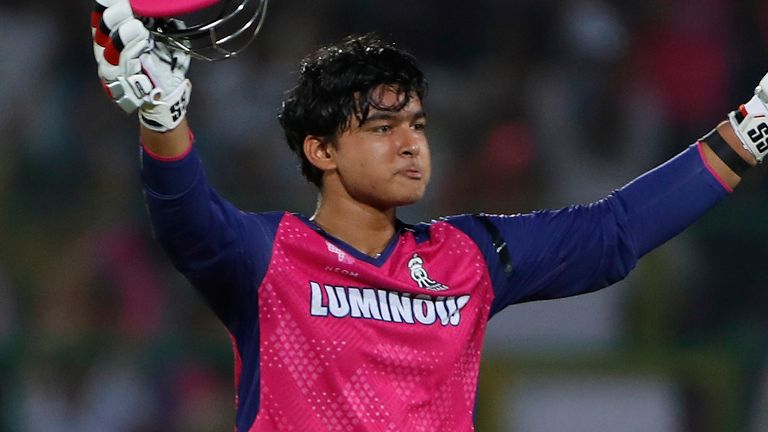
Vaibhav Suryavanshi — IPL Records, Stats & Biography | वैभव सूर्यवंशी — Bihar का वो 15 साल का तूफान जिसने Cricket इतिहास बदल दिया
-
Dream Bihar Debut: Sakib Hussain’s 4-wicket IPL Entry That Stunned RR
Sakib Hussain’s dream IPL debut for Sunrisers Hyderabad stunned Rajasthan Royals as the Bihar pacer claimed 4 wickets in a match-turning spell. Full story, highlights, and biography. Sakib Hussain did not just arrive in the IPL on 13 April 2026 — he announced himself with force. The Bihar-born fast bowler ripped through Rajasthan Royals with a stunning 4-wicket haul on his Sunrisers Hyderabad debut, instantly becoming one of the most talked-about names in IPL 2026. Sakib Hussain’s Dream IPL Debut: The Bihar Pacer Who Stunned Rajasthan Royals Sakib Hussain’s sensational IPL debut Use this section to open with the match context, the pressure of debut night, and the impact of…
You May Also Like
Praful Prakash Hinge, On Debut For SRH, Takes 4 Wickets In 2 Overs
Mukul Choudhary — IPL Stats, Biography, Records | मुकुल चौधरी — झुंझुनू का वो Finisher जिसने IPL 2026 में दुनिया को चौंकाया
Vaibhav Suryavanshi — IPL Records, Stats & Biography | वैभव सूर्यवंशी — Bihar का वो 15 साल का तूफान जिसने Cricket इतिहास बदल दिया
-
Praful Prakash Hinge, On Debut For SRH, Takes 4 Wickets In 2 Overs
Praful Prakash Hinge: शांत शुरुआत से विस्फोटक आगाज़ तक, भारतीय तेज गेंदबाज़ी का उभरता चेहरा भारतीय क्रिकेट की सबसे दिलचस्प कहानियाँ अक्सर उन खिलाड़ियों से बनती हैं जो बिना शोर के अपनी नींव तैयार करते हैं और फिर एक ही दिन में पूरे परिदृश्य को बदल देते हैं। Praful Hinge इसी श्रेणी के खिलाड़ी हैं। विदर्भ के इस युवा तेज गेंदबाज़ ने लंबे समय तक घरेलू क्रिकेट में मेहनत की, अपनी गेंदबाज़ी को निखारा और फिर आईपीएल के मंच पर कदम रखते ही ऐसा प्रदर्शन किया जिसने उन्हें रातोंरात चर्चा का केंद्र बना दिया। उनका क्रिकेट सफर उन पारंपरिक कहानियों से अलग नहीं है जहाँ प्रतिभा को समय, अनुशासन और…
You May Also Like
Vaibhav Suryavanshi — IPL Records, Stats & Biography | वैभव सूर्यवंशी — Bihar का वो 15 साल का तूफान जिसने Cricket इतिहास बदल दिया

Dream Bihar Debut Sakib Hussain का 4-Wicket IPL Entry जिसने RR को चौंका दिया
Mukul Choudhary — IPL Stats, Biography, Records | मुकुल चौधरी — झुंझुनू का वो Finisher जिसने IPL 2026 में दुनिया को चौंकाया
-
Best Child Savings Plans in India — Secure Your Child’s Future Today
Best Child Savings Plans: Secure Your Child’s Future The moment a child is born in India, parents begin thinking about the future — education, career, security. These thoughts are noble but they remain thoughts for most families unless converted into a systematic financial plan. The cost of quality education in India has been rising at approximately 10 to 12% per year — significantly faster than general inflation. An engineering degree at a reputed private college that costs ₹10 lakh today will cost approximately ₹26 lakh in 10 years. An MBBS at a private medical college: from ₹50 lakh today to potentially ₹1.3 crore in 10 years. Studying abroad: already ₹50…
-
Capital Guarantee Plans in India — Zero Risk, Assured Returns Explained
Capital Guarantee Plans: Assured Returns Explained There is a specific type of investor that every financial advisor in India has encountered: the person who wants market-linked returns but cannot emotionally or financially afford to lose even a rupee of their original investment. For salaried professionals saving for a child’s education, for business owners with unpredictable income who need certainty on a specific future date, for first-generation investors who carry the financial trauma of seeing relatives lose money in chit funds or poorly managed cooperatives — the idea of market participation with capital protection is not greed. It is a rational response to genuine life circumstances. Capital Guarantee Plans, also called…
You May Also Like
Pradhan Mantri Jan Dhan Yojana 2026: Zero Balance Account और ₹10,000 Overdraft — Complete Guide

Divyang Government Schemes 2026: विकलांग व्यक्तियों के लिए सरकारी योजनाएं — Complete Guide
Gujarat Sarkari Yojana 2026: Gujarat के निवासियों के लिए 25 सरकारी योजनाएं — Complete State Guide
-
Money Back Policy in India — How It Works and Is It Good for Indians
Money Back Policy in India If there is one insurance product that captures the Indian middle-class imagination more vividly than any other, it is the Money Back Policy. The appeal is visceral and immediate: you don’t just get money when you die. You get money during your lifetime, at regular intervals, while the policy is still running. Life is unpredictable — this at least gives you something now. That is the pitch. It is emotionally compelling. But does the financial reality match the emotional appeal? This guide breaks it down completely. The Concept — Survival Benefits During the Policy Term A Money Back Policy is a variant of endowment insurance…
-
Endowment Policy in India — What It Is and Who Should Buy It
Endowment Policy in India Endowment plans are the product that built the life insurance industry in India. Before the liberalisation of the insurance sector in 2000, LIC was the only life insurer in India and its bread and butter was the endowment plan. Tens of millions of Indians — including the parents and grandparents of many current investors — have had endowment policies over the decades. They are still sold in enormous volumes today. Understanding what they are, what they actually return, and who genuinely benefits from them is essential for any Indian navigating their insurance and investment decisions. The Dual Nature of Endowment — What It Promises An endowment…
-
Guaranteed Return Plans in India — Safe Investment or Missed Opportunity
Guaranteed Return Plans: Safe Investment Every week, millions of Indians see advertisements for products that promise to “double your money in 10 years” or “guaranteed returns of ₹50 lakh on investing ₹20,000 per month.” These are Guaranteed Return Plans — life insurance products that promise a fixed, predetermined payout at maturity regardless of market conditions. No risk, no uncertainty, money guaranteed. For a nation of people who have seen market crashes, bank failures, and chit fund frauds, the appeal is completely understandable. But as with most things that sound too safe to be true, the reality requires a closer examination. What a Guaranteed Return Plan Actually Is A Guaranteed Return…
-
What Is a ULIP — Benefits, Charges and Best ULIP Plans in India
What Is a ULIP: Best ULIP Plans in India Few financial products in India have as complicated a reputation as the Unit Linked Insurance Plan. In the early 2000s, ULIPs were aggressively and often dishonestly sold by insurance agents who misrepresented them as guaranteed return investments while burying the enormous charges in fine print. The backlash when policyholders discovered the reality was severe. IRDAI’s 2010 reforms fundamentally restructured ULIPs — capping charges, mandating transparency, and introducing the 5-year lock-in to ensure they served long-term purposes. The modern ULIP of 2026 is a meaningfully different and better product than what was sold in 2005. Understanding what it actually is — without…
-
Best SIP Plans in India 2026 — How to Start Investing With ₹500 Per Month
Best SIP Plans in India 2026 The most powerful financial idea that most Indians discover too late is this: you do not need to be wealthy to build wealth. You need to start early and be consistent. A ₹500 monthly SIP started at age 22 can build a larger retirement corpus than a ₹5,000 monthly SIP started at age 40. The mathematics of compounding — where your returns earn returns, which earn further returns — is so powerful over long time horizons that starting small and early beats starting large and late in almost every realistic scenario. This guide tells you everything about starting a SIP in India in 2026…
-
E-Bike Insurance in India — New Rules for Electric Two-Wheelers
E-Bike Insurance in India The electric two-wheeler revolution is happening faster in India than the electric car transition. Ola Electric S1 Pro and S1 X, Ather 450X and Rizta, TVS iQube, Bajaj Chetak, Hero Vida V2, Revolt RV400, and dozens of other models have transformed the two-wheeler market in urban India. Monthly EV two-wheeler sales regularly exceed 1 lakh units. For the millions of Indians who have made the switch or are planning to, understanding how insurance works for electric two-wheelers is just as important as understanding the charging infrastructure. Legal Requirement — No Exemption for EVs The single most common misconception among new e-bike owners is that electric vehicles…
-
Bike Insurance in India — Third-Party vs Comprehensive Complete Comparison
Bike Insurance in India Complete Comparison India has more registered two-wheelers than any other country in the world — over 21 crore as of the latest government data. For the vast majority of Indian families, the two-wheeler is not a luxury but a necessity — for commuting, for deliveries, for navigating city traffic that makes four-wheelers impractical, and for reaching areas where public transport doesn’t reach. Yet bike insurance remains among the most underunderstood and most neglected financial products in the country. Millions of bikes run on expired insurance or no insurance at all. This guide covers everything a bike owner needs to know about insuring their two-wheeler properly. The…
-
IDV in Car Insurance — What It Means and How to Calculate It Correctly
IDV in Car Insurance Calculate It Correctly Of all the numbers in a car insurance policy document, IDV is the one that will determine how much money you receive if the worst happens to your vehicle. It is the single most important financial figure in your comprehensive car insurance, yet the vast majority of Indian car owners renew their insurance every year without ever examining whether their IDV accurately reflects their car’s actual value. This guide fixes that gap completely. What IDV Is and Why It Matters IDV stands for Insured Declared Value. It is the current market value of your car — the maximum amount the insurance company will…
-
Electric Car Insurance in India — Everything EV Owners Must Know
Electric Car Insurance in India India’s electric vehicle revolution is no longer a future possibility — it is a present reality unfolding on every highway and city road. Tata Nexon EV, MG ZS EV, Hyundai Ioniq 5, BYD Atto 3, Kia EV6, Mahindra XEV 9e, and dozens of other models are redefining what Indian car ownership means. Sales of electric passenger vehicles crossed 1 lakh units annually and continue to grow. But owning an EV brings insurance considerations that are genuinely different from insuring a petrol or diesel car, and most new EV owners discover these differences only at claim time — which is exactly the wrong moment. This guide…
-
Pay As You Drive Insurance in India — The Future of Car Insurance
Pay As You Drive Insurance in India Standard car insurance in India operates on a one-size-fits-all annual premium model. A person who drives 3,000 kilometres per year pays nearly the same premium as someone who drives 25,000 kilometres per year for a car of the same make, model, age, and IDV. This is fundamentally unfair — the high-mileage driver has statistically far higher accident exposure, while the low-mileage driver is subsidising their risk. Pay As You Drive insurance corrects this inequity. Introduced in India by IRDAI in 2020, it is growing in relevance as driving patterns shift significantly — particularly as remote work reduces daily commuting for millions of urban…
You May Also Like

Vridha Pension Yojana 2026: बुढ़ापे की Pension कैसे मिलेगी — Complete Guide
Pradhan Mantri Internship Scheme 2026: Top Companies में Internship और ₹5000 महीना — Complete Guide

Stock Market Investing for Self-Employed Indians in 2026 — Direct Stocks Mein Paisa Lagana Chahte Ho? Pehle Yeh Padho
-
How to Check Your Car Insurance Status Online in India
How to Check Your Car Insurance Status Knowing whether your car is insured at this moment — and whether the insurance is valid — is not just a curiosity. It is a legal and financial necessity. Thousands of Indians drive on expired or unknown-status insurance every day, either because they forgot the renewal date, because the renewal cheque was not processed, or because they genuinely do not know. Driving an uninsured vehicle exposes you to fines, vehicle impoundment, and complete personal financial liability for any accident. Checking your car insurance status takes less than 3 minutes using the methods in this guide. Why Checking Insurance Status Matters More Than You…
-
Zero Depreciation Car Insurance — Is It Really Worth the Extra Premium
Zero Depreciation Car Insurance Every car owner who has ever filed an insurance claim and received significantly less than the repair bill knows the frustration of depreciation deduction. You expected the insurance to cover the full ₹45,000 repair cost. You received ₹28,000. The ₹17,000 gap came out of your pocket and nobody explained this clearly when you bought the policy. Zero Depreciation — also called Zero Dep, Nil Dep, or Bumper-to-Bumper insurance — eliminates exactly this gap. But is the additional premium worth it? Here is the complete, honest analysis. The Depreciation Problem Explained Precisely When an accident damages your car, the insurer does not simply pay the cost of…