
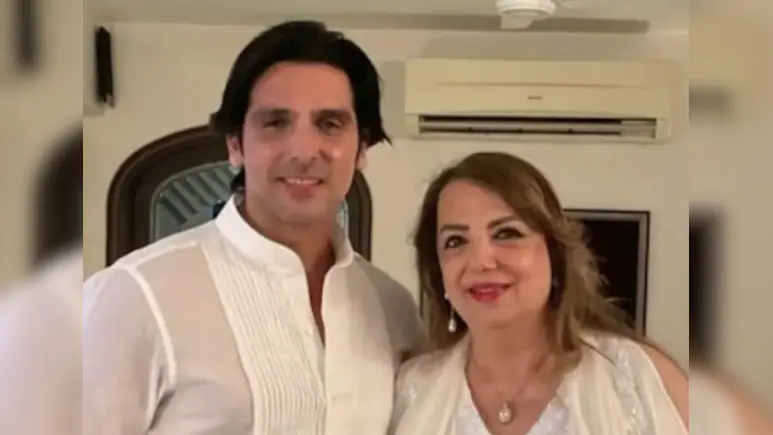
The intersection of celebrity, religion, and personal choice has once again ignited a fierce debate across the Indian digital landscape following recent statements from actor Zayed Khan regarding the last rites of his mother, Zarine Khan. Zarine Khan, a former model and actress who was the matriarch of one of Bollywood’s most prominent families, passed away at the age of 81 in November 2025 after a prolonged battle with age-related ailments (Hindustan Times, 2026). While the film fraternity turned out in large numbers to pay their respects at the Juhu Crematorium, a section of social media users quickly pointed out the apparent contradiction of a Hindu cremation for a woman born into a Parsi family and married to a Muslim man, veteran actor Sanjay Khan (Livemint, 2026). Zayed Khan, known for his role in the blockbuster Main Hoon Na, has finally broken his silence on the matter, offering a poignant defense of his family’s decision to honor his mother’s final wish over rigid traditional expectations (Zoom TV, 2026). His response is not just a rebuttal to online critics but a deep dive into the secular values that have defined the Khan household for nearly six decades (Sunrise Radio, 2026). By emphasizing that “insaaniyat” or humanity remains the primary faith in their home, Zayed has challenged the growing trend of digital moral policing in modern India (India.com, 2026). This situation provides a unique window into the complexities of interfaith marriages in India, a topic that often draws parallels to the melting-pot cultures of the United States and the secularist traditions of Western Europe (Outlook India, 2026).
Why the Khan Family’s Secularism Matters Today
The Pressure of Digital Moral Policing
In an era where social media often acts as a self-appointed jury, the backlash against the Khan family highlights a growing discomfort with fluid religious identities. For many observers in the West, where personal choice in funeral rites is largely respected as a private matter, the public scrutiny faced by Zayed Khan seems intrusive and unnecessary (Lehren, 2026). However, in the current Indian social climate, where religious lines are frequently used to define political and social boundaries, the family’s choice to conduct a Hindu cremation becomes a radical act of personal sovereignty (India.com, 2026). This clash between individual will and collective expectation is a recurring theme in the lives of public figures who navigate multi-faith backgrounds (Zoom TV, 2026).
Fulfilling the Final Wish Above Ritual
Zayed Khan’s emotional revelation that his mother specifically requested her ashes be immersed in a river to “be free” shifts the focus from religious dogma to the fulfillment of a loved one’s last desire (Livemint, 2026). In many European cultures, such as in the United Kingdom or Germany, the scattering of ashes in nature is a common and respected practice, often devoid of the heavy religious weight it carries in South Asia (Outlook India, 2026). By prioritizing her wish over the standard Parsi or Muslim protocols, the family chose to celebrate the individual’s spirit rather than adhere to a pre-defined script (Zoom TV, 2026). This decision underscores a belief that the sanctity of a promise to the deceased far outweighs the temporary noise of internet trolls (Lehren, 2026).
Defining the Secular Indian Identity
The Khan family represents a specific branch of the Indian elite that has historically championed a syncretic culture, often referred to as Ganga-Jamuni Tehzeeb. Zarine Khan, born Zarine Katrak, never converted to Islam after her marriage to Sanjay Khan in 1966, maintaining her own identity while raising a family that celebrated all faiths (The Times of India, 2025). This model of co-existence is increasingly rare and under constant scrutiny, yet Zayed’s insistence that his family is not “answerable” to anyone for their rituals reaffirms this secular stance (Sunrise Radio, 2026). For a global audience, particularly in the United States where interfaith marriages are statistically high, this story serves as a reminder of the personal courage required to maintain a secular household in a polarized environment (Outlook India, 2026).
The Heart of the Response: Zayed Khan’s Zoom Interview Deep-Dive
A Call for Insaaniyat Over Labels
During his interview with Zoom TV, Zayed Khan became visibly emotional when discussing the guiding principles his mother instilled in him. He described “insaaniyat” or humanity as the first religion taught at home, a concept that transcends the labels of Parsi, Muslim, or Hindu (Zoom TV, 2026). He noted that this wasn’t just a philosophy for the family but extended to their household staff and the broader community they supported (Livemint, 2026). This focus on universal human values over sectarian ones is a perspective often mirrored in the secular humanism prevalent in many Western European nations, where ethical living is valued independently of religious affiliation (Outlook India, 2026).
The River of Freedom
The most striking detail of the interview was Zayed’s recollection of a quiet moment his mother spent by a “lovely river.” She had expressed that if she were to pass away, she wanted her remains to flow in that water because she wanted to “be free” (Livemint, 2026). This poetic request became the blueprint for her final rites, leading the family to opt for cremation so that her ashes could be immersed according to her vision (Zoom TV, 2026). Fulfilling this wish required the family to ignore the loud demands of those who felt she should have been buried or placed in a Tower of Silence according to her Parsi roots (Lehren, 2026). Zayed’s tearful explanation highlights the heavy emotional labor involved in protecting a parent’s legacy against public distortion (Zoom TV, 2026).
The Cycle of Times and Maturity
Zayed also offered a philosophical take on the current state of public discourse, citing the adage that “good times make weak people,” which eventually leads to tough times (Livemint, 2026). He suggested that the current lack of “adults in the room”—those capable of nuance and empathy—is a symptom of a cycle that his family is trying to break by setting an example for the next generation (Zoom TV, 2026). By teaching his children to “carve a new future” based on these inclusive values, he is attempting to ensure that the secular legacy of the Khan family survives the current era of division (Outlook India, 2026). This approach resonates with the progressive parenting styles often discussed in the U.S. and Europe, where raising children with a global, empathetic mindset is a priority (Lehren, 2026).
Secondary Context: The Matriarch’s Influence and the Family’s Legacy
Zarine Khan’s Career and Artistic Contributions
While often known as a “star wife,” Zarine Khan had a successful career in her own right, appearing in classic films like Tere Ghar Ke Saamne (1963) alongside Dev Anand (The Times of India, 2025). Her transition from the screen to interior design and writing showed a versatile intellect that influenced her children, including interior designer Sussanne Khan and jewelry designer Farah Khan Ali (ETV Bharat, 2025). In many ways, she was a pioneer for the modern Indian woman who balances traditional family roles with professional independence (IndianScreen, 2025). This trajectory is comparable to the multifaceted careers of many 1960s icons in the West who evolved from performance to entrepreneurship (The Times of India, 2025).
The Khan Household as a Cultural Landmark
The Khan residence in Juhu has long been a hub for the Bollywood elite, known for its warmth and hospitality. Zarine was the glue that held this large, diverse family together, managing a household that included famous in-laws like Hrithik Roshan (ETV Bharat, 2025). Her ability to maintain these bonds through trials, including her husband’s severe injuries during the filming of The Sword of Tipu Sultan, solidified her status as a pillar of strength (The Times of India, 2025). Her passing marks the end of an era for a specific kind of old-school Bollywood grace that prioritized discretion and family unity above all else (IndianScreen, 2025).
Culinary Traditions and the Khan Family Cookbook
Food has always been a central pillar of the Khan family’s hospitality, and Zarine Khan famously documented this in her book, Family Secrets: The Khan Family Cookbook (The Times of India, 2025). The recipes in the book reflect the family’s mixed heritage, blending Parsi flavors with the rich Mughlai traditions of her husband’s family. For instance, her Irani mutton koftas were a staple that she was seen preparing in family vlogs even in her later years (ETV Bharat, 2025). This culinary fusion is a testament to the family’s lived secularism; you can’t truly understand their bond without tasting the diverse influences on their dinner table (The Times of India, 2025). For a visitor to Mumbai looking to experience this kind of high-end fusion, restaurants in the Juhu and Bandra areas offer similar Mughlai-Parsi blends, with a meal for two at a reputable establishment costing roughly €45 to €60 ($50 to $65).
FAQ Section
Who was Zarine Khan? She was a former actress, model, and the wife of veteran Bollywood actor Sanjay Khan, known for her roles in films like Tere Ghar Ke Saamne (The Times of India, 2025).
Why did Zarine Khan have a Hindu funeral? Zayed Khan clarified that it was her specific final wish to be cremated and have her ashes immersed in a river to “be free” (Livemint, 2026).
What was Zarine Khan’s religious background? She was born into a Parsi (Zoroastrian) family and never converted to Islam after marrying her husband, Sanjay Khan (The Times of India, 2025).
How did Zayed Khan react to the backlash? He stated that his family is not answerable to anyone and that they prioritized fulfilling their mother’s last wishes over public opinion (Sunrise Radio, 2026).
What is “insaaniyat,” which Zayed mentioned? It translates to “humanity,” and Zayed described it as the primary faith practiced and taught in the Khan household (Zoom TV, 2026).
Who are Zarine Khan’s children? She is survived by four children: Zayed Khan, Sussanne Khan, Farah Khan Ali, and Simone Arora (IndianScreen, 2025).
Was Zarine Khan an author? Yes, she wrote Family Secrets: The Khan Family Cookbook, which shared the culinary heritage of her multi-faith household (The Times of India, 2025).
How long were Zarine and Sanjay Khan married? The couple was married for 59 years, celebrating their last anniversary in April 2025 (Hindustan Times, 2026).
What was her role in her husband’s recovery? She provided unwavering support to Sanjay Khan after he suffered major burns on the set of The Sword of Tipu Sultan in 1990 (The Times of India, 2025).
Where was the funeral held? The last rites were conducted at the Juhu Crematorium in Mumbai (Livemint, 2026).
Final Thoughts: The Freedom of a Last Wish
The controversy surrounding Zarine Khan’s final rites serves as a stark reminder of the challenges inherent in maintaining a private belief system in the age of public accountability. Zayed Khan’s decision to speak out is not just a defense of his family’s actions but a courageous affirmation of the right to personal agency in one’s final moments. By choosing to honor the specific request of his mother to “be free” in the river, he has placed the sanctity of the individual above the rigid demands of collective identity. This story is a poignant reflection of a changing India, where traditional boundaries are being tested by a generation that values humanity and personal truth over prescribed labels. The Khan family’s journey through grief and scrutiny underscores the enduring power of secularism and the quiet dignity found in keeping a promise to the departed. In the end, the most fitting tribute to Zarine Khan is not the ritual performed, but the legacy of kindness and independence she left behind for her children to protect.