


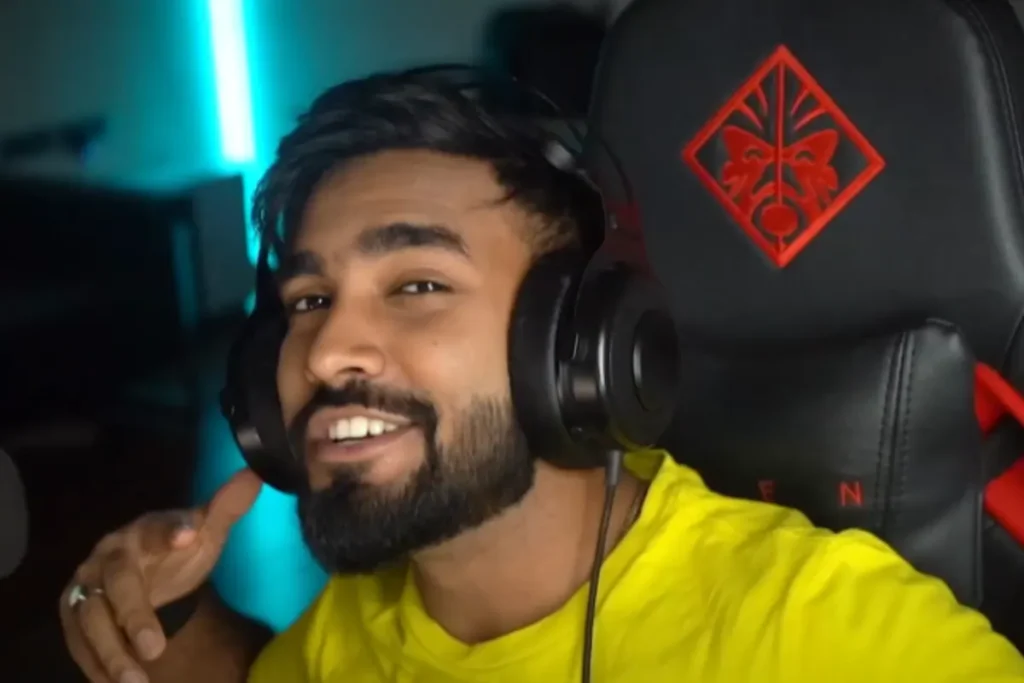
- Ujjwal Chaurasia: Before the Screen, Before the Fame
- The Channel That Almost Did Not Happen
- The Architecture of an Audience
- The GTA V Era: Building a Legend
- Style Evolution: A Decade of Transformation
- The Music Chapter: When the Gamer Started Rapping
- Bigg Boss 17: The Biggest Stage He Had Ever Walked Onto
- India's Gaming Creator Landscape: Where Techno Gamerz Stands
- The Wealth Behind the Game
- The Person Behind the Persona
- Why 51 Million Subscribers Is Just a Number
- A Letter to the Gamer Who Changed the Game
Ujjwal Chaurasia: Before the Screen, Before the Fame
There is a particular kind of ambition that grows quietly in middle-class homes — the kind that has no model to follow, no roadmap to copy, no family precedent to lean on. Ujjwal Chaurasia grew up with exactly that kind of ambition, in a household in New Delhi where his father Vijay Chaurasia ran a modest shop and his mother Usha Chaurasia managed the home. It was an ordinary Delhi upbringing in the truest sense — full of warmth, short on excess, and built on the straightforward values of education, discipline, and hard work.
Born on January 12, 2002, Ujjwal was the younger of two brothers. His older brother Ankit Chaurasia would eventually become one of the most important figures in his story — not as a business partner in the formal sense, but as the first person who believed in what Ujjwal was building when nobody else had a reason to. In the early days, Ankit lent Ujjwal his smartphone to play games and, crucially, he was the one who understood that YouTube gaming channels could actually generate income. That piece of knowledge — that a boy playing video games in Delhi could turn those hours into a livelihood — was the spark that lit everything.
Ujjwal did not own a smartphone of his own until his twelfth standard. Before that, he played games on his family’s PC or borrowed devices whenever he could. The first game his brother introduced him to was GTA Vice City — a small detail that feels symbolic in retrospect, because the game that would eventually build his empire, GTA V, was a direct descendant of that very franchise. Everything that followed was essentially an expansion of that first moment of joy in front of a screen.
The Channel That Almost Did Not Happen
On August 13, 2017, a fifteen-year-old boy from Delhi uploaded his first video to a YouTube channel he called Techno Gamerz. The channel began with gaming tutorials — instructional content that showed viewers how to download and play specific games. It was practical, unpolished, and entirely earnest. His brother had negotiated a strict condition for allowing Ujjwal to use his smartphone for content: equal time for gaming and studying, a balance that was enforced with the kind of sibling authority that actually works.
One of his first tutorial videos — a downloading guide for Dragon Ball Z — unexpectedly crossed 250,000 views. For a fifteen-year-old in Delhi who had never been told the internet would pay attention to him, that number was not a metric — it was a message. The audience was there. The hunger for accessible, Hindi-language gaming content from a creator who spoke like them, thought like them, and played the same games they played — that hunger was real and enormous. Ujjwal simply had the instinct to feed it.
The Architecture of an Audience
What Ujjwal did between 2017 and 2020 was something most creators attempt and very few achieve cleanly: he built a community, not just an audience. His voiceover style was engaging and conversational — he narrated gameplay in a way that made even a viewer who had never touched a controller feel included in the experience. His content was family-friendly in a deliberate and principled way, which opened his channel to a demographic that much of India’s gaming content excluded: younger viewers, students, and parents who watched alongside their children.
He was also one of the first Indian gaming creators to treat multiple game titles with equal seriousness rather than locking himself into a single franchise. While many creators built their entire identity around one game, Ujjwal explored GTA V, Minecraft, Ranch Simulator, Red Dead Redemption 2, Garena Free Fire, PUBG, and dozens of others. That breadth gave him a resilience that single-game creators lacked — when a game fell out of fashion or got banned, his channel pivoted rather than collapsed. In January 2018, he launched a second YouTube channel under his own name, designed to host more personal and varied content beyond gameplay, giving him a multi-channel architecture that expanded his reach across different viewer intentions.
The GTA V Era: Building a Legend
If there is a single body of work that defines Techno Gamerz in the popular imagination of Indian gaming culture, it is the GTA V series. Grand Theft Auto V became the canvas on which Ujjwal built his most iconic content — a continuous, episodic storytelling project that gave his audience a genuine narrative to follow, with running jokes, character callbacks, and evolving storylines that made each episode feel connected to everything that came before. The mod-based storytelling he brought to GTA V — building narratives within the game’s architecture through custom modifications that introduced new characters, scenarios, and situations — was genuinely inventive.
He was not just playing the game; he was using it as a writing tool. The result was content that felt closer to a serialised web series than a gaming channel, and it attracted viewers who had never played GTA V in their lives but came purely for the story. This storytelling instinct is the invisible engine beneath the raw subscriber numbers, and it is what distinguishes Techno Gamerz from the hundreds of Indian gaming channels that launched in the same era with similar production setups but never achieved comparable scale.
Style Evolution: A Decade of Transformation
2017–2018: The Tutorial Phase. The earliest content was purely instructional — game downloading guides, basic tutorials, and beginner walkthroughs. Production quality was minimal, recorded on a borrowed smartphone with natural audio and no editing infrastructure. The value was entirely in the information and in Ujjwal’s natural warmth on camera.
2018–2020: The Narrative Expansion. As income began flowing from the channel, reinvestment in production quality became possible. He shifted progressively from pure tutorials toward longer gameplay videos with running commentary, and the GTA V series began its defining run. This was the period that established his core identity as a storyteller-gamer rather than a tutorial creator.
2020–2022: The Scale Period. During the pandemic years, when India’s gaming content consumption exploded and YouTube watch time surged globally, Techno Gamerz grew at a pace that redefined what was possible for an Indian gaming channel. His subscriber count crossed 10 million, then 20 million, and kept climbing. The frequency and consistency of uploads, combined with the variety of games he covered, kept his audience perpetually engaged and gave the algorithm every reason to amplify his content.
2022–2024: Diversification and the Mainstream Leap. This period saw Ujjwal consciously expand beyond pure gaming — into music with “Game On” and “Life” produced with Sez on the Beat, into reality television with Bigg Boss 17, and into mainstream brand partnerships that had nothing to do with gaming hardware. He became a Red Bull India athlete and was featured on Forbes India’s 30 Under 30 list. He completed a BBA from Sam Higginbottom University and a PGDM from IILM University Greater Noida — simultaneously running one of India’s most significant digital media enterprises.
2024–2026: The Institution. By April 2026, Techno Gamerz had crossed 51 million subscribers on the primary channel, making it one of the most subscribed gaming channels in the world. His total subscriber count across all four channels — Techno Gamerz, Ujjwal, Ujjwal Shorts, and Techno — exceeded 50 million combined. His channel had accumulated over 7.5 billion total video views, placing it in territory occupied by only the largest entertainment channels on the platform globally.
The Music Chapter: When the Gamer Started Rapping
On January 19, 2021, Ujjwal Chaurasia did something nobody in India’s gaming creator space had done before with any real production seriousness — he released a music video. The track was called “Game On,” produced by Sez on the Beat, one of India’s most acclaimed hip-hop producers whose credits include collaborations with DIVINE, Naezy, and the Mumbai rap scene’s most defining voices.
The song was autobiographical in the most direct sense possible. Its lyrics traced Ujjwal’s journey from zero to 10 million subscribers — the borrowed phone, the tutorial videos, the exponential growth, the disbelief of a middle-class Delhi family watching their youngest son become famous on the internet. Sez on the Beat brought a sonic credibility to the track that placed it far beyond the novelty tier that most creator-musician experiments occupy. The music video featured cinematic production, a Ford Mustang, and an emotional honesty that made it feel like a genuine artistic statement rather than a marketing exercise.
The response was staggering. “Game On” crossed 62 million views on the Techno Gamerz YouTube channel alone, and its presence on streaming platforms including Spotify, Apple Music, JioSaavn, Wynk, and Hungama meant it reached audiences far beyond his existing subscriber base. It became one of the most-watched creator music videos in Indian YouTube history — a record set not by a Bollywood-backed vanity project but by a twenty-year-old gamer from Delhi with a story worth telling.
The collaboration with Sez on the Beat was not a one-time arrangement. In September 2023, Ujjwal returned with a second track titled “Life,” again produced by Sez on the Beat and penned by lyricist Panther. Where “Game On” was a victory lap, “Life” was a more reflective piece — a meditation on what it means to be young, famous, and still figuring out the distance between the person you were and the person the world expects you to be. The track’s music video accumulated tens of millions of views and demonstrated that his musical ambition was not a diversion from his creative identity but an extension of it.
What the music chapter reveals about Ujjwal is something that his gaming content already suggested but never stated so explicitly: he thinks in narratives. He is not a creator who makes content — he is a storyteller who uses whatever medium is available to tell the story he wants to tell. On YouTube it is GTA V episodic gaming. On streaming platforms it is hip-hop autobiography. The medium changes; the instinct does not.
Bigg Boss 17: The Biggest Stage He Had Ever Walked Onto
In October 2023, Ujjwal Chaurasia entered Bigg Boss 17 as a wild card contestant — walking through the doors of India’s most-watched and most volatile reality television franchise in front of an audience that had no idea who Techno Gamerz was. That gap between his world and the show’s world was precisely the point. Bigg Boss 17’s viewership skews toward an older, more mainstream television demographic — the same demographic that has never subscribed to a gaming channel and likely never will. By appearing on it, Ujjwal was not just participating in a reality show; he was conducting the single most efficient audience expansion exercise available to a digital creator in India.
The show itself is a social experiment as much as entertainment — fifty-odd contestants locked in a house together, navigating alliances, conflicts, tasks, and the constant surveillance of cameras and a national audience. For a twenty-one-year-old whose professional life had been conducted almost entirely through a screen, behind which he controlled the narrative, Bigg Boss represented an entirely different kind of exposure. There was no editing. There was no script. There was no option to retake or reshoot. Whatever happened, happened in real time, in front of millions of viewers who were forming their opinions of him without the benefit of the cinematic production he had spent years building around himself.
What the Bigg Boss experience gave Ujjwal was something that no amount of YouTube views can manufacture — mainstream legitimacy. India’s middle-aged television audience, the parents and uncles and teachers who might have dismissed gaming content as a frivolous pursuit for children, watched him on Salman Khan’s show and saw a young man who was composed, genuine, and articulate. The post-Bigg Boss subscriber surge that followed his appearance was a direct consequence of that introduction — millions of new viewers going to YouTube to find out more about the boy they had just spent weeks watching on their television screens.
He had entered the house as a gaming creator. He left as a mainstream celebrity. That transition, achieved in a single reality show stint, is one of the most strategically significant moments of his career — and he handled it with the same natural ease that has always characterised his on-screen presence.
India’s Gaming Creator Landscape: Where Techno Gamerz Stands
Understanding Ujjwal’s position in India’s digital ecosystem requires placing him alongside the other creators who define that landscape. The comparison below charts the key dimensions across India’s top gaming and entertainment creators as of 2026:
| Creator | Channel | Primary Niche | Subscribers | Est. Net Worth | Known For |
|---|---|---|---|---|---|
| Ujjwal Chaurasia | Techno Gamerz | Gaming / Storytelling | ~51 Million | ₹16–42 Crore | GTA V narrative series, multi-game coverage, music |
| Ajey Nagar | CarryMinati | Comedy / Gaming / Roast | ~45 Million | ₹55–70 Crore | Roast videos, mainstream crossover, Bigg Boss presence |
| Ajendra Variya | Total Gaming | Mobile Gaming | ~45 Million | ₹18–20 Crore | Free Fire dominance, late face reveal |
| Naman Mathur | Mortal | Esports / FPS Gaming | Multi-platform | ₹30–50 Crore | Esports career, PUBG/BGMI competitive play |
| Lokesh Raj | Lokesh Gamer | Mobile Gaming | 30M+ | ₹16 Crore | Free Fire content, young audience base |
| Sahil Rana | AS Gaming | Mobile Gaming | ~20 Million | ₹5–10 Crore | Free Fire gameplay, regional audience |
What the table reveals is important. CarryMinati leads on net worth primarily because his roast and comedy content attracts higher CPM advertisers and broader brand categories than pure gaming. Total Gaming dominates mobile gaming, which remains India’s largest gaming demographic by raw numbers. But Techno Gamerz holds a position none of the others fully occupy — the intersection of storytelling, music, television mainstream crossover, and multi-platform content that makes Ujjwal the most diversified creative enterprise of the group. He is not the richest on the list, but he is arguably the most strategically positioned for long-term growth.
The Wealth Behind the Game
Ujjwal Chaurasia’s financial story is one of the most remarkable wealth-building narratives in Indian digital media — because it began with nothing and built entirely on creative output, audience trust, and disciplined diversification. His estimated net worth as of 2025–2026 ranges between Rs. 16.5 crore and Rs. 42 crore across various estimates, reflecting the difficulty of precisely valuing an enterprise with this many revenue streams.
His YouTube earnings alone — from AdSense revenue across his four channels with their combined billions of views — generate monthly income estimated between Rs. 15 lakh and Rs. 1.3 crore, depending on which channel and which period is measured. Brand sponsorship deals, which command fees far above AdSense rates for a creator of his influence, add a separate and significantly larger income layer on top. His brand partnership portfolio includes Red Bull India as an official athlete sponsor, alongside a wide roster of gaming and lifestyle brands. His merchandise line at shop.technogamerz.in generates income independent of any platform algorithm. His music career adds streaming royalties and YouTube music revenue across two commercially successful tracks, with “Game On” alone crossing 110 million views across platforms.
The totality of these income streams creates a financially diversified enterprise that would hold its value even if YouTube’s algorithm shifted dramatically tomorrow. That structural resilience is the mark of someone who has been thinking about the business of content creation with far more sophistication than his age would suggest.
The Person Behind the Persona
One of the qualities that makes Ujjwal Chaurasia genuinely compelling as a public figure is the contrast between the scale of what he has built and the simplicity of who he appears to be. He grew up in a middle-class Delhi family, studied commerce at university, and has never performed a persona that felt disconnected from that background. In 2020, he was awarded “Best Gaming Creator” at the Streamy Awards, and in 2021 he was featured on Forbes India’s 30 Under 30 list — accolades that validate what his audience already knew, delivered through institutions that speak to the wider world.
His relationship with his brother Ankit runs through his story as a quiet constant — the older sibling who lent a phone, enforced study balance, and believed before anyone else had reason to. He remains unmarried as of 2026, focused primarily on creative and business growth. His educational qualifications — a BBA followed by a PGDM — suggest that middle-class pragmatism and digital ambition were never opposites in his household. They ran simultaneously, each reinforcing the other.
Why 51 Million Subscribers Is Just a Number
The metrics around Techno Gamerz are genuinely staggering — 51 million subscribers on the primary channel, 7.5 billion total video views, music tracks crossing 110 million views, a net worth estimated above Rs. 16 crore, a Forbes 30 Under 30 recognition, a Red Bull athlete contract, a Bigg Boss 17 appearance, and two music collaborations with one of India’s finest hip-hop producers. These numbers are real and they matter.
But none of them are the most interesting thing about Ujjwal Chaurasia. The most interesting thing is the journey from a boy with no smartphone of his own to the most subscribed gaming creator in India, achieved in under a decade, starting at age fifteen, with a borrowed device and a borrowed hour of screen time. He built this without a media company behind him, without a film family connection, without an investor or a mentor or a system designed to produce outcomes like his. He built it with consistency, creativity, a deep understanding of his audience, and an older brother who believed in him before anyone else had reason to.
That story — of a middle-class Delhi boy who chose the screen over convention and was proved spectacularly right — is the story that millions of young Indians carry with them into their own lives. Not the subscriber count, not the net worth figure, but the proof of possibility itself.
A Letter to the Gamer Who Changed the Game
This is not analysis. This is acknowledgement.
To Ujjwal Chaurasia — the boy who played GTA Vice City on his brother’s PC and somehow, impossibly, turned that into 51 million people watching him play games on the internet: you did something that had no blueprint. India did not have a model for what you became. There was no senior creator to apprentice under, no established industry to break into, no well-worn path from a middle-class Delhi home to international gaming icon.
You built the path while walking it. You uploaded tutorials on a borrowed phone, kept your study-gaming balance because your brother asked you to, watched 250,000 strangers discover a Dragon Ball Z video, and decided that was enough reason to keep going. Every episode of GTA V you narrated, every game you tried when others were sticking to one title, every Hindi-speaking teenager you made feel seen in a global gaming culture that was not originally made for them — all of that accumulated into something the industry still does not fully have a category for.
The Forbes 30 Under 30 recognition is real. The Red Bull athlete status is real. The Bigg Boss appearance and the music and the merchandise and the billions of views are all real. But the realest thing you built is permission — the permission that every kid in a small flat in Delhi or Lucknow or Patna now carries in their pocket: the knowledge that the screen in their hand is not just entertainment but possibility. You gave them that. And it costs nothing to say: that matters more than any number.

