
Table of Contents
The Deepika Padukone Nobody Fully Knows Yet
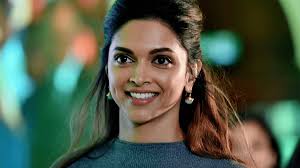
She was not supposed to be here. Her father, Prakash Padukone, is one of the greatest badminton players India has ever produced — the first Indian to win the All England Championship in 1980, a national hero with a racquet. Her childhood was planned around a court, not a camera. Deepika Padukone spent her formative years training professionally in badminton, competing at the junior national level, before a modelling assignment at eighteen quietly redirected the trajectory of her entire life. That redirection produced something remarkable: an actress who brought the same work ethic and physical precision she learned on the badminton court to a film career that now spans 19 years, 33 feature films, 129 nominations, 58 wins, a ₹500 crore net worth, three Filmfare Awards, a Hollywood debut, a production company, and a mental health foundation that has arguably done more to normalise public conversations about depression in India than any government campaign. She is the only Indian actress whose brand value has been independently assessed at $108.5 million by Duff & Phelps — ahead of every other female Indian celebrity measured that year.
Bangalore, Badminton, and a Father Who Changed Indian Sport
Deepika Padukone was born on January 5, 1986, in Copenhagen, Denmark, where her father Prakash Padukone was competing professionally. The family returned to Bangalore when she was a child, and she grew up in the Padukone household as the elder daughter — her younger sister Anisha Padukone also went on to become a professional golfer, suggesting that athletic discipline runs through the family’s DNA as naturally as breathing.
Her father’s sporting legacy is not incidental to understanding who she became professionally. Prakash Padukone did not just win All England — he was the first Asian to do so and spent years ranked among the world’s top three players. He built a badminton academy that trained national players. The household was defined by discipline, early rising, physical training, and the quiet understanding that greatness requires consistent work rather than sporadic inspiration. Deepika has spoken repeatedly about inheriting this framework — she has described her approach to film preparation, fitness maintenance, and career management as essentially athletic: structured, measurable, long-term.
She studied at Sophia High School in Bangalore and simultaneously trained at her father’s badminton academy, competing at the state and national junior levels. She enrolled at Indraprastha College for Women, Delhi, but relocated to Mumbai before completing her degree when a modelling career began generating professional momentum she could not defer. Her first significant modelling work was a 2005 appearance in Himesh Reshammiya’s music video Naam Hai Tera — her first time in front of a camera, before any film discussion had begun.
Om Shanti Om Changed Everything in One Weekend
Her Kannada film debut in Aishwarya (2006) was a regional stepping stone — seen in Karnataka, largely unnoticed nationally. The film that turned her into a star with no further argument required was Om Shanti Om (2007), directed by Farah Khan and starring Shah Rukh Khan. She played a dual role — the tragic 1970s actress Shanti Priya and the contemporary Sandhya — requiring her to oscillate between two distinct visual and tonal registers in her very first major Hindi film appearance. She won the Filmfare Award for Best Female Debut and, more significantly, earned the trust of one of Bollywood’s most commercially reliable creative ecosystems — Farah Khan and Shah Rukh Khan — in a single film.
The years immediately following, however, were not smooth. Bachna Ae Haseeno (2008) was a moderate success. Love Aaj Kal (2009) with Saif Ali Khan performed well at the box office but did little for her critical standing. Housefull (2010) was commercial but creatively thin. Desi Boyz (2011) underperformed. She was consistently cast as the decorative romantic lead — chosen for her height, her face, and her ability to carry expensive costumes — rather than for any dramatic capability the script tested. The career appeared to be settling into a comfortable but unchallenging lane.
The Three Films That Made Critics Stop Underestimating Her
The turn came in 2012–2013 in a sequence so rapid it almost appeared coordinated. Cocktail (2012), directed by Homi Adajania, cast her as Veronica — a hedonistic, emotionally complicated party girl who sabotages her own happiness through self-destruction. The character was the complete opposite of the composed, well-dressed heroine she had been playing for five years, and she inhabited it with enough raw energy that critics who had previously dismissed her as a model-turned-actor began writing differently.
Yeh Jawaani Hai Deewani (2013) with Ranbir Kapoor and Chennai Express (2013) with Shah Rukh Khan made her the only actress in Bollywood that year with two films grossing over ₹200 crore — a commercial record nobody had previously held. Then Goliyon Ki Raasleela Ram-Leela (2013) with Ranveer Singh arrived and shifted the conversation entirely. Directed by Sanjay Leela Bhansali in his most sexually charged and visually extravagant register, Deepika played a Gujarati clan chieftain — fierce, sensuous, and psychologically unstable — and won her first Filmfare Award for Best Actress. Three major films in a single calendar year, three entirely different characterisations, and a commercial total that no actress in contemporary Bollywood had come close to matching. The industry had been taking her face for granted. After 2013, it paid attention to the actor.
The Bhansali Chapter: Three Films, Three Immortal Roles
No single creative relationship has defined Deepika Padukone’s artistic legacy more completely than her collaboration with Sanjay Leela Bhansali. They have made four films together — Ram-Leela (2013), Bajirao Mastani (2015), Padmaavat (2018), and Love & War (currently in production for 2026) — and across the first three, she has delivered performances of such technical and emotional intensity that critics routinely place them among the finest female performances in the history of Hindi cinema.
Bajirao Mastani (2015) required her to play Kashibai — not the expected romantic heroine, but the dignified, heartbroken legitimate wife watching her husband fall irrevocably in love with another woman. The role could easily have been peripheral; Deepika made it the film’s emotional centre. She won her third Filmfare Best Actress Award. Padmaavat (2018) — one of the most expensive and most controversial Indian films ever made, requiring over a year of production under political threats, protests, and multiple release bans across several states — gave her the role of Rani Padmavati. The restraint she brought to a character who needed to be simultaneously regal, vulnerable, and morally absolute was a different kind of craft from Bajirao — quieter, more internal, and in many ways more difficult.
When She Went Public About Depression — and What It Cost Her to Do It
In 2015, at the absolute peak of her career — the year of both Piku and Bajirao Mastani, arguably the two most acclaimed female performances of that Bollywood decade — Deepika Padukone gave an interview to NDTV in which she spoke openly about having suffered from clinical depression in 2014. She described waking up crying without knowing why, losing motivation to do anything, and being unable to explain her condition to her family for months before her mother, Ujjala Padukone, noticed something was wrong and pushed her toward treatment.
The public reaction was neither uniform nor entirely supportive. In India, where mental health still carries significant social stigma — particularly among high-achieving, publicly successful individuals — her disclosure was met with some scepticism and considerable discomfort alongside the widespread support. She responded by founding The Live Love Laugh Foundation (TLLLF) in 2015, a registered charity focused on mental health awareness and resource connectivity in India. The foundation has run national campaigns including I Have A Brain Too and My Circle, My Support, reaching millions across schools, colleges, and corporate organisations. What made her intervention credible rather than cosmetic was the timing — she did not wait until the issue was fashionable, and she did not position herself as recovered and inspirational. She said “I am still working on it,” which is a different kind of honesty entirely.
Complete Films: From Debut to ₹10 Billion Kalki
The table below traces Deepika Padukone’s film journey, highlighting key milestones, commercial performance, and career-defining moments. Box office figures are approximate worldwide gross (in ₹ crore unless otherwise noted), based on industry reports as of early 2026.
| Year | Film | Box Office | What It Meant |
|---|---|---|---|
| 2006 | Aishwarya | Regional debut | Kannada introduction; marked entry into films |
| 2007 | Om Shanti Om | Blockbuster | Filmfare Best Female Debut; Bollywood breakthrough |
| 2012 | Cocktail | Hit | First real acting recognition; dramatic range noticed |
| 2013 | Ram-Leela / Yeh Jawaani Hai Deewani / Chennai Express | 3 × ₹200 Cr+ | Only actress with two ₹200 Cr films in the same year; commercial peak |
| 2013 | Goliyon Ki Raasleela Ram-Leela | ₹116 Cr+ | 1st Filmfare Best Actress; critically acclaimed performance |
| 2015 | Piku / Bajirao Mastani | Both major hits | 2nd & 3rd Filmfare Best Actress nominations; versatility established |
| 2017 | xXx: Return of Xander Cage | $44.8M opening weekend | Hollywood debut; international visibility |
| 2018 | Padmaavat | ₹585 Cr+ | Biggest film of her career at the time; historical epic landmark |
| 2023 | Pathaan | ₹1,050 Cr+ | Comeback alongside SRK; massive commercial resurgence |
| 2024 | Fighter / Kalki 2898 AD | ₹250 Cr+ / ₹1,050 Cr+ | Back-to-back pan-India blockbusters; solidified top-tier status |
| 2026 | King (with SRK) / Love & War (Bhansali) | Upcoming | Christmas 2026 + TBA; highly anticipated collaborations |
Box office figures are approximate worldwide gross and contextual verdicts based on industry consensus. Deepika Padukone’s career trajectory reflects exceptional commercial consistency, critical acclaim, and successful expansion into pan-India and international cinema.
₹500 Crore, Louis Vuitton, and the Business Mind Behind the Face
Deepika Padukone’s estimated net worth stands at ₹500 crore ($60 million) as of 2025, built across film income, endorsements, production revenues, and investments. She charges ₹15–20 crore per film and ₹8–12 crore per endorsement contract.
Her brand portfolio is the most prestigious of any Indian actress — it spans luxury fashion (Louis Vuitton, Cartier), premium retail (Tanishq), banking (Axis Bank), beauty (L’Oreal Paris, Maybelline), wellness, and airlines. Duff & Phelps independently assessed her brand value at $108.5 million in 2018 — the second-highest brand value of any Indian celebrity male or female that year, and the highest of any Indian woman.
Ka Productions, her production company founded in 2018, has produced 83 (2021), Pathaan (2023), Fighter (2024), and Kalki 2898 AD (2024) — four films collectively grossing over ₹15 billion — making her one of the most commercially successful producer-actors in Indian cinema, a fact rarely acknowledged in discussions dominated by her acting and appearance. She has invested in startups including Epigamia (the Greek yogurt brand, which was later acquired), and holds strategic investments in health and wellness brands. Known properties include apartments in Mumbai’s Prabhadevi neighbourhood and a lavish residence in the same building as Ranveer Singh’s family home.
Ranveer, Dua, and the Life Off-Camera
Deepika Padukone met Ranveer Singh on the sets of Ram-Leela in 2012 — a meeting she has described as arriving “like a force of nature.” They dated for six years before marrying on November 14–15, 2018, in a deeply private two-day ceremony at Lake Como, Italy, with only immediate family in attendance and an almost complete media blackout. The ceremony followed both Konkani Hindu and Sindhi Hindu rituals, respecting both families’ traditions.
Their daughter Dua Padukone Singh was born in September 2024. In keeping with their consistent protection of her privacy, the couple kept Dua entirely out of public view for months before sharing her first photographs on Diwali 2025 — a single family image that broke social media engagement records within hours of posting. In early 2026, both parents were spotted together at airports and public events, with Deepika visibly preparing to return to full shooting schedules for King and Love & War.
Projects That 2026 and Beyond Are Riding On
King (December 24, 2026), directed by Siddharth Anand, reunites her with Shah Rukh Khan for what will be their sixth film together. Her character reportedly plays Suhana Khan’s mother and SRK’s former lover — a role described as an extended cameo with narrative significance rather than a traditional co-lead part. This is her first collaboration with Siddharth Anand directly as director, and the commercial scale of King — with its Warsaw action sequences, ₹50 crore set pieces, and the franchise weight of the Pathaan audience — makes it one of the most watched releases of 2026.
Love & War, directed by Sanjay Leela Bhansali — their fourth collaboration — is currently in production, co-starring Ranbir Kapoor and Vicky Kaushal. The film’s subject is not yet fully revealed, though it is confirmed to be set against a war backdrop with a romantic triangle. This is the reunion the Hindi film press has awaited since Padmaavat (2018), and given Bhansali’s track record of extracting career-best performances from Deepika every time they work together, expectations are structural rather than speculative. She had exited both Spirit and Kalki 2898 AD Part 2 in 2025 following her pregnancy, and these two 2026 projects represent her full return to front-line production.
The Numbers, the Awards, and What the Industry Actually Thinks of Her
Three Filmfare Awards for Best Actress — Ram-Leela (2013), Bajirao Mastani (2015), and Padmaavat (2018). IIFA Best Actress multiple times. Screen Award Best Actress. 58 wins from 129 nominations across 19 years. She has been featured on Time magazine’s 100 Most Influential People list, Forbes highest-paid entertainers list, and People magazine’s Most Beautiful global lists. She represented India at the Cannes Film Festival jury in 2022 — a cultural assignment that reflects both her global recognition and her industry standing.
What the industry actually thinks, separate from official awards, is reflected in a more telling metric: she is the only Indian actress who consistently gets offered equal billing with India’s top male stars — SRK, Ranbir, Hrithik, Prabhas — and is considered a commercial co-anchor for a major release rather than a supporting element around a male star. That distinction — between being cast for marquee value versus being cast for supplementary value — is what separates Deepika Padukone from every other actress in contemporary Hindi cinema. Her name on a poster moves opening-weekend numbers. Very few female actors in any global film industry can make that claim.
The Flops, the Exit Controversies, and the Things That Did Not Work
Kochadaiiyaan (2014), Finding Fanny (2014), Tamasha (2015), and Chhapaak (2020) — the last a film about acid attack survivor Laxmi Agarwal, which she also produced — were either commercial disappointments or audience polarisers. Her Hollywood debut in xXx: Return of Xander Cage (2017) was commercially successful globally but critically mauled, and her English dialogue delivery drew specific criticism. Gehraiyaan (2022), while generating significant conversation, underperformed commercially despite strong reviews.
The Jawaharlal Nehru University (JNU) visit in January 2020 — when she stood in solidarity with students attacked during campus violence — generated both enormous public support and an immediate organised boycott campaign against Chhapaak, which released two days later. The film’s box office was visibly impacted. She has not publicly revisited the decision, which is itself a position. Her exit from Spirit and Kalki 2 in 2025 — citing post-pregnancy recovery — was reported without controversy by the productions involved, though both are significant projects whose loss of her involvement required casting reconfiguration.
Ten Questions People Actually Search For
How much is Deepika Padukone worth?
₹500 crore ($60 million) as of 2025, from film fees of ₹15–20 crore per film, endorsements of ₹8–12 crore per brand, Ka Productions revenues, and investments.
Who is Deepika Padukone’s husband?
Actor Ranveer Singh. They married on November 14–15, 2018, in Lake Como, Italy. Their daughter Dua was born in September 2024.
What was Deepika Padukone’s first movie?
Kannada film Aishwarya (2006). Her Bollywood debut was Om Shanti Om (2007).
What are Deepika Padukone’s biggest box office films?
Pathaan (2023) ₹10+ billion, Kalki 2898 AD (2024) ₹10+ billion, Padmaavat (2018) ₹5.85 billion, Chennai Express (2013) ₹4 billion.
How many Filmfare Awards has she won?
Three Filmfare Best Actress Awards — Ram-Leela (2013), Bajirao Mastani (2015), Padmaavat (2018) — plus the Best Female Debut award for Om Shanti Om (2007).
What is Ka Productions?
Her production company founded in 2018. Produced 83, Pathaan, Fighter, and Kalki 2898 AD — collectively grossing over ₹15 billion.
What is The Live Love Laugh Foundation?
A registered mental health charity founded by Deepika in 2015, following her public disclosure of depression in 2014. Runs national awareness campaigns in schools, colleges, and corporations.
What is her next film in 2026?
King (December 24, 2026) with Shah Rukh Khan, directed by Siddharth Anand, and Love & War directed by Sanjay Leela Bhansali with Ranbir Kapoor and Vicky Kaushal.
What brands has she endorsed?
Louis Vuitton, Cartier, L’Oreal Paris, Tanishq, Axis Bank, Maybelline, and over 70 brands across fashion, luxury, banking, beauty, and wellness. Her brand value was assessed at $108.5 million by Duff & Phelps.
Did Deepika Padukone play badminton professionally?
Yes — she trained at her father Prakash Padukone’s academy and competed at junior national level before modelling redirected her career at eighteen.
What She Leaves Behind — and What She Is Still Building
Deepika Padukone’s legacy is not a single film or a single performance — it is the cumulative proof, delivered across 19 years of disciplined professional choices, that an Indian actress can be simultaneously the most commercially valuable female star in her industry, a genuine dramatic artist whose craft earns consistent critical respect, a successful producer, a mental health advocate with structural impact, and a global luxury brand ambassador — all at the same time, without compromising any one dimension for another. At 40, returning to full production in 2026 with two of the most anticipated films on India’s release calendar and a daughter named Dua whose childhood she has already made clear she intends to protect from the same media machinery that made her famous, she is building the second chapter of a career that the first chapter only partially mapped. The badminton academy in Bangalore produced a champion they never trained for. Indian cinema has not finished being surprised by her.
Deepika Padukone — Five Complete Deep Dives
The Padukone Household: Where Champions Are the Default Setting
Deepika Padukone was born on January 5, 1986, in Copenhagen, Denmark — not because her family lived there, but because her father Prakash Padukone was mid-competition in Europe at the time. The family returned to Bangalore when she was barely a year old, and she grew up in a household where sporting greatness was not an aspiration but the ambient condition of daily life. Prakash Padukone had become the first Indian to win the All England Open Badminton Championships in 1980 — the most prestigious badminton tournament in the world at the time — after which he was ranked World No. 1 and received both the Arjuna Award (1972) and the Padma Shri (1982). He later co-founded Olympic Gold Quest, a foundation that has funded the training of multiple Indian Olympic medal winners. Her mother Ujjala Padukone built a parallel career as a travel agent and managed the logistics of a household built around professional sport without complaint.
The surname itself carries history — “Padukone” is the name of a village in coastal Karnataka to which the family’s Konkani-speaking ancestors trace their origin, and the family’s Konkani cultural identity remains deeply embedded in Deepika’s sense of home despite having spent her adult professional life in Mumbai. Her paternal grandfather, Ramesh Padukone, was the secretary of the Mysore Badminton Association — making the sport a three-generation inheritance rather than simply Prakash’s individual achievement. Her younger sister Anisha Padukone became one of India’s top amateur golfers before briefly turning professional — a second athletic achievement in the next generation that underlines how completely the Padukone family’s DNA runs toward disciplined physical competition.
Deepika trained at her father’s Padukone Badminton Academy from childhood, competing at the state and national junior levels. She attended Sophia High School and later Mount Carmel College in Bangalore, where her schedule was built around court training rather than social life. She enrolled for a Bachelor’s degree in Arts at Indira Gandhi National Open University after relocating to Mumbai, but never completed it — the modelling assignments were accelerating too quickly to accommodate academic deadlines. Her first brush with a camera came through child artist work in television advertisements — a fact that explains why she appeared completely relaxed in front of a lens from the very first modelling assignment, without the usual stiffness of someone encountering professional cameras for the first time in their mid-twenties. A 2005 music video appearance for Himesh Reshammiya’s Naam Hai Tera was her first credited adult screen work — watched by very few people at the time, remembered now only because of what followed.
Lake Como, a Powerboat Patrol, and the Marriage Nobody Photographed
The story of Deepika and Ranveer begins on the sets of Goliyon Ki Raasleela Ram-Leela (2013) in Udaipur — a film so charged with physical and romantic intensity between its leads that several cast and crew members have since said they could tell something was happening before either of them acknowledged it. Ranveer Singh has recalled publicly that their love story “blossomed” during that Udaipur schedule, naming the city specifically as the place where his certainty about her became permanent. They never officially confirmed the relationship to the press for over a year, maintaining a careful public ambiguity that frustrated the film media considerably.
What the public did not know — and what Deepika only disclosed years later — was that they had been quietly engaged since 2014. “No one knows this,” she said in an interview. “Only his parents and my parents and our respective sisters knew.” Six months into the relationship she had already decided this was who she was going to marry — a clarity she has described as arriving without drama or deliberation. They spent the intervening years between engagement and wedding doing exactly what they were doing before: making films, attending events together and separately, and refusing to turn their private life into public content.
The wedding, when it finally came on November 14–15, 2018, was one of the most successfully private events in the history of Indian celebrity. The venue was Villa del Balbianello at Lake Como, Italy — a 13th-century former monastery set on a promontory overlooking the lake, its terraced gardens among the most photographed natural landscapes in Europe. The couple chose it specifically because privacy was the single non-negotiable requirement, and because both of them love water. Thousands of white flowers were flown in from Florence to decorate the venue. Guests had stickers placed over their phone cameras before entering. The couple commissioned patrolling powerboats on the lake to intercept any waterborne paparazzi attempting telephoto shots from the water. The ceremony on November 14 followed Konkani Hindu traditions — honouring Deepika’s South Indian roots — and ran for over five hours, which is traditional for the Konkani ritual structure. The ceremony on November 15 followed Sindhi Hindu traditions, honouring Ranveer’s family heritage.
They returned to India and held two receptions — one in Bengaluru and one in Mumbai — before fully returning to public life. In a final piece of characteristic understated wit, they kept their wedding video entirely private for five years before showing it publicly for the first time on the premiere episode of Koffee with Karan Season 8 in 2023. Their daughter Dua Padukone Singh was born on September 8, 2024. They kept her face entirely out of public view until Diwali 2025, when a single family photograph was released — generating more social media engagement in its first hour than most film trailer launches.
Ka Productions: The Business Nobody Discusses Enough
Ka Productions is Deepika Padukone’s production company, founded in 2018 — the same year she married Ranveer and the same year she delivered Padmaavat, which at that point was her biggest commercial hit. The timing was deliberate: she had reached a point in her career where she had both the financial resources and the industry relationships to function as a producer, and she wanted the creative and commercial control that production ownership provides. The company has since produced some of the most commercially significant films in recent Indian cinema history, making her simultaneously one of the most successful actresses and one of the most successful producers working in Bollywood.
Her first major production was 83 (2021), the biographical sports drama about India’s 1983 Cricket World Cup win, directed by Kabir Khan and starring her husband Ranveer Singh as Kapil Dev. The film was delayed significantly by COVID-19 — it was originally scheduled for April 2020 and finally released in December 2021 — and its theatrical performance was modest, partly because audiences had not fully returned to cinema halls at that point. The lesson Deepika drew from 83 was about timing and platform rather than content quality.
Pathaan (2023) was a structural reinvention. Produced in partnership with Yash Raj Films, it starred Shah Rukh Khan returning to screens after four years and became the highest-grossing Hindi film of 2023 with over ₹10 billion worldwide — a film in which she was simultaneously the female lead, a producer, and a commercial co-anchor whose name on the marketing materials meaningfully contributed to the opening weekend performance. Jawan (2023) — also a production partnership — added another ₹10 billion to her cumulative commercial total. Fighter (January 2024) earned ₹215 crore domestically. Kalki 2898 AD (June 2024) earned ₹653 crore domestically and over ₹1,042 crore worldwide. Singham Again (November 2024) earned ₹222 crore domestically.
The cumulative result: Deepika Padukone became the first Indian actress in history to accumulate ₹4,000 crore in domestic box office collections across 30 films — a milestone crossed in 2024. She delivered ₹1,090 crore from three 2024 releases alone, making it her second consecutive ₹1,000 crore year — a consistency no other Indian actress has come close to achieving at the box office.
Louis Vuitton, ₹500 Crore, and What It Actually Means to Be India’s Most Valuable Female Brand
The single most commercially significant brand decision of Deepika Padukone’s career was not a film — it was a handbag campaign. In May 2022, Louis Vuitton appointed her as its first-ever Indian House Ambassador, placing her alongside Emma Stone and Chinese actress Zhou Dongyu in a global campaign for the brand’s Dauphine bag. The announcement was made alongside her Cannes Film Festival jury appearance that same week, generating a dual news cycle that positioned her simultaneously in luxury fashion and high-culture cinema contexts before the global press in a single month.
The commercial impact on Louis Vuitton was measurable almost immediately. During the 2022 Cannes Film Festival, her posts alone accounted for seven of Louis Vuitton’s top ten Instagram posts and generated over 25% of the $20.2 million in Media Impact Value (MIV) the brand earned during the twelve-day festival. A single photograph of her in a floor-sweeping red Louis Vuitton gown on day three of Cannes generated over 2 million likes and more than $1 million in MIV for the brand from a single post. In 2025, she attended Louis Vuitton’s Women’s Fall-Winter 2025 show in Paris as House Ambassador and was named as a jury member for the LVMH Prize 2025 — a prestigious internal appointment within the luxury group that goes to individuals whose cultural significance the brand considers worthy of associating with the industry’s next generation of creative talent.
Beyond Louis Vuitton, her endorsement portfolio spans: Cartier (luxury jewellery), L’Oreal Paris (beauty), Levi’s (denim), Adidas (sportswear), Tanishq (Indian jewellery), Axis Bank (financial services), Tissot (watches), and over 60 other brands accumulated across 19 years. Her total brand endorsement income is estimated at ₹80–120 crore annually, with her per-brand fee at the luxury segment running at ₹15–20 crore. Duff & Phelps independently assessed her brand value at $108.5 million — the second-highest of any Indian celebrity regardless of gender and the highest of any Indian woman. Her combined net worth of ₹500 crore is built across film fees (₹15–20 crore per film), Ka Productions profit-sharing, endorsements, and startup investments including the now-acquired Epigamia Greek yogurt brand.
2026 and Beyond: The Busiest Year of Her Career at 40
Deepika Padukone’s 2026 film schedule is, by any honest accounting, the most ambitious release calendar any Indian actress has assembled in a single year. She is actively shooting or in post-production for multiple major projects simultaneously, while managing the demands of early motherhood with a daughter born in September 2024.
King (December 24, 2026) is the commercial anchor of the year. Directed by Siddharth Anand and reuniting her with Shah Rukh Khan for the sixth time, it is an action thriller in which she plays a character connected to both SRK’s assassin lead and Suhana Khan’s character — described as a role with narrative centrality rather than decorative presence. The film shot extensively in Warsaw, Mumbai, and Chennai, with the ₹50 crore Warsaw action sequence involving SRK and Abhishek Bachchan as its centrepiece. The marketing campaign for King is expected to be among the largest in Indian cinema history, and Deepika’s inclusion as female lead alongside SRK’s first post-Dunki film gives it a commercial weight no other 2026 release is likely to match.
Love & War, directed by Sanjay Leela Bhansali with Ranbir Kapoor, Alia Bhatt, and Vicky Kaushal, has had its shoot extended to May 2026 following multiple delays. Bhansali is now targeting an August or September 2026 release — a date that, if confirmed, would put it on a collision course with Ramayana Part 1‘s October-November window and potentially King‘s December slot. The film’s casting — three of India’s most commercially and critically significant actors from the current generation — and Bhansali’s track record with Deepika across three previous films ensure it will be among the most anticipated Indian releases regardless of when it finally arrives.
She is also simultaneously shooting for the Atlee-directed film with Allu Arjun — a pan-India sci-fi action project that most industry reports are targeting for Summer 2027 — making 2026 a year in which she is essentially doing full-time production work across three major simultaneous projects while promoting King for its Christmas release. The combination of scale, variety, and commercial weight in her 2026-27 pipeline reflects a career operating at its highest possible level of ambition — which, for someone who learned ambition on a badminton court before she learned it on a film set, is exactly where she is most comfortable.
Discover. Learn. Travel Better.
Explore trusted insights and travel smart with expert guides and curated recommendations for your next journey.