


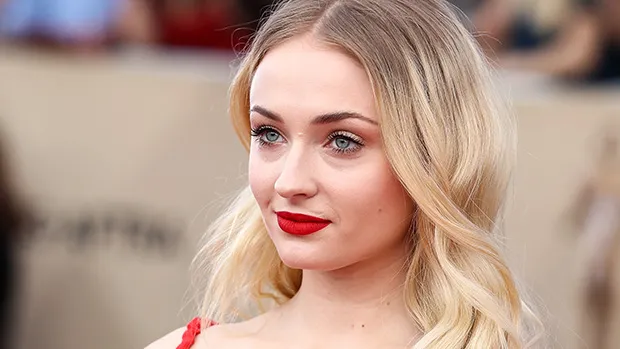
- Sophie Turner Introduction
- Who Is Sophie Turner?
- Early Life — Warwickshire and the Theatre Foundation
- Game of Thrones — Nine Years of Sansa Stark
- The X-Men Films — Jean Grey and Phoenix
- Joan — The Career-Redefining Performance
- The Staircase and Prestige TV Work
- Steal — The Heist Series
- Tomb Raider — Lara Croft on Prime Video
- Mental Health Advocacy — Speaking the Truth Out Loud
- Frequently Asked Questions
- How old is Sophie Turner in 2026?
- What is Sophie Turner most famous for?
- Who does Sophie Turner play in Tomb Raider?
- What is Joan about?
- What is Steal about?
- What is Sophie Turner's net worth in 2026?
- Is Sophie Turner married?
- What mental health challenges has Sophie Turner spoken about?
- What is The Staircase and what role did Sophie Turner play?
- Who created the Tomb Raider Prime Video series?
- What other upcoming projects does Sophie Turner have?
- Did Sophie Turner really suffer a back injury during filming?
Sophie Turner complete biography 2026 — from Northampton to global stardom as Sansa Stark, Jean Grey, and Lara Croft. Full career story, Game of Thrones, X-Men, Joan, Steal, Tomb Raider Prime Video, mental health advocacy, Joe Jonas divorce, and net worth 2026.
Sophie Turner Introduction
Sophie Turner — born on February 21, 1996, in Northampton, England — is one of the most significant British actresses of her generation, and her career story is unlike almost any other in contemporary television and film because it began with the most demanding possible entry point — playing a complex, evolving character across eight seasons of the most watched television drama of the decade — and then continued to build credibly beyond that definition-setting role into a creative body of work that now includes two Marvel blockbusters, a critically acclaimed ITV biographical thriller, a Prime Video heist series, and the most anticipated upcoming Prime Video production of 2026. She is the daughter of Andrew Turner, a property developer, and Sally Turner, and grew up in Chesterton in Warwickshire before her acting career relocated the family’s entire trajectory. She attended the King’s High School for Girls in Warwick and began training with the Playbox Theatre Company as a child — a youth theatre association whose structured approach to performance gave her the early technical foundation that a casting process as intensive as Game of Thrones would later demand. She was fourteen years old when she was cast as Sansa Stark in HBO’s Game of Thrones after a casting agent from the production spotted her in a school play. She had no professional credits. She had never appeared on television. And she was cast in one of the most consequential television productions in the history of the medium, alongside some of the most experienced and acclaimed actors in British and international television, in a role that would require her to age from a naive eleven-year-old girl to the Queen in the North across eight seasons of increasingly complex narrative and political drama. She played Sansa Stark from 2011 to 2019 — nine years, across 58 episodes — and received a Primetime Emmy Award nomination for Outstanding Supporting Actress in a Drama Series for her Season 7 performance. She simultaneously built her film career through multiple projects — Another Me (2013), Barely Lethal (2015), X-Men: Apocalypse (2016), Josie (2017), Time Freak (2018), Dark Phoenix (2019), Survive (2020). Her marriage to American singer Joe Jonas in May 2019 placed her permanently in the tabloid spotlight beyond her professional output. Their divorce in 2024, and the subsequent legal battles over the custody of their two daughters Willa and Delphine, generated international media attention that she navigated with considerable dignity given its public complexity. She relocated back to the United Kingdom following the divorce — returning to the country and the professional community where her career began. Joan (2024), the ITV biographical drama in which she played real-life diamond thief Joan Hannington, was the performance that re-established her creative standing in British television with absolute clarity — critics and audiences responded to it as her finest individual performance to that point. Steal (2026), the Prime Video heist drama, continued the crime thriller momentum Joan had established. And Tomb Raider — the Prime Video series created and written by Phoebe Waller-Bridge, co-showrunning with Chad Hodge, directed by Jonathan Van Tulleken, with Sigourney Weaver and Jason Isaacs in supporting roles — places Sophie Turner in the most physically demanding and commercially significant role of her career as the third actress ever to play Lara Croft in live action, following Angelina Jolie and Alicia Vikander. She is thirty years old in 2026, a mental health advocate of genuine conviction who has spoken publicly about her battles with anxiety, depression, and an eating disorder during her Game of Thrones years, and she is at the most creatively ambitious and personally resolved point of a career that began when she was fourteen and shows no sign of slowing.
Who Is Sophie Turner?
Sophie Turner is an English actress whose career spans over fifteen years of continuous professional work across British and American television and international film. She is best known globally for playing Sansa Stark in HBO’s Game of Thrones (2011–2019) and Jean Grey/Phoenix in the X-Men film series. She is a mental health advocate who serves as an ambassador for Women for Women International, supporting survivors of sexual violence. She trains for the demanding physical performance requirements of Tomb Raider under a regime that includes combat training, parkour fundamentals, and weapons handling. She manages her career through professional representatives and lives in the United Kingdom following her 2024 return from the United States.
Early Life — Warwickshire and the Theatre Foundation
Sophie grew up in Chesterton, a village in Warwickshire, England — a small, rural community whose distance from the London entertainment industry made her path into professional acting genuinely unlikely rather than simply narratively convenient. Her father Andrew is a property developer and her mother Sally raised Sophie and her brothers James and Will in a household that was supportive without being stage-parent driven. She attended King’s High School for Girls in Warwick — a selective independent school with a strong drama programme — and began training with the Playbox Theatre Company, a youth theatre organisation based in Warwick whose methodological approach to youth performance develops genuine technical competence rather than simply celebrating participation. It was through this combination of school drama and Playbox training that a casting agent for Game of Thrones first spotted her — a discovery moment whose complete accidentalness is one of the most repeated details in her career story, precisely because it is genuinely true. She was fourteen years old, had no professional credits, and was cast in a role that would define the following nine years of her life.
Game of Thrones — Nine Years of Sansa Stark
Game of Thrones, HBO’s adaptation of George R.R. Martin’s A Song of Ice and Fire fantasy novels, aired from April 2011 to May 2019 across eight seasons, 73 episodes, and became the most watched television drama in the history of the medium — breaking viewership records, Emmy records, and cultural conversation records with the consistency and comprehensiveness of something entirely unprecedented in television history. Sophie Turner played Sansa Stark across all eight seasons — 58 episodes in total — beginning at age fourteen as the naive, romantically idealistic eldest daughter of the Stark family and ending at age twenty-three as the Queen in the North, the most politically sophisticated and self-possessed survivor of everything Westeros had subjected her to. The role demanded that she age believably, develop measurably, and convey Sansa’s transformation from victimhood to authority with specificity and emotional honesty rather than simply through costume and hairstyle changes. The challenge was enormous and the exposure was total — Game of Thrones was watched by hundreds of millions of people globally, criticised with forensic intensity, and discussed in cultural commentary spaces that extended far beyond television criticism into politics, feminism, psychology, and medieval history. She grew up inside that exposure from age fourteen to twenty-three, navigating every physical and psychological transition of adolescence and early adulthood while playing one of the most discussed fictional women on earth. She received her Primetime Emmy nomination for Season 7 — specifically for the episode “The Battle of the Bastards” and its aftermath — and while she did not win, the nomination acknowledged what careful viewers had recognised for several seasons: that her performance had grown into something genuinely formidable.
The X-Men Films — Jean Grey and Phoenix
Sophie Turner played Jean Grey — one of the original X-Men and ultimately the cosmic-powered Phoenix — in two entries of the X-Men film franchise produced by 20th Century Fox. X-Men: Apocalypse (2016), directed by Bryan Singer, introduced her version of Jean as a young, uncertain mutant whose formidable telepathic and telekinetic powers are as frightening to herself as to those around her. The film was a major commercial success and her performance was noted positively in a cast that included James McAvoy, Michael Fassbender, Jennifer Lawrence, and Oscar Isaac. Dark Phoenix (2019), directed by Simon Kinberg, gave her the full lead role in an X-Men film for the first time — a Jean Grey story adapting the Dark Phoenix Saga, one of the most beloved and complex storylines in X-Men comics history, in which Jean absorbs a cosmic force that amplifies her powers beyond control and forces the X-Men to confront whether she can be saved. The film received mixed critical notices and underperformed commercially, but her performance as Jean — carrying the emotional weight of a character whose entire arc is about the terror of becoming something that cannot be contained — was handled with commitment and physical intensity. The two X-Men films gave her the blockbuster franchise experience that complemented her television work and proved she could carry major studio action productions alongside the prestige television credentials Game of Thrones had established.
Joan — The Career-Redefining Performance
Joan (2024), the ITV biographical crime drama, is the project that most comprehensively demonstrated what Sophie Turner is capable of when given material that fully matches her talent and experience. She played Joan Hannington — a real-life British woman whose life took a dramatic turn into high-end diamond theft in 1980s London, driven by the need to protect her daughter from an abusive ex-husband. The series aired on ITV in 2024 and was subsequently broadcast on The CW in the United States, where it earned Variety’s designation as one of the year’s most notable crime drama performances. Hannington’s story demanded warmth, resourcefulness, vulnerability, and a specific period physicality — the 1980s hair, fashion, and social codes of working-class London — that Sophie delivered with complete authenticity. Critics who had watched her grow up as Sansa Stark wrote about Joan as the performance that finally showed what she could do when she was the unambiguous centre of a story built around her character’s interiority rather than her relationship to a larger ensemble narrative. She has spoken about the role as the first time she felt genuinely liberated from the Sansa Stark comparison that had followed her through every post-Game of Thrones project.
The Staircase and Prestige TV Work
The Staircase (2022), the HBO Max dramatisation of the infamous Michael Peterson murder case, cast Sophie Turner as Margaret Ratliff — one of the adopted daughters of the accused, navigating the psychological impossibility of loving a father who may have killed her mother. The limited series starred Colin Firth as Michael Peterson and Toni Collette as Kathleen Peterson in the central roles, and Sophie’s Margaret was a supporting but emotionally essential character — the family member whose unconditional love for her father provided the drama’s most morally complicated thread. The series earned strong critical reviews and performing alongside Colin Firth and Toni Collette in such a tonally demanding production gave her the prestige television credential that her Game of Thrones years, for all their cultural significance, had not specifically provided — the credential of working in an intimate ensemble drama where every performance has to earn its place rather than benefiting from the spectacle and scale of a fantasy epic.
Steal — The Heist Series
Steal (2026), the Prime Video heist drama series in which Sophie plays Zara Dunne — an overworked, undervalued office worker who transforms into a calculating thief when a gang of violent criminals bursts in and demands her help stealing billions of pounds from ordinary people’s pension funds — continues the crime thriller trajectory that Joan established. The series is described as combining sharp social commentary about financial inequality with the momentum and character chemistry of a proper heist narrative. Her character’s transformation from frustrated, ordinary professional to adaptable criminal operative draws directly on the same quality that made Joan work — her ability to play women whose circumstances are extraordinary but whose emotional responses are completely grounded in recognisable human psychology. The Prime Video platform gives Steal immediate global distribution across every market simultaneously, making it Sophie’s most accessible recent project for the international audience that knows her from Game of Thrones but may not have tracked the British television work that followed.
Tomb Raider — Lara Croft on Prime Video
The Tomb Raider Prime Video series is the most commercially significant production of Sophie Turner’s career since Game of Thrones ended, and the circumstances of its creation are exceptional. The series is created and written by Phoebe Waller-Bridge — the creator of Fleabag, who brings to Tomb Raider the same sharp wit, emotional intelligence, and female interiority that made Fleabag one of the defining British television achievements of the last decade. Phoebe Waller-Bridge co-showruns alongside Chad Hodge. Jonathan Van Tulleken, whose television direction credits include Shogun and Dope Thief, directs and executive produces. The cast includes Sigourney Weaver as Evelyn Wallis and Jason Isaacs as Atlas DeMornay — two of the most experienced and respected actors in international cinema and television, whose presence in a production signals its ambition and seriousness immediately. Sophie Turner plays Lara Croft — the iconic archaeologist-adventurer whose origins as a 1996 Eidos video game character made her one of the most recognisable fictional figures of the last thirty years, and whose live-action incarnations by Angelina Jolie (2001, 2003) and Alicia Vikander (2018) set a very high bar for physical and dramatic credibility. Amazon MGM Studios released the first-look image of Sophie as Lara in January 2026 — dual pistols, tactical harness, green tank top, red sunglasses — and the response from fans and industry observers was immediate and enthusiastic. Production briefly paused in March 2026 following a minor back injury but has since resumed.
Mental Health Advocacy — Speaking the Truth Out Loud
Sophie Turner’s advocacy work around mental health is neither casual nor performative — it is grounded in personal experience of genuine struggle that she has shared with the specific intention of making that sharing useful to other people facing similar challenges. She has spoken publicly about battling anxiety, depression, and an eating disorder during her Game of Thrones years — describing what it felt like to be a teenager navigating global celebrity, the physical scrutiny of fan culture, and the psychological pressures of a nine-year role, all simultaneously and without the frameworks for managing them that she would only develop later. She has described her past coping mechanism as isolation — enduring “extended periods of time” without seeking help — and her current approach as the complete opposite: immediately calling friends, using tapping and box breathing techniques, and maintaining proactive communication with her support network. She serves as an ambassador for Women for Women International — the global charity supporting women survivors of conflict and sexual violence — bringing her public platform to an issue she has described as close to her sense of responsibility toward other women’s experiences. She has also publicly advised the cast of the new Harry Potter television series to stay off social media during production — advice rooted directly in her own assessment of how social media exposure affected her mental health during the Game of Thrones years.
Personal Life — Divorce, Daughters, and the Return Home
Sophie Turner married Joe Jonas — the American singer and member of the Jonas Brothers — in Las Vegas on May 1, 2019, in an impromptu ceremony following the Billboard Music Awards. A more formal ceremony followed in France in June 2019. Their first daughter Willa was born in July 2021 and their second daughter Delphine was born in July 2022. Joe Jonas filed for divorce in September 2023, and the subsequent months included a highly publicised custody dispute that played out partly through legal filings and partly through media reporting in ways that Sophie later described as among the most difficult experiences of her personal life. The divorce was finalised in 2024. Sophie relocated from the United States back to the United Kingdom following the divorce — returning to the country where she grew up, the professional environment she was trained in, and the cultural context that Joan and Steal demonstrate she operates within most naturally and most powerfully. She was reported to be dating British businessman Peregrine Pearson in 2025, though she has kept that relationship consistently private. Her two daughters split time between the United Kingdom and the United States under the custody arrangement.
Complete Filmography Highlights
Sophie Turner’s complete acting career spans fifteen years of professional work across British and American television and international film. Her television credits include Game of Thrones Seasons 1–8 (2011–2019, 58 episodes as Sansa Stark), The Staircase (2022, HBO Max), Joan (2024, ITV/The CW), Steal (2026, Prime Video), and Tomb Raider (in production, Prime Video). Her film credits include Another Me (2013), Barely Lethal (2015), X-Men: Apocalypse (2016), Josie (2017), Time Freak (2018), Dark Phoenix (2019), Heavy (2019), Survive (2020), and numerous additional productions. Her confirmed upcoming projects include Tomb Raider (Prime Video) and Trust — a film in development directed by Carlson Young with screenplay by Gigi Levangie. So the filmography covers fantasy epic, superhero blockbuster, psychological thriller, biographical crime drama, heist series, and action adventure — a genre range that continues expanding rather than narrowing as her career develops.
Net Worth 2026 — Building Wealth After Game of Thrones
Sophie Turner’s estimated net worth in 2026 stands at approximately $10 million USD, built across fifteen years of professional acting fees. Her Game of Thrones earnings are estimated to have contributed approximately $6 million of that total — with her per-episode fee growing from a relatively modest starting point in 2011 to a reported $150,000 per episode by the final seasons, reflecting the dramatic increase in HBO’s investment in the show and its cast as it became the most watched television drama in the world. Her X-Men film fees for X-Men: Apocalypse and Dark Phoenix added significant studio film income. Joan’s ITV fee reflected her return to British television at a leading lady level rather than a supporting capacity. And her Prime Video fees for Steal and Tomb Raider — both at streaming platform production budgets rather than terrestrial television rates — represent the most significant individual production income of her post-Game of Thrones career.
Why Sophie Turner Inspires Millions
Sophie Turner’s story is for every person who grew up in public during the most psychologically difficult years of their life — in a fishbowl of global observation, without the privacy to make ordinary mistakes, inside a role whose complexity and visibility would challenge any adult actor — and came through it not merely intact but genuinely stronger, more self-aware, and more creatively ambitious than the teenager who walked onto that Game of Thrones set in 2010 could possibly have imagined becoming. She has spoken about her struggles because she believed that speaking would help other people. She returned to the United Kingdom because she believed that roots and community and creative environment matter. She chose Joan and Tomb Raider and Phoebe Waller-Bridge because she believed that the quality of the creative collaboration is the thing that makes the work worth doing. So the lesson of her career is not about surviving the pressure of being Sansa Stark — it is about what a person does with everything they survived, and how deliberately and honestly they build what comes next.
Frequently Asked Questions
How old is Sophie Turner in 2026?
Sophie Turner was born on February 21, 1996, making her 30 years old as of April 2026.
What is Sophie Turner most famous for?
She is most famous for playing Sansa Stark in HBO’s Game of Thrones (2011–2019) across all eight seasons and 58 episodes — a role that earned her a Primetime Emmy Award nomination for Outstanding Supporting Actress in a Drama Series for her Season 7 performance.
Who does Sophie Turner play in Tomb Raider?
She plays Lara Croft — the iconic archaeologist and adventurer — in the Prime Video live-action series created and written by Phoebe Waller-Bridge. She is the third actress to play Lara Croft in live action, following Angelina Jolie and Alicia Vikander. The series also stars Sigourney Weaver and Jason Isaacs.
What is Joan about?
Joan (2024) is an ITV biographical crime drama in which Sophie Turner plays Joan Hannington — a real-life British woman who turned to high-end diamond theft in 1980s London to protect her daughter from an abusive ex-husband. The series aired on ITV in the UK and The CW in the US, and was critically acclaimed as her finest individual performance to date.
What is Steal about?
Steal (2026) is a Prime Video heist drama in which Sophie plays Zara Dunne — a disgruntled office worker who is forced to help a gang of violent criminals steal billions of pounds from pension funds and transforms in the process into a calculating, resourceful thief. The series continues the crime thriller trajectory established by Joan.
What is Sophie Turner’s net worth in 2026?
Her estimated net worth in 2026 is approximately $10 million USD, built through Game of Thrones earnings, X-Men film fees, and increasingly significant streaming platform fees for Joan, Steal, and Tomb Raider.
Is Sophie Turner married?
She was married to American singer Joe Jonas from May 2019 until their divorce was finalised in 2024. They have two daughters — Willa (born July 2021) and Delphine (born July 2022). Following the divorce, Sophie relocated from the United States back to the United Kingdom.
What mental health challenges has Sophie Turner spoken about?
She has spoken publicly about battling anxiety, depression, and an eating disorder during her Game of Thrones years — describing how she isolated herself during difficult periods and the coping mechanisms including tapping and box breathing she now uses proactively. She serves as an ambassador for Women for Women International and has advised the new Harry Potter cast to stay off social media based on her own experience.
What is The Staircase and what role did Sophie Turner play?
The Staircase (2022) is an HBO Max dramatisation of the Michael Peterson murder case, in which Sophie played Margaret Ratliff — one of Peterson’s adopted daughters who must navigate the moral impossibility of loving a father who may have killed her mother. The series starred Colin Firth and Toni Collette in the central roles.
Who created the Tomb Raider Prime Video series?
The series was created and written by Phoebe Waller-Bridge — the creator of Fleabag — who serves as executive producer and co-showrunner alongside Chad Hodge. Jonathan Van Tulleken directs and executive produces. The cast includes Sophie Turner as Lara Croft, Sigourney Weaver as Evelyn Wallis, and Jason Isaacs as Atlas DeMornay.
What other upcoming projects does Sophie Turner have?
Beyond Tomb Raider, she has Trust — a film directed by Carlson Young with a screenplay by Gigi Levangie — in development, and further projects continue to be announced through her management as her post-Game of Thrones career expands in new directions.
Did Sophie Turner really suffer a back injury during filming?
Yes. Production on the Tomb Raider Prime Video series briefly paused in March 2026 after she suffered a minor back injury during filming. Production subsequently resumed and continued without further reported interruption.

