
Table of Contents
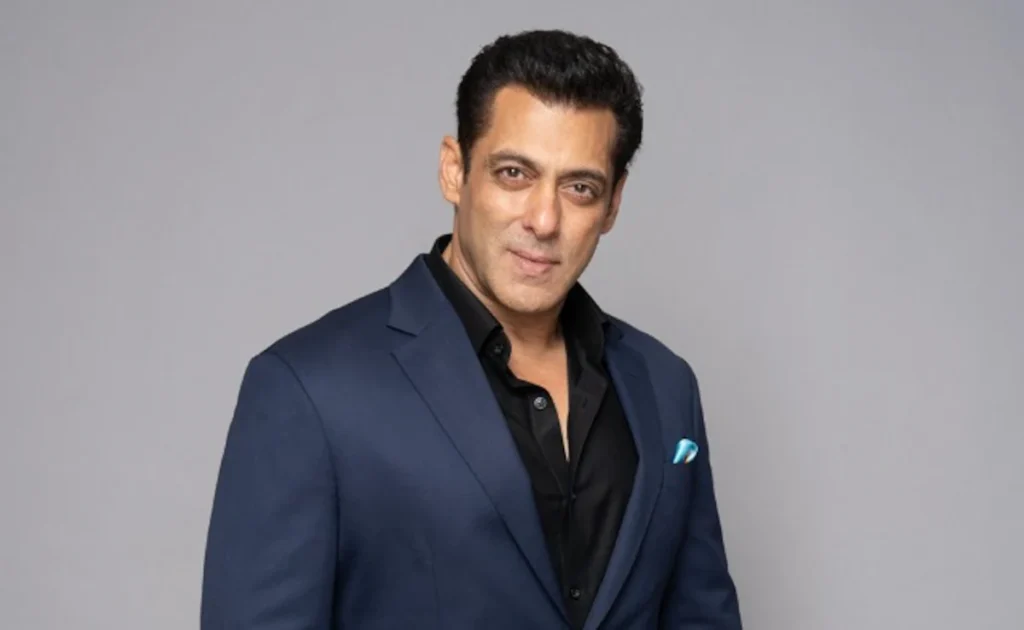
Bollywood actor Salman Khan at the Nita Mukesh Ambani Cultural Centre (NMACC) in Mumbai.
Salman Khan is arguably the most commercially dominant force in the history of Hindi cinema. Over a career spanning more than three decades, he has headlined the top-grossing Hindi film of the year ten separate times — the highest for any actor in the history of Indian cinema. Known universally as “Bhai” or “Bhaijaan,” his name alone drives advance bookings into the hundreds of crores before a single review lands. His films have grossed well over ₹10,000 crore collectively, his charity brand Being Human is a cultural phenomenon, and his television franchise Bigg Boss is currently in its eighteenth season under his hosting. Whether you admire him, critique him, or both — nobody in Indian cinema today divides opinion more sharply or commands a more loyal mass audience.
Early Life and Background
Abdul Rashid Salim Salman Khan was born on December 27, 1965, in Mumbai. His father, Salim Khan, is a celebrated Bollywood screenwriter who co-wrote blockbusters including Sholay (1975) and Deewar (1975) with Javed Akhtar. His mother Sushila Charak — who adopted the name Salma — is a homemaker of Dogra Rajput and Maratha descent. The family’s roots are eclectic: Salim Khan traces his paternal ancestry to Alakozai Pashtuns from Afghanistan who immigrated to Indore in the mid-1800s, while Salman’s maternal grandfather Baldev Singh Charak came from Jammu. Salman grew up in both Muslim and Hindu traditions.
In 1981, Salim Khan married actress Helen, straining his relationship with his children for several years — a domestic rupture that only healed gradually over time. Salman has two brothers, Arbaaz Khan and Sohail Khan, both of whom went on to work in the film industry as actors and producers. His sisters are Alvira Khan Agnihotri (married to director Atul Agnihotri) and adopted sister Arpita Khan Sharma (married to actor Aayush Sharma).
Salman attended the prestigious Scindia School in Gwalior for his primary years, then shifted to St. Stanislaus High School in Bandra, Mumbai, along with Arbaaz and Sohail. He enrolled in St. Xavier’s College, Mumbai but dropped out before completing his degree. He was never an academic achiever by choice — his real education happened in gyms, on film sets, and in the company of his father’s industry connections.
Entry into the Film Industry
Salman Khan’s entry into films carried the advantage of proximity — he grew up around the industry through his father’s stature — but he made his debut on relatively modest terms. His first on-screen appearance was a supporting role in Biwi Ho To Aisi (1988), a comedy with Rekha in the lead. His performance went largely unnoticed.
The following year, Sooraj Barjatya cast him as the lead in Maine Pyar Kiya (1989) opposite Bhagyashree. The film was a phenomenon — an All Time Blockbuster with chart-busting music that made Salman Khan a star virtually overnight and earned him the Filmfare Award for Best Male Debut. The film’s simplicity, clean romance, and Salman’s fresh-faced screen presence were perfectly calibrated for the late 1980s Hindi-film audience. He was suddenly everywhere.
Career Growth and Major Turning Points
His first decade was defined by consistent commercial success rooted in romantic films. Saajan (1991) was a musical blockbuster. Hum Aapke Hain Koun..! (1994) with Madhuri Dixit became the highest-grossing Indian film of its time, earning over ₹2 billion worldwide and winning the National Award for the most popular film of the year. Karan Arjun (1995) with Shah Rukh Khan proved he could also power large-scale commercial action films.
The 2000s brought a prolonged dip. While films like Tere Naam (2003) offered glimpses of genuine dramatic intensity, a long string of commercially average or outright failing films — Kyon Ki (2005), Salaam-E-Ishq (2007), Yuvvraaj (2008) — suggested his best years might be behind him.
Then came Wanted (2009), directed by Prabhu Deva. The film reset his entire career identity — from romantic hero to mass-action entertainer — and opened the floodgates to the most commercially dominant decade any Bollywood actor has ever had. Dabangg (2010), Bodyguard (2011), Ek Tha Tiger (2012), Kick (2014), Bajrangi Bhaijaan (2015), Sultan (2016), and Tiger Zinda Hai (2017) formed a seven-year run of consecutive Eid blockbusters, with each film opening to full houses and entering the ₹200–500 crore club. He became the only actor to collect over ₹5 billion in domestic net revenue in a single calendar year.
Complete Filmography Overview
The following table highlights Salman Khan’s most significant films by era and commercial achievement:
| Year | Film | Box Office (Approx.) | Notes |
|---|---|---|---|
| 1989 | Maine Pyar Kiya | All Time Blockbuster | Filmfare Best Male Debut |
| 1994 | Hum Aapke Hain Koun..! | ₹200 Cr+ (worldwide) | Biggest Bollywood film of its time |
| 1995 | Karan Arjun | ₹120 Cr+ | With Shah Rukh Khan |
| 2003 | Tere Naam | Hit | Career-best dramatic performance |
| 2009 | Wanted | ₹150 Cr+ | Career resurrection |
| 2010 | Dabangg | ₹220 Cr+ | National Award winner |
| 2011 | Bodyguard | ₹300 Cr+ | India’s highest earner that year |
| 2012 | Ek Tha Tiger | ₹330 Cr+ | YRF Spy Universe launch |
| 2014 | Kick | ₹300 Cr+ | Eid blockbuster |
| 2015 | Bajrangi Bhaijaan | ₹600 Cr+ | 2nd highest Bollywood grosser at the time |
| 2016 | Sultan | ₹580 Cr+ | Critically praised; Best Actor nominations |
| 2017 | Tiger Zinda Hai | ₹550 Cr+ | ₹130 crore acting fee milestone |
| 2023 | Tiger 3 | ₹466 Cr+ | YRF Spy Universe; below prequel benchmarks |
| 2025 | Sikandar | Below expectations | Received largely negative reviews |
His upcoming confirmed film is Battle of Galwan (releasing August 14, 2026), directed by Apoorva Lakhia, in which he plays Colonel B. Santosh Babu.
Acting Style and Screen Persona
Salman Khan’s acting is best understood through the lens of star performance rather than classical craft. He does not disappear into characters the way Nawazuddin Siddiqui or Manoj Bajpayee do — instead he brings his larger-than-life personality to every role, and for a specific type of masala entertainer designed around his persona, it works with extraordinary effectiveness.
His signature is physical confidence — the shirtless reveal, the swagger, the one-liner delivered with a smirk — layered over an occasional vulnerability that surfaces most convincingly in films like Bajrangi Bhaijaan and Tere Naam. Critics note a limited emotional range in dramatic scenes, while acknowledging that in action-comedy templates, few actors command the screen with comparable authority. His nickname “Bhai” is both affectionate and sociologically precise — he projects the older, invincible, slightly reckless protector archetype that resonates deeply across India’s smaller cities and towns.
Awards and Achievements
Salman Khan holds two National Film Awards as a producer — Chillar Party (2011) won Best Children’s Film and Dabangg (2010) won Best Popular Film Providing Wholesome Entertainment. As an actor, he has two Filmfare Awards: Best Male Debut for Maine Pyar Kiya (1989) and Best Supporting Actor for Kuch Kuch Hota Hai (1998).
Beyond domestic recognition, Forbes included him on its global list of highest-paid entertainers in 2015 and 2018, and in 2015 he ranked seventh in Forbes‘s worldwide list of highest-paid actors with earnings of $33.5 million — placing him ahead of Johnny Depp, Brad Pitt, and Leonardo DiCaprio that year. In 2016, the Indian Olympic Association appointed him as the Indian Olympic contingent’s goodwill ambassador for the Rio 2016 Summer Olympics.
Brand Endorsements and Business Ventures
Salman Khan’s brand endorsement income alone is estimated at ₹200–300 crore annually. His endorsement portfolio over the years has spanned Thums Up, Mountain Dew, Pepsi, Hero Honda, Relaxo Chappals, Dixcy Scott innerwear, Britannia Tiger Biscuits, Revital by Ranbaxy, Dubai fashion label Splash, Yatra travel portal (in which he became a shareholder), CP Plus, Astral Pipes, and the Bombay Municipal Corporation’s Swachh Bharat initiative.
On the production side, he operates two banners: SKBH Productions (Salman Khan Being Human Productions), launched in 2011, with proceeds from productions donated to the Being Human Foundation; and SKF (Salman Khan Films), launched in 2014, which has produced Bajrangi Bhaijaan, Bharat, Sultan, Dabangg 3, Sikandar, and the upcoming Battle of Galwan. He also owns the gym brand SK-27 Gym and has invested in commercial real estate, including a prominent Linking Road property in Mumbai purchased for ₹120 crore in 2012. The Being Human merchandise brand — T-shirts, apparel, accessories — is valued at approximately ₹235 crore and operates both online and through branded retail stores.
Personal Life
Salman Khan has never married. His most public relationships were with Aishwarya Rai (1999–2001), Katrina Kaif (approximately 2003–2010), and Sangeeta Bijlani. Since 2012, he has been in a relationship with Romanian actress and singer Iulia Vântur, though neither has commented extensively on the status of their relationship.
In August 2011, Salman publicly disclosed that he has been suffering from trigeminal neuralgia — a facial nerve disorder known as the “suicide disease” due to the severity of its pain — for several years, stating that it had affected his voice and caused unbearable discomfort.
His Being Human Foundation, registered as a charitable trust, focuses on two pillars: education and healthcare for the underprivileged. He has personally funded it in its early years and facilitated initiatives including Being Human Art, Being Human Gitanjali Gold Coins, and SKBH Productions, whose film production profits feed into the trust. In 2012, he offered to pay ₹4 million to release approximately 400 prisoners from Uttar Pradesh jails who had served their sentences but could not afford legal fines. He pledged to donate the profits from Bajrangi Bhaijaan (2015) to poor farmers across India.
Net Worth and Income Sources
The table below summarizes Salman Khan’s estimated net worth and primary income streams, drawn from recent public reports (as of late 2025–early 2026). Figures are approximate and subject to variation based on project-specific deals, profit shares, and economic factors.
| Category / Income Stream | Estimated Amount |
|---|---|
| Overall Net Worth | ₹2,900 crore (approx. $350–364 million USD) |
| Film Acting Fees (per film) | ₹80–150 crore (often includes 60–70% profit share) |
| Brand Endorsements | ₹200–300 crore per year (or higher in peak periods) |
| Television (Bigg Boss Hosting) | ₹120–150 crore per season (recent seasons; varies by format and length) |
| Production House Revenues (Salman Khan Films & others) | Variable (significant from hits and distribution) |
| Real Estate Rental Income & Other Investments | ₹1 crore+ per month (from known properties; plus business ventures like Being Human) |
| Approximate Monthly Income (All Sources Combined) | ₹16–20 crore (aggregate across streams) |
These estimates are compiled from credible media reports and industry analyses. Actual figures may differ due to private contracts, taxes, investments, and charitable contributions (notably through the Being Human Foundation). Annual totals fluctuate based on active projects, with film and television forming the core, supplemented by endorsements and business interests.
His estimated net worth as of 2026 stands at approximately ₹2,850 crore (around $350 million). Key assets include Galaxy Apartments in Bandra (flats on the 17th and 18th floors, rent ₹8.25 lakh/month), a beach house at Gorai estimated at ₹100 crore, a 150-acre farmhouse in Panvel estimated at ₹80 crore with three bungalows, a swimming pool and gym, and the Linking Road commercial property. His vehicle collection includes multiple luxury and SUV models.
Social Media Presence
Salman Khan’s Instagram following stands at approximately 66 million — among the top five most-followed Indian celebrities on the platform. His digital engagement style is characteristically understated: he posts infrequently relative to younger Bollywood stars, but fan accounts and fan-generated content ensure a perpetual social media presence far beyond his own posting frequency. His Galaxy Apartments address is a cultural landmark — crowds gather there routinely on his birthday (December 27) in numbers that would embarrass most political rallies. On YouTube, his film trailers and song releases consistently rack up 50–100 million views within days of posting.
Public Impact and Cultural Influence
Salman Khan occupies a category of Indian celebrity that transcends cinema. His “Bhai” persona — accessible, rebellious, charitable, unapologetically mass-market — has built a loyal fanbase particularly in tier 2 and tier 3 cities, among working-class and lower-middle-class audiences, and across communities that mainstream Bollywood has historically struggled to reach. His Eid releases have been a cultural ritual for over a decade, with families across India scheduling theatre visits around his films as reliably as they would a festival function.
The Being Human brand has made philanthropy commercially viable for Indian celebrities in a way few had managed before him. His wax statue at Madame Tussauds London (installed 2008) and at Madame Tussauds New York (installed 2012) reflect his international recognition, though his global footprint is rooted more in the Indian diaspora’s loyalty than in crossover mainstream Hollywood appeal.
Criticism and Challenges
Salman Khan’s career and personal life carry a weight of legal controversy that would have ended most public careers. The 2002 hit-and-run case — in which a person died after his car ran over pavement dwellers — resulted in a 2015 conviction for culpable homicide, which was subsequently set aside by the Bombay High Court. The case remains sub judice at the Supreme Court level after the Maharashtra government challenged the acquittal.
The 1998 blackbuck poaching case, in which he was convicted in 2018 and sentenced to five years by a Jodhpur court, resulted in bail two days later pending appeal. The Bishnoi community — for whom the blackbuck is sacred — has not forgiven this. The Lawrence Bishnoi gang has made repeated and credible threats against Salman’s life, culminating in an April 2024 firing incident outside Galaxy Apartments in Bandra where two gunmen shot at his residence while he was inside. Salman was unharmed; the attackers were arrested in Gujarat.
On the career side, the post-2019 trajectory has been rough. Radhe (2021) was a critical and box office failure. Kisi Ka Bhai Kisi Ki Jaan (2023) flopped. Sikandar (2025) received the worst critical response of his career since Yuvvraaj (2008), with reviewers citing limited emotional range and a script unable to support his star persona.
Upcoming Projects
Battle of Galwan is confirmed for an Independence Day (August 14, 2026) release, directed by Apoorva Lakhia, with Salman playing Colonel B. Santosh Babu — the Indian Army officer killed in the 2020 Galwan Valley clash with Chinese forces. The patriotic subject matter and the Independence Day slot suggest a deliberate attempt to reposition him in a more serious, nationalistic register after the commercial setbacks of 2023–2025.
FAQs
What is Salman Khan’s net worth in 2026?
His estimated net worth is approximately ₹2,850 crore (about $350 million), built across film fees, endorsements, production revenues, television, real estate, and the Being Human brand.
What was Salman Khan’s first movie?
His first on-screen appearance was a supporting role in Biwi Ho To Aisi (1988). His breakthrough lead role was in Maine Pyar Kiya (1989).
Is Salman Khan married?
No. Salman Khan has never married. He has been in a relationship with Romanian actress Iulia Vântur since approximately 2012.
What are his highest-grossing films?
His biggest box office successes include Bajrangi Bhaijaan (₹600+ crore), Sultan (₹580+ crore), Tiger Zinda Hai (₹550+ crore), Bodyguard (₹300+ crore), and Ek Tha Tiger (₹330+ crore).
How did Salman Khan become famous?
He became a star with Maine Pyar Kiya (1989), rose to superstardom with Hum Aapke Hain Koun..! (1994), experienced a career dip in the 2000s, and then comprehensively reinvented himself as a mass-action entertainer with Wanted (2009).
How much does he charge per film?
His per-film acting fee is estimated at ₹50–100 crore, with profit-sharing arrangements on top — he reportedly received ₹130 crore as acting fees alone for Tiger Zinda Hai in 2017, marking the first time any Bollywood actor crossed that threshold.
What is Being Human Foundation?
A registered charitable trust founded by Salman Khan focusing on education and healthcare for underprivileged communities in India, funded through the Being Human merchandise brand, art initiatives, and film production profits.
Has Salman Khan won a National Award?
Yes — as a producer. Dabangg (2010) won the National Award for Best Popular Film Providing Wholesome Entertainment and Chillar Party (2011) won the National Award for Best Children’s Film, both under his production banners.
What TV shows has Salman Khan hosted?
He has hosted 10 Ka Dum (2008–2009) and has been the host of Bigg Boss every season from Season 4 (2010) through Season 18, making him the longest-running host of any major Indian reality format.
What is his connection to the Lawrence Bishnoi gang?
The Bishnoi community regards the blackbuck as sacred, and the gang has targeted Salman over the 1998 blackbuck poaching conviction. In April 2024, gunmen fired at his Galaxy Apartments residence. The gang has since threatened anyone professionally associated with him.
Long-Term Legacy
Salman Khan’s place in Indian cinema history is paradoxical and genuinely complex. He is simultaneously one of the industry’s greatest commercial forces and one of its most controversial figures. His ability to resurrect his career not once but twice — after the 1990s romantic era faded and again after the 2000s decline — speaks to a rare kind of mass-market durability that defies conventional critical assessment.
At 60 years old, entering the latter portion of his career, the question is whether Battle of Galwan (2026) can open a third chapter — one that trades on his physical stardom for something graver and more emotionally resonant. Whatever the outcome, the Salman Khan biography is already complete enough to be studied: a career built not on critical acclaim but on an unbreakable bond with the Indian mass audience, forged over three decades and still intact, controversies and all.
Discover. Learn. Travel Better.
Explore trusted insights and travel smart with expert guides and curated recommendations for your next journey.