


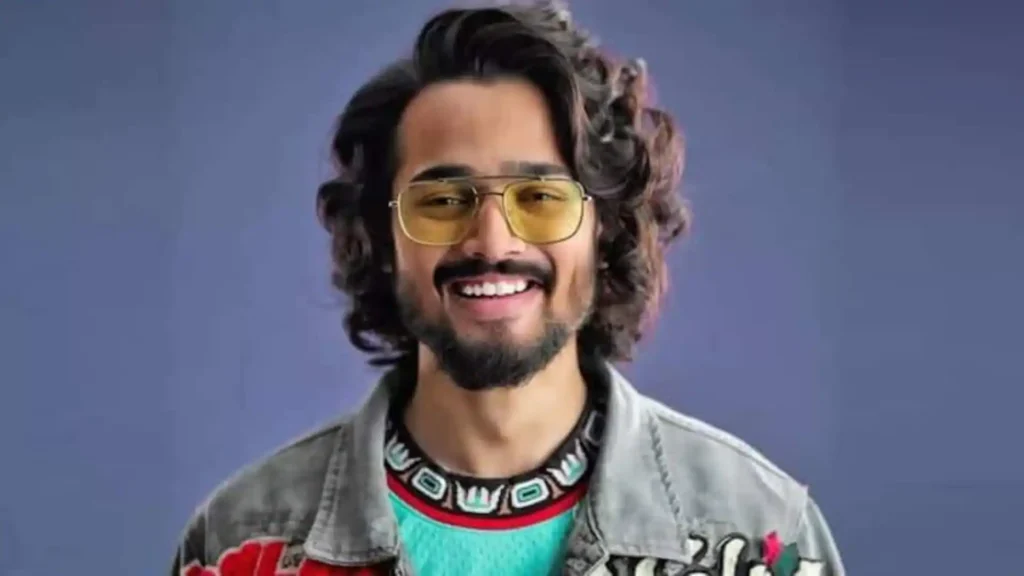
- Bhuvan Bam: Before the World Knew His Name
- The Accident That Started Everything
- The Universe He Built in One Body
- The Music That Ran Alongside the Comedy
- Dhindora: Taking the Universe to the Screen
- Taaza Khabar: The OTT Arrival
- The Grief That Changed Everything
- The Style That Evolved Into a Legacy
- The Wealth That Rs. 5,000 Built
- What the Records Say and What They Cannot
- A Letter to the Bar Singer Who Became an Empire
Bhuvan Bam: Before the World Knew His Name
Every defining creative career has a room in it — a small, specific, unglamorous physical space where something enormous quietly begins. For Bhuvan Avnindra Shankar Bam, that room was his apartment in Delhi’s Safdarjung Enclave, where a twenty-year-old bar musician sat alone with a new phone, checked the front camera by accident, and filmed a short comedy video that would accidentally change the architecture of Indian entertainment.
But before that room, before the channel, before any of it, there was a birth in Vadodara, Gujarat, on January 22, 1994, and then a childhood in New Delhi, the city that shaped him in every way that mattered. He grew up in a middle-class Marathi family — his father Avnindra Bam and mother Padma Bam raising him in the uncomplicated rhythms of a Delhi household where aspirations were real and resources were limited. He studied history at Shaheed Bhagat Singh College, Delhi University — the same institution that Komal Pandey would also attend — and graduated with a B.A. (Hons) that pointed toward precisely nothing in particular.
What it pointed toward, in practice, was music. Bhuvan Bam spent the early years of his adult life as a singer and guitarist performing at bars and restaurants in Delhi, earning approximately Rs. 5,000 a month. That is not a metaphor or a rounding error. It is the actual number — Rs. 5,000 per month — that sits on one end of a financial journey that ends at Rs. 122 crore net worth. The distance between those two figures is not just money. It is a decade of relentless creative output, personal tragedy, professional reinvention, and an audience of tens of millions of people who decided, one by one, that this particular person’s voice was worth returning to.
The Accident That Started Everything
In 2014, Bhuvan Bam filmed what would become the first BB Ki Vines video — a short comedy sketch he made while testing the front camera of his new Nexus phone. The video was not uploaded with ambition. It was shared casually, without expectation, to a small online circle. What happened next was the kind of thing that could not have been planned: the video went viral in Pakistan.
That specific detail — Pakistan, not India — is one of the stranger and more interesting footnotes in the origin story of India’s most successful creator. A comedy sketch made by a Delhi bar musician was discovered first by an audience across the border, in a country that shared enough cultural and linguistic DNA with his content to find it immediately recognisable and funny. The geographical accident of that first virality was the signal that Bhuvan needed. Not that he was famous — he was not, not yet — but that the thing he was making had range. It crossed borders without trying. It connected with strangers who had never met him and never would.
On June 21, 2015, he formally launched the BB Ki Vines YouTube channel. Within a year, it had crossed 1 million subscribers. Within three years, it had crossed 10 million — making Bhuvan Bam the first Indian content creator in history to reach that milestone. That record, set before any other Indian YouTuber had managed it, is not a footnote. It is the foundational fact of his career, the number that established him not merely as popular but as a pioneer.
The Universe He Built in One Body
The creative achievement that sits at the heart of BB Ki Vines is one that most people who watch the videos intuitively appreciate but rarely articulate clearly: Bhuvan Bam plays every character himself. The teenager. The parents. The uncle. The teacher. The neighbour. The friend. The grandmother. Every person in every scene of every video is Bhuvan Bam in a different costume, with a different voice, a different posture, a different relationship to the camera.
The characters he created across those years became a genuine cultural mythology. Titu Mama — the charismatic, perpetually single uncle. Banchod Das — the deadpan, world-weary street philosopher. Sameer Fuddi — the excitable, slightly dim friend. Babloo — the father whose very existence is a comedy of middle-class dignity. Janki — the mother whose patience is infinite but not unconditional. Mr. Hola — the teacher who is several decades behind the students he is supposed to be educating. These are not sketches. They are people — fully realised, internally consistent, beloved by tens of millions of viewers who have watched them for years and feel about them the way you feel about characters in a book you loved as a child.
Building that kind of character depth from a single body is a technical and emotional achievement that the acting profession trains for over years. Bhuvan Bam did it self-taught, in a bedroom, in front of a camera, with no director and no co-star and no safety net. The discipline that required — to hold twelve distinct characters in memory, to shift between them flawlessly, to write dialogue that is simultaneously funny in the moment and consistent with each character’s established personality — is staggering when you stop to think about it carefully.
The Music That Ran Alongside the Comedy
What most casual observers of Bhuvan Bam’s career miss is that he was a musician before he was a YouTuber, and he never stopped being one. The bar performances that paid Rs. 5,000 a month were not a failed chapter he closed — they were the training that gave him the ear, the stage presence, and the sense of timing that makes his comedy land the way it does. Comedy and music share a grammar. Both depend on rhythm, pacing, the placement of a beat, and the emotional intelligence to know when to hold back and when to release.
His original songs — “Safar,” “Rahguzar,” “Teri Meri Kahaani,” and others released across his career — are not creator vanity projects dressed up with studio production. They are genuine musical compositions, written and composed by Bam, that explore loss, longing, love, and the specific emotional texture of being young in India. “Safar,” released in 2016, crossed millions of views not because his comedy audience was obligated to watch it but because it was genuinely moving — the kind of song that people discover at a vulnerable moment and associate permanently with whatever they were feeling when they first heard it.
His music gave his creative identity a dimension that pure comedy cannot provide. It demonstrated that the emotional range he brought to his characters was not performance — it was character. The same person who made you laugh until your stomach hurt could also make you feel something completely different, in an entirely different key, and do it just as precisely.
Dhindora: Taking the Universe to the Screen
In October 2021, Bhuvan Bam did something that had never been done before in the history of Indian digital content: he took the world he had built entirely alone in a bedroom and expanded it into a full-scale web series, writing every character, every scene, and every line of dialogue himself. Dhindora — the word means “drumroll” — premiered on the BB Ki Vines YouTube channel on October 14, 2021, with an eight-episode run that released weekly.
The premise was a classic middle-class comedy of errors: Babloo, the father from the BB Ki Vines universe, wins a lottery, and the windfall chaos that follows becomes the vehicle for an ensemble story that brought every beloved character to life simultaneously in the same scene, for the first time. Bhuvan played ten characters across the series — ten distinct physical performances, ten distinct vocal signatures, ten distinct emotional arcs — all directed by Himank Gaur, who brought cinematic structure to a story that Bhuvan had been building in fragments for six years.
By July 2022, Dhindora had crossed 500 million views on YouTube. It was named the second most popular Indian web series of 2021 by IMDb. A second season is currently in production for Netflix — a platform migration that signals the scale at which Dhindora’s story is expected to continue. The jump from YouTube to Netflix is not merely a distribution change. It is a statement that the BB Ki Vines universe, which began with one person and one camera, is now considered commercially significant enough to sit alongside the most premium original content in the world.
Taaza Khabar: The OTT Arrival
If Dhindora proved that Bhuvan Bam could build a world, Taaza Khabar proved that he could inhabit someone else’s. Released on Disney+ Hotstar on January 6, 2023, Taaza Khabar was a departure in every meaningful sense — it was not a BB Ki Vines extension, not a character he had invented, not a story built from his own mythology. It was a full-scale OTT production written by Abbas Dalal and Hussain Dalal, directed by Himank Gaur, co-starring Shriya Pilgaonkar, J.D. Chakravarthy, and Mahesh Manjrekar.
The series tells the story of a sanitation worker who stumbles upon magical powers, a premise that allowed Bhuvan to demonstrate dramatic range that his comedy persona had never fully required. The Telegraph India described his performance as evidence that he is ready for the Bollywood big league — a significant statement from a publication that does not make it lightly. A second season followed on September 27, 2024, and the series has been dubbed into Bengali, Kannada, Malayalam, Marathi, Tamil, and Telugu — a pan-India distribution reach that few Hindi OTT series achieve.
His Bollywood film debut, Kuku Ki Kundli, arrived in 2026 — completing the full transition from bedroom comedian to mainstream film actor that most people in the industry said was impossible for a YouTube creator. He proved them wrong with the same quiet stubbornness he has always brought to every stage of his career.
The Grief That Changed Everything
No honest biography of Bhuvan Bam can skip what happened in May and June of 2021, because it is the most significant personal event of his life and it happened in the middle of his greatest professional expansion. Within thirty days of each other, he lost both his parents to COVID-19.
His father Avnindra Bam died on May 11, 2021. His mother Padma Bam died on June 10, 2021. Bhuvan shared the news on Instagram with words that were not polished or carefully composed — they were raw, devastated, and completely honest: “Lost both my lifelines to covid. Without Aai and Baba, nothing will be the same. Everything fell apart in a month. My home, dreams, everything”.
India’s creative community responded with an outpouring that was itself a measure of how deeply he had embedded himself in the national consciousness. Rajkumar Rao, one of Bollywood’s most respected actors, wrote to him publicly, drawing on his own experience of parental loss: “Being someone who has lost both his parents, I can tell you they will never leave you, their blessing will always be with you”.
What Bhuvan did in the months that followed that grief is the thing that makes his story not just impressive but genuinely moving. He returned to creating. Not immediately, not without pain, and not with the same unguarded lightness that had characterised his earliest work. But he returned, and the maturity that appears in his content from Dhindora onward — the emotional depth, the willingness to sit with something complicated rather than resolve it quickly into a punchline — carries the weight of that loss. He did not turn the grief into content. He let it make him deeper, and the work that followed reflected that depth without ever explaining it.
The Style That Evolved Into a Legacy
2014–2015: The Accidental Beginning. A front camera, a new phone, a video that went viral in Pakistan before India had discovered him. The comedy was raw, the production was minimal, the persona was still forming.
2015–2017: The Character Architecture. The systematic construction of the BB Ki Vines universe — character by character, video by video, each piece adding to a mythology that was becoming one of the most beloved creative worlds in Indian digital culture. The first creator to cross 10 million Indian YouTube subscribers.
2017–2020: The Musical Parallel. Original songs released alongside comedy videos demonstrated a creative range that no other Indian creator had established. “Safar,” “Rahguzar,” “Teri Meri Kahaani” — a musical catalogue that stood independently of his comedy identity.
2021: The Year of Everything. Dhindora launched in October and crossed 500 million views. His parents died in May and June. No single year in his career contains more creation and more loss in closer proximity.
2022–2024: The OTT Crossover. Taaza Khabar on Disney+ Hotstar in 2023, Season 2 in 2024. Critical recognition, pan-India dubbing, mainstream acting credibility formally established. The YouTube creator had become a streaming star.
2025–2026: The Bollywood Chapter. Kuku Ki Kundli marks his film debut. Dhindora Season 2 heading to Netflix. The full architecture of a mainstream entertainment career, built from a bedroom over a decade, now standing as one of India’s most complete creative institutions.
The Wealth That Rs. 5,000 Built
The financial story of Bhuvan Bam is, in the entire Indian creator economy, the single cleanest illustration of what a decade of compounding creative value looks like in rupee terms. He earned Rs. 5,000 a month as a bar musician in 2014. He has an estimated net worth of Rs. 122 crore as of 2025–2026 — making him the second richest YouTuber in India behind Technical Guruji.
His income operates across several distinct streams, each substantial on its own. YouTube AdSense from BB Ki Vines alone generates an estimated Rs. 12 to 15 crore annually in ad revenue. Brand endorsements — his single largest income stream — pull in an estimated Rs. 25 to 30 crore per year, from collaborations with Gillette, Pepsi, boAt, Cadbury, and a rotating portfolio of premium brands that pay premium rates for access to his audience. His merchandise line through Youthiapa — a brand that grew out of his channel and has its own standalone commercial identity — generates retail income that compounds independently of any platform performance.
His BBKV Productions, the production house he established to create Dhindora and his subsequent projects, represents an entrepreneurial asset that extends his income beyond personal creator fees. A production company means he participates in the commercial upside of content he creates, directs, and writes — not merely as a talent fee recipient but as an owner. The Dhindora Netflix deal and the Taaza Khabar Disney+ Hotstar partnership both run through structures that make his ownership stake financially meaningful.
His total income is estimated between Rs. 3 to 5 crore per month across all sources — a monthly income figure that would be remarkable for a senior corporate executive and is extraordinary for a creator who built everything from scratch, in a room, with no institutional backing.
What the Records Say and What They Cannot
First Indian YouTuber to cross 10 million subscribers. Forbes 30 Under 30. Filmfare Award for Best Short Film for Plus Minus. WebTV Asia Award for Most Popular Channel. Hindustan Times Game Changer Award. Rs. 122 crore net worth. Second richest YouTuber in India. 25 million YouTube subscribers. 500 million Dhindora views. Two seasons of Taaza Khabar on Disney+ Hotstar. A Bollywood film debut. A Netflix deal.
The records are clean and they are real and they are impressive. But they cannot record the specific texture of what Bhuvan Bam actually built — the weight that Titu Mama carries in the memory of every Indian millennial who grew up watching BB Ki Vines, the specific emotional flavour of “Safar” at two in the morning, the experience of watching Dhindora and recognising your own family in a story that was made entirely by one person in a room.
Those things are not in the data. They are in the thirty million people who chose to come back, video after video, year after year, loss after loss, because something about what he was making told them the truth about their lives in a way that nothing else quite did.
A Letter to the Bar Singer Who Became an Empire
This is not analysis. This is acknowledgement.
To Bhuvan Avnindra Shankar Bam — the bar musician earning Rs. 5,000 a month who checked a camera by accident and accidentally changed what Indian entertainment thinks is possible: you built something that the industry did not have a category for when you started. There was no “YouTube creator to Bollywood actor” pipeline in 2015. There was no precedent for a solo creator playing ten characters in a web series that crosses 500 million views. There was no template for going from a rental flat in Safdarjung Enclave to a Rs. 122 crore net worth without a film family, a production company, or anyone who told you it was achievable.
You lost your parents in consecutive months in 2021, in the middle of your greatest creative expansion, and you came back. Not because it was easy — nothing about it was easy. But because the thing you built was bigger than any single grief, and the audience you had built trusted you enough to wait.
The Rs. 122 crore is real. The Netflix deal is real. The Bollywood debut is real. The Filmfare Award is real. But the realest thing you built is Titu Mama, Banchod Das, Janki, Babloo — a family that millions of Indians grew up with, felt understood by, and will remember long after every platform, every algorithm, and every quarterly earnings report has become irrelevant. You gave India a mirror that made it laugh, cry, and feel seen all at once. That is not content. That is art. And it started with Rs. 5,000 a month and a phone camera you checked by accident.

