


- Introduction
- Who Is Beyoncé? (Quick Profile Box)
- Early Life and Family Background
- The Zero to Hero Story
- Career Beginnings — The First Step
- Breakthrough Moment — The Game Changer
- Discography — The Complete Era-by-Era Map
- Biggest Hits and Blockbusters
- Awards and Achievements
- Net Worth 2026 — How Rich Is Beyoncé?
- Personal Life — Love, Family, and Relationships
- Controversies and Challenges
- Upcoming Projects 2025–2026
- Why Beyoncé Is an Inspiration
- FAQ — Beyoncé Quick Answers
- How old is Beyoncé in 2026?
- Where is Beyoncé from?
- What is Beyoncé's religion?
- How tall is Beyoncé?
- What is Beyoncé's net worth in 2026?
- How many Grammys has Beyoncé won?
- What is Destiny's Child and how did Beyoncé start there?
- What was "Beychella"?
- What is "Cowboy Carter" and why was it significant?
- Who is Beyoncé married to and how many children does she have?
- What is Act III and when is it coming?
- What businesses does Beyoncé own?
Introduction
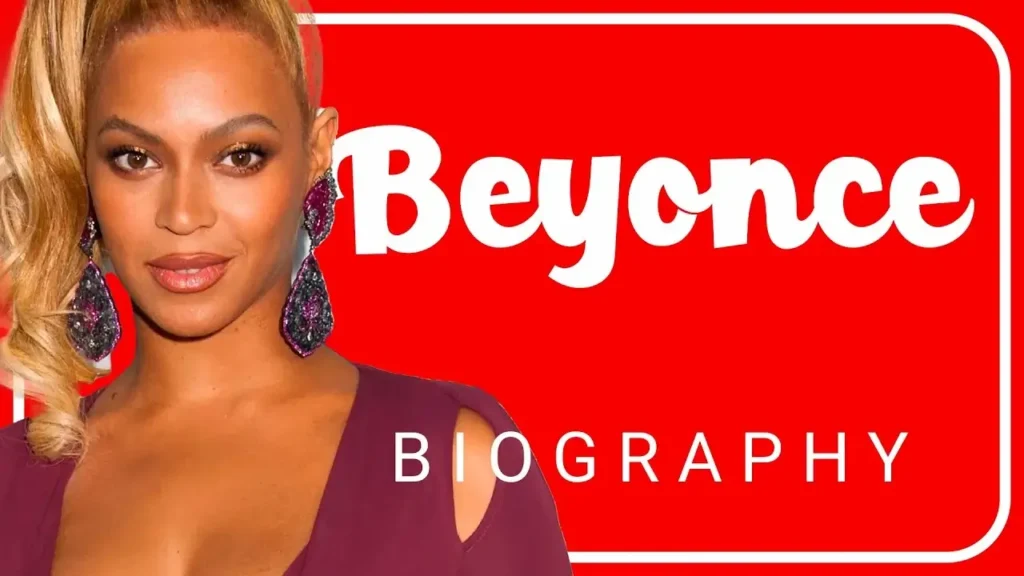
There are artists who make great music, and then there is Beyoncé — a category so singular that the industry had to keep inventing new language to describe what she was doing. She did not just sing; she choreographed, directed, produced, and controlled every frame and every beat until live performance became an art installation, a political statement, and a religious experience simultaneously. And when the music world tried to ignore her country ambitions or dismiss her experimental edges, she simply kept releasing something so undeniable that the conversation had to follow her, not the other way around.
By 2026, Beyoncé Giselle Knowles-Carter holds the record as the most-awarded artist in Grammy history with 35 wins, recently confirmed billionaire status by Forbes, and one of the most anticipated albums of the decade — the still-untitled Act III — somewhere on the horizon. She built this from a group rehearsal in a Houston backyard, a television talent show loss, and a father who ran boot camp drills because he could see what the rest of the world had not yet caught up to. This guide covers the complete story — early life, Destiny’s Child chaos, solo dominance, business empire, controversies, her historic billing as a billionaire, and what comes next. For fans in India, the USA, the UK and Germany, this is the full arc of the most decorated recording artist alive.
Who Is Beyoncé? (Quick Profile Box)
Beyoncé Giselle Knowles-Carter was born on September 4, 1981, in Houston, Texas, and today she is widely acknowledged as the greatest live performer of her generation, the most-awarded artist in Grammy history, and a billionaire businesswoman whose catalog, company and cultural influence stretch across more than thirty years of professional music. She is American by nationality, of African-American and Louisiana Creole descent, and her first name is a tribute to her mother’s maiden name, Beyincé. Married to rapper and entrepreneur Jay-Z since 2008, the couple’s combined net worth is estimated at around 3.5 to 3.8 billion dollars in 2026. Beyoncé’s individual net worth crossed the billion-dollar threshold for the first time in December 2025, placing her on Forbes’ 2026 Celebrity Billionaires list. Social media: @beyonce on Instagram, with no traditional X presence — she controls access to her image with unusual intentionality. Primary company: Parkwood Entertainment.
Early Life and Family Background
Beyoncé Giselle Knowles was born into a working-class household in Houston’s Third Ward, the eldest child of Tina Knowles (née Beyincé), a hairdresser and salon owner, and Mathew Knowles, then a Xerox sales manager. Her first job, as she would later recall, was sweeping hair off the floor at her mother’s salon, occasionally stopping to sing for customers — an image that anchors the mythology of who she is before she became what the world knows. She attended St. Mary’s Catholic Montessori School and later began dance classes there, where her vocal talent was first formally noticed when a dance instructor started humming a tune and Beyoncé spontaneously completed the melody.
Her younger sister Solange, born in 1986 and later a critically acclaimed R&B artist in her own right, grew up alongside her, and the two have maintained a close but separately developed professional lives. Beyoncé was raised attending both St. John’s United Methodist Church and St. Mary of the Purification Catholic Church, immersed in Houston’s gospel and spiritual music culture that would show up later in the emotional weight of her albums. In her own words from “Formation”: “My daddy Alabama, Mama Louisiana” — a lyric that encapsulates the Deep South roots she has consistently honoured through her music, especially “Lemonade” and “Cowboy Carter.”
At age seven, after displaying an instinct for performance, Beyoncé was entered into competitions and local talent shows. Her voice and presence led her father Mathew — whose Xerox sales career had little to do with entertainment — to gradually shift his professional focus toward managing her talent, eventually leaving his corporate job entirely to dedicate himself to her group. That decision would shape everything that followed, for better and for worse.
The Zero to Hero Story
Beyoncé’s “zero” is a nationally televised loss. In 1992, a six-girl Houston group called Girl’s Tyme — Beyoncé, Kelly Rowland, and four others — was flown to California after catching the attention of music producer Arne Frager, and they appeared on the television talent competition “Star Search.” They lost. They went home to Houston without a contract, without industry validation, and with a loss broadcast across American living rooms.
What happened next is the actual story. Mathew Knowles did not accept the outcome. He ran the group through intensive boot camp training in the Knowleses’ backyard, with Tina designing their costumes and the girls rehearsing routines between school days and summers. They performed as opening acts for established R&B acts, rebuilt their sound, cycled through lineup changes, and changed their name multiple times — from Girl’s Tyme to Somethin’ Fresh to Cliché to The Dolls to Destiny — before finally settling on Destiny’s Child after signing with Columbia Records in 1997. The signed deal came after being dropped by Elektra before a single album was released — another “no” on a long list of them.
The “hero” arc in Beyoncé’s story is not a single moment. It is a relentless accumulation: from the backyard rehearsals to Star Search loss to Destiny’s Child records to solo breakout to visual-album pioneer to Grammy record holder to billionaire. And at every stage, the industry had reasons to contain her — she was too young, too Black for country radio, too experimental for commercial pop — and at every stage she simply made something too undeniable to be ignored.
Career Beginnings — The First Step
Destiny’s Child’s first real commercial step was their self-titled debut album in 1998, which produced modest but encouraging results before their sophomore project, “The Writing’s on the Wall” (1999), arrived and changed everything. That album sold over eight million copies globally and spawned megahits including “Bills, Bills, Bills,” “Bug a Boo,” and “Say My Name” — establishing Destiny’s Child as the most commercially powerful girl group in the world at that moment, bigger than rival groups and a legitimate cultural force in R&B and pop.
Beyoncé’s early solo steps happened in parallel and increments: a feature on Amil’s “I Got That” in 2000, a role in the teen comedy “Carmen: A Hip Hopera” in 2001, and her breakthrough acting debut in Austin Powers: Goldmember” in 2002, where she also contributed to the soundtrack. Each was a calculated probe into what life beyond Destiny’s Child could look like, while she and her father considered the timing for a full transition.
Breakthrough Moment — The Game Changer
Beyoncé’s true individual breakout arrived on a single beat in the summer of 2003. “Crazy in Love,” featuring Jay-Z, opened her debut solo album “Dangerously in Love” and became one of the most instantly recognisable songs in modern pop history — the horn sample, the vocal run, the chemistry, the video in that yellow skirt. The song reached number one in both the United States and the United Kingdom simultaneously, making her the first female artist to top both the singles and albums charts in both countries with a debut. “Dangerously in Love” won five Grammys and announced clearly that this was not a graceful side project while Destiny’s Child was on hiatus. This was a separate career of its own.
The follow-up single “Crazy in Love” was not even the ceiling. “B’Day” (2006), “I Am… Sasha Fierce” (2008), “Beyoncé” (2013) and especially “Lemonade” (2016) kept expanding the artistic vocabulary, until “Lemonade” — a visual album about infidelity, Black womanhood, grief, and generational trauma — was recognised not just as a great record but as one of the most important American cultural documents of its decade.
Discography — The Complete Era-by-Era Map
Beyoncé’s solo discography is one of the most intentionally constructed bodies of work in modern music, each album representing a distinct creative statement rather than a commercial reflex.
“Dangerously in Love” (2003) is the arrival — joyful, romantic, undeniably star-making. “B’Day” (2006) is the defiant follow-up, rushed out to accompany her acting role in “Dreamgirls” and underrated in comparison to what surrounded it. “I Am… Sasha Fierce” (2008) is the commercial peak of her pop-R&B era, with the dual-disc format separating the ballads from the bangers and producing “Single Ladies (Put a Ring on It)” and “Halo.”
“4” (2011) strips back the bombast for something more personal and musically adventurous. “Beyoncé” (2013), released without a single announcement or marketing campaign at midnight on a Friday, rewrote how album rollouts worked across the entire industry, introducing the concept of the “visual album” and generating over a million downloads in twelve hours. “Lemonade” (2016) is the artistic apex of her first decade as a solo artist — an album that was also a film, a political statement, and a deeply intimate reckoning with marriage, ancestry, and Black American identity.
“Renaissance” (2022) turns to club music, house, and dance as a celebration of Black and LGBTQ+ creative traditions, earning four Grammys and becoming the fastest-selling album of her career at that point. “Cowboy Carter” (2024) is the act that shocked even the most committed Beyoncé observers — a country album that placed her first Black woman atop the Billboard Country Albums chart, earned Album of the Year at the 2025 Grammys, and was simultaneously snubbed by the CMA Awards. “Act III,” the anticipated rock-inspired conclusion to her trilogy, is expected in 2026, based on her two-year release pattern and a hint dropped at her final Cowboy Carter Tour show.
Biggest Hits and Blockbusters
Beyoncé’s catalog of hits is too deep to rank comfortably, but certain songs have become permanent cultural reference points. “Crazy in Love” (2003), “Irreplaceable” (2006), “Single Ladies (Put a Ring on It)” (2008), “Halo” (2008), “Drunk in Love” (2013), “Formation” (2016), “Break My Soul” (2022), and “Texas Hold ‘Em” (2024) are the milestones most likely to appear in any definitive list.
On the live side, her 2018 Coachella performance — “Beychella” — is widely considered the greatest festival headline performance in the event’s history, featuring a live marching band, Destiny’s Child reunion, and an encyclopaedic sweep through her catalog that ran long over its scheduled slot. Her tours are economic events: the Renaissance World Tour (2023) grossed between 579 and 600 million dollars across 56 shows, drawing 2.7 million fans and pushing her net worth from approximately 500 million to 800 million dollars in a single touring cycle. The Cowboy Carter Tour (2024–2025) followed with over 400 million dollars in ticket sales from just 32 dates, with merchandise adding another estimated 50 million.
Awards and Achievements
The headline figure is 35 Grammy Awards — the most of any artist in history. She surpassed her own previous record multiple times, breaking the overall Grammy record first during the 2021 ceremony, extending it with “Renaissance” wins in 2023, and adding Album of the Year for “Cowboy Carter” at the February 2025 ceremony — her first win in that category after being nominated four times previously. She entered the 2025 Grammys as the most-nominated artist in the ceremony’s history with 99 career nominations, officially surpassing Jay-Z’s previous record.
Beyond Grammys, her achievement list includes: the first Black woman to headline Coachella (2018); the first Black woman to top the Billboard Country Albums chart (2024); the first female artist to debut all eight of her solo studio albums at number one on the Billboard 200; more than 200 million records sold globally; and a confirmed billionaire status confirmed by Forbes in December 2025. Her Parkwood Entertainment, founded in 2010, functions as the creative and business hub for all of her projects, giving her a level of artistic and financial control that most artists her age do not have.
Net Worth 2026 — How Rich Is Beyoncé?
Beyoncé became a billionaire for the first time in December 2025, as confirmed by Forbes, with an estimated net worth of approximately 1 billion dollars — a figure that has since been cited broadly as the floor, with some estimating upward of 1.1 billion. What makes her wealth structurally different from most celebrity fortunes is that the overwhelming majority of it comes directly from music and live performance, not fashion businesses or beauty lines.
Her income breakdown tells the story clearly. Her music catalog — owned outright through Parkwood Entertainment — is estimated at 300 million dollars in value on its own, generating publishing royalties, sync licensing, streaming income and neighboring rights income continuously. The Renaissance World Tour generated estimated gross revenue of 579 to 600 million dollars; the Cowboy Carter Tour followed with over 400 million in tickets and 50 million in merchandise; combined, the two touring cycles grossed roughly 1 billion dollars in under three years. Additional income streams include Ivy Park (her activewear line), Cécred (her haircare brand launched in 2024), brand partnerships, the Levi’s campaign that earned approximately 10 million dollars, and a growing real estate portfolio. Her husband Jay-Z is separately estimated at 2.5 to 2.8 billion dollars, making their combined household wealth somewhere between 3.5 and 3.8 billion dollars.
Personal Life — Love, Family, and Relationships
Beyoncé and Jay-Z have been one of the most watched power couples in global entertainment since their relationship became public in the early 2000s. They married on April 4, 2008, in a private ceremony in New York, and have since appeared publicly on terms that they almost entirely define — minimal interviews, controlled media access, and a preference for letting the art carry the biographical weight. Their eldest daughter, Blue Ivy Carter, born in January 2012, became notable as one of the youngest Grammy winners in history after appearing on “Brown Skin Girl” (2020), which won Best Music Video. Twins Rumi and Sir Carter arrived in June 2017 via complicated pregnancy — Beyoncé disclosed later that she had experienced preeclampsia and had been in emergency condition, a revelation that added a layer of vulnerability to the “Lemonade” and “Renaissance” eras.
The most publicly discussed challenge in their marriage was the acknowledgement — explicit in “Lemonade” (2016) — of infidelity, which Jay-Z later addressed on his own album “4:44” (2017). Both albums were commercially and critically celebrated, and the couple presented a sustained public front of a repaired, deepened partnership in the years that followed.
Controversies and Challenges
Beyoncé has navigated controversies with the instincts of someone who has been in the industry since childhood and learned early how quickly narratives can be turned against you.
The Destiny’s Child lineup crisis of 1999–2000 was her first major public controversy: original members LeToya Luckett and LaTavia Roberson were replaced — with the group announcement arriving via a music video featuring new members, before they had been informed — and both subsequently filed lawsuits against Mathew Knowles, citing nepotism and financial misconduct. The cases were settled out of court, but the episode shadowed the group’s “Survivor” era and gave the media a “managed by Daddy” narrative that dogged Beyoncé even into her early solo years.
The 2013 Presidential Inauguration lip-sync controversy — in which she was said to have mimed to a backing track of the national anthem — blew through news cycles for days before she held an impromptu press conference, sang a cappella to journalists, and effectively ended the story. In 2014, CCTV footage of sister Solange physically attacking Jay-Z in an elevator at the Met Gala after-party leaked, prompting global speculation about their family dynamics and the state of the Beyoncé-Jay-Z marriage — a story that was eventually, silently, addressed only through music. Plagiarism accusations from multiple songwriters over the years — including claims involving “Drunk in Love,” “If I Were a Boy” and others — have resulted in legal proceedings that have generally been resolved without significant financial penalty but have contributed to a recurring narrative about compositional ownership.
“Cowboy Carter’s” complete exclusion from the CMA Awards nominations in 2024, despite topping the Country Albums chart, sparked one of the most visible conversations about racial gatekeeping in country music’s modern history. Beyoncé did not publicly respond. The album won Album of the Year at the Grammys instead.
Upcoming Projects 2025–2026
The most eagerly anticipated project in 2026 is Act III — the untitled third album of Beyoncé’s announced trilogy, following “Renaissance” (2022) and “Cowboy Carter” (2024). Fan and industry speculation, based on her two-year release pattern and a teaser dropped in an Instagram post after her final Cowboy Carter Tour show, points to a May or early summer 2026 release, with the album expected to explore rock influences as the final act of her genre-spanning trilogy.
She is also confirmed as a co-chair of the 2026 Met Gala, which typically generates a significant visual and cultural moment. A new world tour is widely expected to follow Act III in 2027 if the trilogy pattern holds, though no tour has been officially announced as of April 2026. Her Cécred haircare line and Ivy Park activewear brand continue to develop as business ventures alongside whatever musical chapter comes next.
Why Beyoncé Is an Inspiration
Beyoncé’s story resonates across generations and geographies because it is built on something most celebrity narratives quietly skip: the depth of the craft behind the image. She started not with an inherited celebrity name or a viral moment, but with a talent show loss at age ten, a father who refused to let it be the ending, and a girl who went home and kept rehearsing. Every reinvention — from pop to visual album to country to rock — has come from artistic conviction rather than market research, and she has consistently used that platform to centre stories, cultures and communities that mainstream pop had historically overlooked.
For artists and entrepreneurs alike, she is a case study in vertical integration: she owns her label, her catalog, her tours, and her business ventures, which means the money and the decisions flow through her hands rather than through intermediaries. And for anyone who has ever been told a room was not built for them, her consistent willingness to walk into those rooms — country music, the Super Bowl halftime stage, Coachella — and leave as the most-discussed act of the evening is as close to a practical life lesson as pop culture delivers.
FAQ — Beyoncé Quick Answers
How old is Beyoncé in 2026?
Beyoncé was born on September 4, 1981, making her 44 years old in 2026.
Where is Beyoncé from?
She was born and raised in Houston, Texas, in a neighborhood she has referenced repeatedly in her music, particularly in “Formation” and “Cowboy Carter.”
What is Beyoncé’s religion?
She was raised across multiple Christian traditions, attending both Methodist and Catholic churches in Houston, and her music frequently draws on gospel and spiritual themes.
How tall is Beyoncé?
Most biographical sources list her height at approximately 5 ft 7 in (about 1.69 m).
What is Beyoncé’s net worth in 2026?
Forbes confirmed her billionaire status in December 2025, placing her net worth at approximately 1 billion dollars, driven by her music catalog, tours, and business ventures.
How many Grammys has Beyoncé won?
She has won 35 Grammy Awards as of 2026, making her the most-awarded artist in Grammy history, with her latest win being Album of the Year for “Cowboy Carter” at the 2025 ceremony.
What is Destiny’s Child and how did Beyoncé start there?
Destiny’s Child was an R&B girl group formed in Houston in 1990 as Girl’s Tyme. After years of lineup changes and rejections, the group signed with Columbia Records and became one of the best-selling girl groups of all time, with Beyoncé as lead vocalist.
What was “Beychella”?
“Beychella” refers to Beyoncé’s 2018 Coachella headline performance, the first by a Black woman in the festival’s history. The show featured a live marching band, a Destiny’s Child reunion, and is widely considered the greatest performance in Coachella’s history.
What is “Cowboy Carter” and why was it significant?
“Cowboy Carter” (2024) is Beyoncé’s country-inspired studio album and Act II of her planned trilogy. It made her the first Black woman to top the Billboard Country Albums chart and won Album of the Year at the 2025 Grammys, despite being completely snubbed by the CMA Awards.
Who is Beyoncé married to and how many children does she have?
She married Jay-Z in April 2008. They have three children: Blue Ivy Carter (born 2012) and twins Rumi and Sir Carter (born 2017).
What is Act III and when is it coming?
Act III is the untitled third and final album of Beyoncé’s announced trilogy, following “Renaissance” and “Cowboy Carter.” Based on her two-year release pattern, it is widely anticipated for mid-2026, and is rumoured to explore rock music.
What businesses does Beyoncé own?
Her major ventures include Parkwood Entertainment (her record label and management company), Ivy Park (activewear, in partnership with Adidas), Cécred (haircare line launched 2024), and BeyGood, her charitable foundation.

