
Table of Contents
Sanjeev Kapoor Net Worth
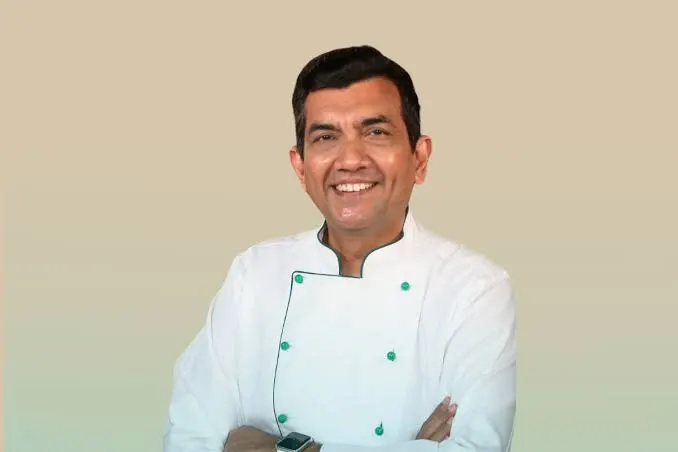
Sanjeev Kapoor is not just a chef — he is a category. When you think of Indian cooking on television, the image that comes to mind is almost certainly his. Over three decades, he has transformed from a hotel kitchen executive into India’s most recognisable culinary personality, with a business empire valued at approximately ₹1000 crore (around $120 million) as of 2025. His journey is the story of how talent, timing, and understanding Indian middle-class aspiration can build a fortune that dwarfs many Bollywood celebrities.
Net Worth and Income Sources: Breaking Down the ₹1000 Crore
Sanjeev Kapoor’s estimated net worth of ₹1000 crore is not built on a single revenue stream — it is the accumulation of multiple parallel businesses that span cookware, television, restaurants, publishing, and digital platforms.
Wonderchef — his premium cookware and kitchen appliances brand — is the largest component of his wealth. In 2017, Wonderchef alone was valued at over ₹1,000 crore and generating annual revenues exceeding ₹225 crore. By 2025, the brand has grown exponentially, manufacturing everything from non-stick pans to air fryers, and is sold through thousands of retail outlets and its own exclusive stores. Discovery Communication acquired a significant stake in his FoodFood television channel, which he launched in 2011, and the channel pulled out of losses to become profitable — adding another major revenue pillar.
His restaurant chain, The Yellow Chilli, operates over 80 outlets across India and internationally. He earns substantial income from brand endorsements, his YouTube channels with millions of subscribers, his Amazon Alexa skill “Sanjeev Kapoor Recipes,” mobile applications, and his website which hosts over 10,000 recipes. The combined annual revenue from his business ventures is estimated to exceed ₹500 crore.
Early Life: The Accidental Chef from Haryana
Sanjeev Kapoor was born on April 10, 1964, in Ambala, Haryana. His entry into the culinary world was entirely unplanned — he enrolled at the Institute of Hotel Management, Catering and Nutrition in Pusa, New Delhi, through what he has described as an “accidental” career choice rather than a childhood passion for cooking.
He graduated in 1984 and joined ITDC (India Tourism Development Corporation) as a management trainee — but while his peers angled for front-desk positions, Sanjeev deliberately chose kitchen duty. This decision would define his trajectory. His discipline and excellence saw him promoted rapidly: within two years he became Executive Chef at Varanasi, and then moved to ITDC Hotel Samrat in Delhi. By age 27, he was Executive Chef of Centaur Hotel in Mumbai — a 400-room property — making him one of the youngest executive chefs in the country at that time.
Khana Khazana: The Show That Changed Indian Television
In 1993, when Sanjeev was at the peak of his hotel career, television came calling. Khana Khazana debuted on Zee TV, and nothing in Indian food media would ever be the same. The show ran for over 18 years, became the longest-running cookery show in Asia, and by 2010 had over 500 million viewers across 120 countries.
The programme did more than teach recipes — it made cooking aspirational for Indian middle-class households. His signature phrase “Namak Swaad Anusaar” (salt to taste) became a cultural reference point, and his accessible, charismatic presentation style turned him into a household name even in villages that had never seen a five-star hotel kitchen.
Sanjeev has revealed that his entry into television was not planned — the show’s original intended host could not participate at the last minute, and he stepped in. That unplanned substitution spawned an empire. The show’s success gave him the courage to quit his executive chef position entirely — a move he made with the support of his wife and brother, even though at the time he admitted, “I became popular, but I had no money for my family.”
The Business Empire: From Pans to Prime Time
Wonderchef (founded 2009) is the cornerstone of his business wealth. Co-founded with Ravi Saxena, former CEO of Sodexo India, the brand started with a ₹30 crore investment from Zurich-based Capvent in 2015 and later raised ₹40 crore from French group Labruyere Eberle for manufacturing expansion. Wonderchef products are now ubiquitous in Indian kitchens, and the brand’s early ₹50 crore revenue target (achieved after 1,000 days) has grown manyfold.
His FoodFood television channel, launched in 2011 through a partnership with Discovery Communication, has produced multiple successful shows including FoodFood Maha Challenge, which launched the career of chefs like Saransh Goila. The channel operates in both Hindi and English, and its content library extends to YouTube where Sanjeev’s channels collectively command millions of subscribers.
His restaurant ventures began in 1998 with a Dubai outlet and expanded into The Yellow Chilli chain, which now operates over 80 locations. He has also authored over 150 cookbooks — making him one of the most prolific Indian cookbook writers — and maintains an online recipe portal with more than 10,000 documented recipes.
Personal Life: The Train Journey That Started It All
Sanjeev Kapoor met his wife Alyona Kapoor on a train journey between Delhi and Banaras (Varanasi) — a meeting that sounds almost cinematic in its simplicity. After dating for five years, they married in October 1992 and celebrated 33 years of marriage in 2025.
The couple has two daughters: Rachita Kapoor (born August 8, 1994) and Kriti Kapoor. Sanjeev describes Rachita’s birth as transformative — “it was a very special day for him… that day had changed his life forever with sunshine and laughter.” Alyona remains actively involved in their food ventures, frequently appearing in projects like the “Family Food Tales” series.
The Padma Shri and Recognition
In 2017, the Government of India honoured Sanjeev Kapoor with the Padma Shri — one of the country’s highest civilian awards — for his contributions to culinary arts and the food industry. In a notable act of defiance against ceremony protocol, Sanjeev chose to wear his chef’s coat to the Padma Shri ceremony — a statement about the dignity and respect he believes the culinary profession deserves.
He has also received multiple ITA (Indian Television Academy) Awards and remains one of the most awarded figures in Indian food media. His influence extends beyond awards — he has mentored an entire generation of Indian chefs including Ranveer Brar, Vikas Khanna, and Saransh Goila, who credit him with legitimising cooking as a serious career path in India.
Philosophy and Legacy
Sanjeev Kapoor’s lasting contribution is not just financial. He made cooking aspirational for Indian men at a time when kitchen work was seen as exclusively women’s domain. In interviews, he speaks passionately about gender neutrality in cooking — influenced by growing up in a home where both his parents cooked. He has publicly criticised the societal norm that relegates cooking to women, referencing films like “Mrs.” starring Sanya Malhotra to highlight the gender bias still prevalent in Indian households.
His evolution from “Namak Swaad Anusaar” to “Namak Sehat Anusaar” (from salt to taste, to salt for health) reflects his adaptation to changing health consciousness among Indian consumers.
At 61 years old, with a ₹1000 crore empire, over 150 books, 80+ restaurants, a television channel, and a cookware brand that sits in millions of Indian homes, Sanjeev Kapoor has done what few chefs anywhere in the world have achieved — he has become more famous than the restaurants he cooks for, and built a fortune that will outlast his television career.
Discover. Learn. Travel Better.
Explore trusted insights and travel smart with expert guides and curated recommendations for your next journey.
