
Table of Contents
Heart Bypass Surgery
Why thousands of patients from the USA, UK, and Australia choose India for heart bypass surgery: India has revolutionized global cardiac care by combining internationally trained cardiac surgeons who completed fellowships at Cleveland Clinic, Mayo Clinic, and Harvard Medical School with JCI-accredited cardiac hospitals featuring cutting-edge technology—hybrid operation theaters, advanced heart-lung machines, robotic-assisted surgery systems, and 24/7 cardiac ICU monitoring—delivering heart bypass surgery outcomes with 98-99% success rates matching America’s premier cardiac centers, all while charging $4,500-$8,000 compared to $70,000-$150,000 in USA, £25,000-£50,000 in UK, and AUD $50,000-$100,000 in Australia. These dramatic 85-95% cost reductions don’t reflect inferior cardiac care but rather fundamental healthcare system advantages including lower operational costs (hospital expenses 70-85% less than Western countries), elimination of insurance bureaucracy adding 35-45% administrative overhead to American healthcare, transparent direct-pricing models without surprise billing endemic to US hospitals, high-volume cardiac centers performing 10,000-60,000 procedures annually creating exceptional surgical expertise through repetition, and favorable currency exchange rates amplifying purchasing power for international patients.
How India delivers world-class heart bypass surgery at fraction of Western costs while maintaining superior outcomes: India’s cardiac excellence stems from rigorous medical education producing over 5,000 cardiac surgeons and 15,000 cardiologists with extensive training, combined with premier cardiac hospitals like Fortis Escorts Heart Institute (99.83% success rate, 28,000+ heart surgeries), Apollo Heart Institute (99.6% success rate, 200,000+ cardiac surgeries), and Narayana Health (99%+ success rate, 60,000+ annual cardiac procedures) achieving clinical outcomes exceeding many Western institutions while serving patients from 140+ countries. The cardiac surgery India infrastructure utilizes identical surgical techniques, prosthetic heart valves from Edwards Lifesciences and Medtronic, coronary stents from Boston Scientific and Abbott, and heart-lung bypass machines from Terumo and LivaNova as American cardiac centers, with board-certified cardiac surgeons performing 200-500 CABG procedures annually compared to 50-150 for typical US cardiac surgeons, creating volume-expertise advantages translating to refined surgical technique, faster recovery protocols, and lower complication rates. India’s CABG surgery India price of $4,500-$8,000 includes comprehensive packages covering pre-operative cardiac evaluation (EKG, echocardiogram, angiography, stress tests), complete surgical procedure (3-5 vessel bypass with saphenous vein or arterial grafts), 5-7 day hospital stay with 3-5 days ICU monitoring, all medications (antibiotics, cardiac drugs, pain management), cardiac rehabilitation guidance, follow-up consultations, and complete medical documentation—services costing $70,000-$150,000 in USA where itemized hospital bills frequently shock patients with $50,000+ facility fees, $30,000+ surgeon charges, $15,000+ anesthesia costs, and $25,000+ ICU charges creating financial devastation for uninsured and underinsured Americans facing life-threatening cardiac disease.
Understanding Heart Bypass India Cost: Complete Breakdown
CABG Surgery India Price: Comprehensive Cost Analysis
Coronary Artery Bypass Grafting (CABG) Cost in India:
- Standard triple bypass: $4,500-$6,500 (₹3,75,000-₹5,40,000)
- Quadruple bypass (4 vessels): $5,000-$8,000 (₹4,15,000-₹6,65,000)
- Off-pump CABG (beating heart): $5,500-$8,500 (₹4,60,000-₹7,00,000)
- Minimally invasive CABG: $6,000-$9,000 (₹5,00,000-₹7,50,000)
- Redo CABG (repeat bypass): $7,000-$12,000 (₹5,80,000-₹10,00,000)
United States CABG Cost:
- Triple/Quadruple bypass: $70,000-$150,000 (average $123,000)
- Facility fees alone: $50,000-$80,000
- Surgeon fees: $20,000-$40,000
- Anesthesia charges: $5,000-$15,000
- ICU costs: $15,000-$35,000
- Total with complications: $200,000-$300,000+
United Kingdom CABG Cost:
- NHS waiting time: 6-18 weeks for non-emergency cases
- Private bypass surgery: £25,000-£50,000 ($30,000-$60,000)
- London private hospitals: £35,000-£55,000 premium pricing
Australia CABG Cost:
- Public hospital waiting time: 4-12 weeks category 2 urgency
- Private cardiac surgery: AUD $50,000-$100,000 ($33,000-$66,000)
- Out-of-pocket after insurance: AUD $15,000-$35,000 typical
Savings Analysis:
- USA patients save: $62,000-$142,000 (85-95%) even including travel
- UK patients save: £17,000-£42,000 (68-84%) for private care
- Australian patients save: AUD $42,000-$92,000 (84-92%)
What’s Included in Heart Bypass India Cost
Comprehensive Pre-Operative Services:
- Complete cardiac evaluation by cardiologist and cardiac surgeon
- Electrocardiogram (EKG/ECG) documenting heart rhythm abnormalities
- Echocardiogram assessing valve function, heart chamber sizes, ejection fraction
- Cardiac stress test evaluating exercise tolerance and ischemia
- Coronary angiography confirming blockage locations and severity
- Chest X-rays and pulmonary function tests
- Complete blood work including cardiac enzymes, lipid panels, kidney function
- Anesthesia consultation and surgical risk assessment
- Pre-operative optimization (medication adjustments, cardiac stabilization)
Surgical Procedure Components:
- Cardiac surgeon fees for complete CABG procedure (3-6 hour surgery)
- Anesthesiologist fees and anesthetic medications
- Operation theater charges with cardiac bypass equipment
- Heart-lung bypass machine operation by trained perfusionists
- Harvesting of saphenous vein grafts from leg or radial artery from arm
- Coronary artery bypass grafting to 3-5 vessels as needed
- Surgical supplies, instruments, sutures, and cardiac-specific equipment
- Intraoperative monitoring with advanced cardiac equipment
- Blood products if transfusion required (uncommon in routine cases)
Hospital Stay and ICU Care:
- Cardiac ICU admission immediately post-surgery (3-5 days typical)
- Continuous cardiac monitoring (telemetry, arterial lines, central lines)
- Ventilator support first 4-12 hours post-surgery
- 24/7 cardiac nursing care with 1:1 or 1:2 nurse-patient ratios
- Private hospital room after ICU transfer (2-3 days)
- All meals for patient and one companion
- Hospital amenities (gown, linens, basic supplies)
Post-Operative Medications and Care:
- Cardiac medications (beta-blockers, ACE inhibitors, statins, antiplatelet drugs)
- Pain management medications (opioids transitioning to oral analgesics)
- Antibiotics preventing surgical site infections
- Blood thinners preventing clot formation
- Wound care supplies and dressing changes
- Chest tube management and removal
- Daily wound checks by surgical team
- Cardiac rehabilitation initiation with physical therapy
- Follow-up consultations before discharge
- Discharge summary and complete medical records
- Post-discharge medication supply (2-4 weeks)
Additional Services:
- Airport pickup and drop-off services
- Visa documentation assistance
- International patient coordinator throughout stay
- Language interpretation if needed
- 24/7 emergency contact numbers
- Telemedicine follow-up consultations (3-6 months)
City-Wise Heart Bypass Surgery Cost in India
Delhi NCR (Fortis Escorts, Max, Medanta):
- CABG cost: $5,500-$8,000 (₹4,50,000-₹6,50,000)
- Highest concentration of JCI-accredited cardiac centers
- International airport connectivity (9-hour direct flights from London)
- Medical tourism infrastructure well-established
Bangalore (Narayana Health, Manipal):
- CABG cost: $4,500-$7,000 (₹3,75,000-₹5,80,000)
- Narayana Health: India’s highest cardiac surgery volumes (10,000+ annually)
- Dr. Devi Shetty’s pioneering affordable cardiac care model
- Pleasant year-round climate supporting recovery
Chennai (Apollo Hospitals):
- CABG cost: $5,000-$7,500 (₹4,15,000-₹6,20,000)
- Apollo Heart Institute: 200,000+ cardiac surgeries performed
- 99.6% success rate with extensive international patient experience
- Traditional medical tourism destination (30+ years serving foreigners)
Mumbai (Multiple Premier Centers):
- CABG cost: $6,000-$8,500 (₹5,00,000-₹7,00,000)
- Asian Heart Institute and Fortis Hospital leadership
- Cosmopolitan infrastructure with luxury recovery options
- Direct international flights from USA, UK, Middle East
Hyderabad (CARE Hospitals, Yashoda):
- CABG cost: $4,800-$7,200 (₹4,00,000-₹6,00,000)
- Competitive pricing with quality cardiac programs
- Growing medical tourism infrastructure
- Emerging cardiac care excellence
Cardiac Surgery India: Why 85-95% Cost Savings
Structural Healthcare Advantages Creating Affordability
Dramatically Lower Hospital Operational Costs (70-85% Reduction):
Indian cardiac hospitals operate with substantially reduced overhead across every category. A state-of-the-art 500-bed cardiac hospital in Bangalore occupies land costing ₹50-100 crore (£5-10 million) versus equivalent cardiac center real estate in Boston costing $150-300 million—representing 20-30x land cost differences. Monthly facility operational expenses including utilities, maintenance, security, and administrative overhead range ₹3-5 crore (£300,000-£500,000) for premier Indian cardiac hospitals versus $5-10 million for comparable American facilities—a 10-15x differential.
Staff salary patterns compound these advantages. Experienced cardiac nurses with 5-10 years ICU experience earn ₹40,000-₹70,000 (£400-£700 / $500-$850) monthly in India versus $6,000-$9,000 in USA, £3,500-£5,500 in UK, and AUD $6,500-$9,500 in Australia—representing 7-12x salary differences for equivalent qualifications and expertise. Perfusionists (heart-lung machine operators), cardiac technicians, respiratory therapists, physical therapists, and administrative staff follow similar ratios creating foundational labor cost advantages.
Medical equipment represents identical capital investments globally—a $500,000 heart-lung bypass machine costs the same whether purchased in Delhi or New York. However, Indian hospitals depreciate equipment over dramatically higher patient volumes (Narayana Health performs 10,000 adult cardiac operations annually versus 500-1,500 at typical US cardiac centers) reducing per-patient costs by 5-7x. This volume advantage extends to operating room utilization, ICU bed turnover, and facility efficiency maximizing return on infrastructure investments.
Elimination of Insurance Bureaucracy (35-45% Cost Reduction):
American cardiac hospitals employ armies of billing specialists, insurance coordinators, coding experts, claims processors, and denial management teams handling pre-authorizations, coverage determinations, itemized billing, claims submissions, appeals processing, and payment reconciliation. A typical 500-bed US cardiac hospital employs 150-250 billing and insurance staff with annual payroll of $15-25 million, costs ultimately transferred to patients through inflated pricing. Additional expenses include electronic health record systems optimized for billing complexity, compliance departments navigating insurance regulations, and revenue cycle management software tracking payment flows.
UK’s NHS bureaucracy and private insurance coordination, plus Australia’s Medicare and private health fund administration, create similar though less extreme overhead. Indian cardiac surgery operates on streamlined direct-pricing models: patients receive comprehensive written quotations specifying total costs ($4,500-$8,000 for CABG), pay directly via bank transfer or credit card, and receive complete treatment without claims processing, network restrictions, or surprise billing. This transparency eliminates 35-45% administrative overhead plaguing Western cardiac care economics.
Competitive Market Dynamics Driving Fair Pricing:
India’s cardiac surgery landscape features hundreds of accredited cardiac centers concentrated in Delhi NCR (15+ JCI/NABH cardiac hospitals), Bangalore (12+ premier centers), Chennai (10+ established programs), Mumbai (10+ facilities), and other metros. When 10-15 world-class cardiac hospitals compete within single metropolitan area, market forces favor patients through competitive pricing, quality differentiation, technology investments, and service innovation rather than monopolistic pricing power.
Contrast this with American cardiac surgery markets where 1-3 major hospital systems dominate most cities, enabling pricing power disconnected from costs. Studies document 300-500% profit margins on cardiac surgery procedures—operations costing hospitals $25,000-35,000 (surgeon salaries, supplies, facility costs, overhead) billed to patients at $100,000-150,000. Indian cardiac hospitals operate on healthier 20-35% margins, focusing on volume, international reputation, and outcomes excellence rather than maximum profit extraction per procedure.
High-Volume Surgical Excellence Creating Efficiency:
Narayana Health Bangalore performs over 10,000 adult cardiac operations and 5,500 pediatric cardiac surgeries annually, making it one of world’s highest-volume cardiac programs. Apollo Heart Institute completed 200,000+ cardiac surgeries over 35 years, averaging 5,700+ annually. Fortis Escorts Heart Institute performed 28,000+ heart surgeries establishing exceptional track record. These volumes create multiple advantages: cardiac surgeons perform 200-500 CABG procedures annually (versus 50-150 for typical US surgeons) developing exceptional technical mastery, refined judgment managing complications, and superior outcomes through repetition; standardized protocols and care pathways eliminate variability and optimize resource utilization; bulk purchasing of surgical supplies, prosthetics, and medications at negotiated pricing; justified investments in cutting-edge technology that remains underutilized at low-volume Western centers; and comprehensive cardiac teams (surgeons, cardiologists, anesthesiologists, perfusionists, nurses) working together daily developing seamless coordination improving efficiency and safety.
This volume-expertise-efficiency cycle characterizes India’s premier cardiac centers, differentiating them from Western hospitals where cardiac surgeons maintain general cardiovascular practices performing occasional CABG procedures alongside valve surgery, thoracic surgery, and vascular surgery lacking specialization depth and volume advantages.
Transparent Direct Pricing vs American Surprise Billing:
Indian cardiac hospitals provide comprehensive written cost estimates before admission specifying: CABG surgery total cost $5,500, itemized breakdown (surgeon fee $1,800, hospital charges $2,500, ICU costs $800, medications $400), inclusions clearly listed, potential additional costs if complications arise, and payment terms (typically 50% advance, 50% at discharge). Patients know exact financial obligation before proceeding, enabling informed decisions and accurate budgeting.
American cardiac surgery billing remains intentionally opaque with surprise bills arriving months post-discharge. Patients receive separate invoices from: hospital facility ($50,000-80,000), cardiac surgeon ($20,000-40,000), anesthesiologist ($5,000-15,000), perfusionist ($3,000-8,000), cardiologist consultants ($2,000-5,000 each), radiologists interpreting scans ($1,000-3,000), pathologists ($500-2,000), and durable medical equipment ($2,000-5,000)—creating billing nightmare with total costs often 50-100% higher than pre-surgical estimates. This “surprise billing” epidemic affects 1 in 5 American cardiac surgery patients, causing financial devastation and bankruptcy.
Quality Standards Exceeding Many Western Institutions
Success Rates Matching Cleveland Clinic and Mayo Clinic:
Fortis Escorts Heart Institute achieves 99.83% overall cardiac surgery success rate performing 28,000+ heart surgeries, matching outcomes at America’s top-ranked Cleveland Clinic (99.5% success) and Mayo Clinic (99.3% success). Apollo Heart Institute reports 99.6% success rate across 200,000+ cardiac procedures, surpassing many US cardiac centers averaging 97-98% success rates. Narayana Health maintains 99%+ CABG success rate despite increasing case complexity and accepting higher-risk patients other institutions decline.
These exceptional outcomes reflect: high surgical volumes creating expertise through repetition, rigorous patient selection and pre-operative optimization, multidisciplinary cardiac teams with seamless coordination, advanced technology and monitoring reducing complications, comprehensive post-operative protocols minimizing infections and cardiac events, and continuous quality improvement analyzing outcomes and refining practices.
Mortality rates for CABG surgery under 1% at premier Indian cardiac centers compare favorably to US national average of 1.5-2.5% mortality, with considerable variation across American hospitals (low-volume centers report 3-5% mortality while high-volume university hospitals achieve 0.8-1.2%). India’s top cardiac programs consistently perform at the elite tier of global cardiac surgery.
Identical International Medical Equipment and Technology:
Indian cardiac hospitals utilize the same advanced equipment as Western institutions: heart-lung bypass machines from Terumo (Japan), Sorin/LivaNova (Italy), or Medtronic (USA) performing cardiopulmonary bypass during surgery; intraoperative transesophageal echocardiography from Philips or GE Healthcare assessing cardiac function real-time; cardiac anesthesia monitoring systems from Philips IntelliVue or GE Carescape tracking hemodynamics continuously; electrosurgical units and cardiac surgical instruments from manufacturers like Medtronic, Edwards Lifesciences, and Karl Storz; and hybrid operation theaters combining surgical and catheterization lab capabilities enabling minimally invasive procedures and emergency interventions.
Prosthetic materials match Western standards: saphenous vein grafts harvested using endoscopic vein harvesting systems minimizing leg incisions, internal mammary artery grafts considered gold standard for left anterior descending coronary bypass, radial artery grafts for additional revascularization if needed, and identical suture materials, hemostatic agents, and surgical supplies from international manufacturers.
The $70,000-150,000 cost difference American patients experience reflects markup, overhead, and billing complexity rather than technology or equipment superiority. The same Terumo heart-lung machine, Edwards lifesciences surgical instruments, and Medtronic monitoring equipment operate in Narayana Health Bangalore and Cleveland Clinic—cost variations stem from surrounding healthcare economics, not clinical capabilities.
JCI Accreditation Ensuring International Standards:
Joint Commission International (JCI) accreditation represents healthcare quality’s gold standard, requiring rigorous evaluation of: infection control protocols (sterilization, hand hygiene, antibiotic prophylaxis, surgical site infection surveillance), medication management (ordering, storing, administering, monitoring with error prevention), patient safety (surgical timeouts, specimen labeling, fall prevention, pressure ulcer prevention), surgical care standards (preoperative assessment, informed consent, anesthesia protocols, post-operative monitoring), emergency preparedness (cardiac arrest responses, mass casualty planning, equipment maintenance), and continuous quality improvement (outcomes tracking, complication reviews, performance benchmarking).
JCI-accredited Indian cardiac hospitals including Fortis network, Apollo hospitals, Medanta, and select Narayana facilities meet identical standards as top American cardiac centers. Independent international auditors conduct on-site evaluations every 3 years verifying compliance with 1,300+ quality standards, providing international patients confidence that Indian facilities match home country expectations regarding safety, quality, and clinical excellence.
NABH (National Accreditation Board for Hospitals) provides India-specific accreditation based on international benchmarks, while ISO 9001 quality management certification validates standardized processes and continuous improvement cultures.
Premier Cardiac Surgery India Hospitals
Fortis Escorts Heart Institute, New Delhi
Cardiac Surgery Excellence:
- Success rate: 99.83% overall cardiac surgery success
- Experience: 55,000+ angiographies and angioplasties, 28,000+ heart surgeries
- International recognition: Medical Tourism Association awarded Best Hospital for Interventional Cardiology (2023)
- Specialization: Complex CABG, valve surgery, aortic procedures, heart failure management
CABG Surgery India Price:
- Triple/Quadruple bypass: $5,500-$8,000
- Off-pump beating heart surgery: $6,500-$9,000
- Minimally invasive CABG: $7,000-$9,500
Technology and Infrastructure:
- 14 cardiac catheterization labs with advanced imaging
- 6 cardiac operation theaters with hybrid capabilities
- 110-bed cardiac ICU with 24/7 monitoring
- Dedicated heart failure and transplant programs
- Robotic-assisted cardiac surgery availability
International Patient Services:
- Dedicated international patient department with coordinators
- Visa assistance and documentation support
- Airport transfers and accommodation arrangements
- Multilingual staff (English, Arabic, Russian, French)
- Telemedicine follow-up for 6-12 months post-surgery
Patient Outcomes:
Successfully performed 28,000+ heart surgeries considered unfeasible at other institutions, establishing reputation for accepting complex high-risk cases declined elsewhere while maintaining 99.83% success rate. This willingness to treat challenging patients (elderly, diabetic, poor cardiac function, previous surgeries) while maintaining exceptional outcomes distinguishes Fortis Escorts as global cardiac surgery leader.
Apollo Heart Institute (Multiple Locations)
Cardiac Surgery Leadership:
- Success rate: 99.6% for cardiac surgeries
- Experience: 200,000+ cardiac surgeries, 300,000+ angioplasties over 35 years
- Total operations: 152,000+ heart operations documented
- Global reach: Treating patients from 140+ countries with comprehensive international infrastructure
CABG Surgery Cost:
- Standard bypass surgery: $5,000-$7,500
- Multi-vessel CABG: $6,000-$8,500
- All-inclusive packages with accommodation available
Locations and Specializations:
- Apollo Hospitals Chennai: Flagship cardiac program, 35+ years international experience
- Indraprastha Apollo Delhi: Advanced cardiac care in North India hub
- Apollo Hospitals Bangalore: Tech city cardiac excellence
- Apollo Hospitals Hyderabad: Comprehensive cardiac services
Technology Advantages:
- Advanced cardiac imaging (3D echo, cardiac CT, cardiac MRI)
- Minimally invasive cardiac surgery programs
- Robotic-assisted procedures for select cases
- Heart transplant capabilities at select locations
- Comprehensive cardiac rehabilitation centers
International Patient Infrastructure:
Apollo’s 35+ years serving international patients created sophisticated medical tourism ecosystem: seamless visa processing assistance with government connections, direct partnerships with international insurance companies (some policies recognize Apollo for coverage), comprehensive pre-arrival consultations via telemedicine, dedicated international patient lounges with business centers, multiple language interpretation services (20+ languages), cultural sensitivity training for medical and nursing staff, and long-term follow-up protocols with global patient management systems.
Narayana Health, Bangalore
Revolutionary Affordable Cardiac Care Model:
- Success rate: 99%+ for bypass surgery despite increasing complexity
- Volume leadership: 60,000+ cardiac procedures annually (10,000 adult, 5,500 pediatric)
- Specialized procedures: 400+ aortic surgeries, 2,600+ valve repairs, 150+ TAVI, 25 heart transplants yearly
- Founder: Dr. Devi Shetty, internationally renowned cardiac surgeon pioneering affordable excellence
Heart Bypass India Cost (Most Affordable):
- CABG surgery: $4,500-$6,500 (India’s lowest pricing maintaining quality)
- High-volume efficiency enables aggressive pricing
- Government partnerships serving economically disadvantaged patients subsidized by international patients
The Narayana Health Model:
Dr. Devi Shetty’s vision combines: exceptional surgical volumes creating cost efficiencies (10,000 cardiac surgeries annually vs 500-1,500 at typical US hospitals), lean operations eliminating waste and unnecessary expenses, standardized care pathways reducing variability and improving outcomes, training programs producing skilled cardiac surgeons and teams, affordable pricing making cardiac care accessible to India’s masses while attracting international patients, and quality outcomes matching world’s best cardiac centers proving affordable and excellent aren’t contradictory.
This model influenced global healthcare thinking, with Dr. Shetty consulting for governments worldwide seeking to replicate India’s affordable excellence approach. His demonstration that high-volume, high-quality, low-cost cardiac surgery is achievable challenges Western healthcare assumptions that quality requires premium pricing.
International Patient Value:
American, British, and Australian patients benefit from Narayana’s efficiency: lowest cardiac surgery pricing in India ($4,500-6,500 for CABG) with outcomes matching Cleveland Clinic, experienced cardiac surgeons performing 200-400 procedures annually developing exceptional expertise, comprehensive packages including all services without hidden costs, and proven track record with 60,000+ annual procedures documenting consistent quality.
Asian Heart Institute, Mumbai
Premium Mumbai Cardiac Care:
- High success rates in complex cardiac surgeries
- Specializations: CABG, minimally invasive surgery, interventional cardiology
- Highly skilled cardiologists and cardiac surgeons with international training
- State-of-the-art technology supporting advanced procedures
CABG Cost in Mumbai:
- Bypass surgery: $6,000-$8,500
- Mumbai premium positioning with luxury recovery environment
- Coastal location enabling beach recovery after discharge
Patient-Centric Approach:
Mumbai’s cosmopolitan sophistication translates to enhanced patient services: international-standard hospitality with luxury private rooms, multi-cuisine dining accommodating dietary preferences (Western, Middle Eastern, Asian), concierge services arranging sightseeing and shopping during recovery, proximity to 5-star hotels for extended family accommodation, and English-speaking environment minimizing communication barriers.
Manipal Hospitals, Bangalore
Comprehensive Cardiac Program:
- Premier medical institute with top cardiac surgery department
- State-of-the-art infrastructure and experienced surgeons
- Remarkable success rates in complex surgeries including CABG, valves, congenital defects
CABG Surgery Pricing:
- Standard bypass: $5,000-$7,000
- Competitive Bangalore market pricing
- Pleasant climate supporting comfortable recovery
Patient-Centric Cardiac Care:
Manipal emphasizes: detailed pre-operative counseling ensuring informed decisions, family involvement in treatment planning and education, comprehensive cardiac rehabilitation programs optimizing recovery, and long-term follow-up protocols maintaining patient connections years post-surgery.
CABG Surgery India: Procedure Details and Recovery
Understanding Coronary Artery Bypass Grafting
What is CABG Surgery:
Coronary artery bypass grafting creates new pathways for blood flow around blocked coronary arteries supplying heart muscle. Cardiac surgeons harvest healthy blood vessels—typically saphenous vein from leg, internal mammary artery from chest wall, or radial artery from arm—and attach them to coronary arteries beyond blockages, restoring blood supply to oxygen-starved heart tissue.
When CABG Surgery Needed:
- Severe multi-vessel coronary disease: Three major coronary arteries showing 70%+ blockages
- Left main coronary artery disease: Critical blockage in artery supplying large heart portion
- Failed angioplasty: Previous stent procedures unsuccessful or unsuitable
- Diabetes with coronary disease: CABG outcomes superior to stenting in diabetics with multi-vessel disease
- Heart failure with ischemia: Reduced pumping function from blocked arteries requiring revascularization
CABG Surgical Approaches Available in India
Standard On-Pump CABG (Most Common):
Heart stopped using cardioplegia solution (potassium-based preservation), heart-lung bypass machine maintains circulation and oxygenation during surgery (1-2 hours cardiac arrest), surgeon operates on motionless heart enabling precise graft anastomosis, 3-5 vessels bypassed typically, and proven long-term outcomes with 50+ years clinical experience.
Off-Pump CABG (Beating Heart Surgery):
Heart continues beating during surgery using stabilization devices, avoids heart-lung machine potentially reducing stroke risk and inflammation, technically demanding requiring exceptional surgical skill, suitable for 60-70% of patients (anatomy-dependent), slightly higher cost ($5,500-8,500) reflecting surgical complexity, and reduced transfusion requirements and faster recovery in select patients.
Minimally Invasive CABG:
Smaller incisions (3-4 inches) between ribs avoiding full sternotomy, robotic-assisted or thoracoscopic techniques, typically single-vessel bypass (left anterior descending via internal mammary artery), reduced pain and faster recovery (3-4 weeks vs 6-8 weeks), higher cost ($6,000-9,000) reflecting advanced technology, and suitable for limited disease patterns.
Hybrid Coronary Revascularization:
Combines minimally invasive CABG (surgical bypass of left anterior descending) with percutaneous coronary intervention (stents in other vessels), reduces surgical trauma while achieving complete revascularization, tailored approach for patients with mixed disease patterns, and growing adoption at advanced Indian cardiac centers.
CABG Surgery Timeline in India
Pre-Operative Phase (Days 1-3):
Day 1 – Arrival and Initial Assessment:
Airport pickup by hospital coordinator, hotel check-in and rest (international patients typically arrive 2-3 days before surgery), evening hospital visit for registration and preliminary assessment if feeling comfortable. Many patients rest completely first day recovering from long international flights (9-17 hours from USA/UK/Australia).
Day 2 – Comprehensive Cardiac Evaluation:
Morning hospital arrival for detailed assessments: cardiac surgeon consultation reviewing medical history, previous cardiac events (heart attacks, angina), current symptoms, medications, and surgical risks; cardiologist evaluation assessing overall cardiac function and operative candidacy; complete physical examination; and extended consultation discussing surgical approach (on-pump vs off-pump), graft options (veins vs arteries), recovery expectations, potential complications, and answering patient/family questions.
Diagnostic testing: electrocardiogram (EKG) documenting baseline heart rhythm, chest X-ray assessing lung condition and heart size, echocardiogram measuring ejection fraction and valve function, blood work (complete blood count, metabolic panel, coagulation studies, cardiac enzymes, lipid panel), pulmonary function tests if lung disease history, and carotid ultrasound if stroke risk factors (assesses neck artery blockages potentially complicating surgery).
Review of coronary angiography images (performed in home country or repeated in India if recent angiogram unavailable) identifying blockage locations, severity, and optimal bypass targets. Surgical planning determining number of grafts needed (triple bypass, quadruple bypass), graft conduit selection (saphenous vein, internal mammary artery, radial artery), and surgical approach (on-pump vs off-pump, conventional vs minimally invasive).
Day 3 – Pre-Operative Preparation:
Anesthesia consultation with cardiac anesthesiologist: reviewing medical history particularly previous anesthesia experiences, medications requiring continuation or discontinuation, allergies, discussing anesthesia plan (general anesthesia with endotracheal intubation, arterial line monitoring, central venous access, epidural pain management), explaining post-operative expectations (ventilator support 4-12 hours, pain management strategies, ICU experience), and addressing patient concerns and questions.
Pre-operative optimization: cardiac medications adjusted (continuing beta-blockers and statins, stopping blood thinners like clopidogrel 5-7 days before surgery while continuing aspirin, ACE inhibitors adjusted based on blood pressure), smoking cessation reinforcement (critical for healing), diabetes management optimization (target glucose 100-140 mg/dL), and infection prevention (special antimicrobial shower solution prescribed for morning of surgery).
Surgical consent signing after thorough discussion of: procedure steps and techniques, expected benefits (angina relief, heart attack prevention, improved survival), potential risks and complications (infection 1-2%, stroke 1-2%, death under 1% at premier centers, bleeding requiring transfusion 5-10%, atrial fibrillation 20-30%, kidney injury 2-5%, wound infection 1-3%), alternative treatments (medical management, angioplasty with stents), and recovery timeline and restrictions.
Family counseling preparing loved ones for post-operative appearance (chest tubes, IV lines, ventilator, monitoring leads, swelling), expected ICU duration (3-5 days), visiting policies, communication protocols, and discharge planning.
Surgery Day (Day 4):
Morning Preparation (6:00-8:00 AM):
Hospital admission to surgical floor, NPO (nothing by mouth) since midnight preventing aspiration risk, antimicrobial shower removing skin bacteria, IV line placement for medications and fluids, pre-operative medications (antibiotics preventing infection, anxiolytics reducing stress, aspirin or heparin for cardiac protection), final vital signs assessment, meeting with surgical team (cardiac surgeon, anesthesiologist, perfusionist, OR nurses) confirming patient identity and planned procedure.
Surgical Procedure (3-6 Hours Total):
Transfer to cardiac operating room (8:00-9:00 AM typical start), anesthesia induction with monitoring line placement (arterial line measuring beat-to-beat blood pressure, central venous line for medications and monitoring, endotracheal intubation for ventilation, urinary catheter measuring urine output, temperature probe), surgical preparation (chest and leg/arm hair clipping, iodine-based antiseptic application, sterile draping), and surgical timeout (final verification of patient identity, procedure planned, antibiotic administration, equipment functionality).
Median sternotomy (breastbone divided vertically enabling heart access), pericardium (heart sac) opened exposing heart, and graft harvesting begins (saphenous vein removed from leg via long incision or endoscopic technique, internal mammary artery dissected from chest wall, radial artery harvested from arm if needed).
Heparinization (blood thinning preventing clotting during bypass), cannulation (tubes placed in heart connecting to bypass machine), initiation of cardiopulmonary bypass (heart-lung machine takes over circulation and oxygenation), aortic cross-clamping (stopping blood flow to heart), cardioplegia administration (cold potassium solution stopping heart and protecting muscle during arrest), and heart arrest (1-2 hours motionless period enabling grafting).
Coronary bypass grafting (surgeon attaches vein or artery grafts to coronary arteries beyond blockages using microscopic sutures creating 1-2mm connections, typically 3-5 grafts performed addressing all significant blockages), completion of distal anastomoses (graft connections to coronary arteries), and rewarming patient preparing for bypass separation.
Removal of aortic cross-clamp (blood flow returns to heart), heart reanimation (spontaneous beating resumes or defibrillation applied), completion of proximal anastomoses (attaching vein graft other ends to aorta creating blood source), separation from cardiopulmonary bypass (heart now pumping independently supporting circulation), decannulation (removing bypass machine tubes), heparin reversal (protamine neutralizing blood thinners), hemostasis (controlling bleeding from surgical sites), chest tube placement (draining blood and fluid from chest), pacing wire placement (temporary pacemaker if needed), and sternal closure (wires bringing breastbone together, skin closure with sutures or staples).
Immediate Post-Operative Period (ICU Days 1-5):
ICU Day 1 (Surgery Evening/Night):
Transfer to cardiac ICU with patient sedated and ventilated, intensive monitoring (continuous EKG, arterial blood pressure, central venous pressure, cardiac output, oxygen saturation, urine output), ventilator support maintaining breathing (4-12 hours typical before extubation when patient awake and stable), chest tubes draining blood and fluid (300-500ml first day normal), IV medications supporting blood pressure and heart function (inotropes like dobutamine if needed, vasopressors if blood pressure low), pain management (IV narcotics, epidural if placed), and frequent assessments by ICU nurses (every 15-30 minutes) and physicians.
Family brief bedside visits (10-15 minutes every few hours) with preparation for patient appearance (intubated, multiple lines and tubes, swelling, pale color all normal post-operative findings).
ICU Day 2-3:
Gradual improvement with patient awakening, ventilator weaning and extubation (removal of breathing tube typically within 12-24 hours when patient breathing independently, alert, and hemodynamically stable), chest tube removal (when drainage minimal, typically day 2-3), beginning oral intake (ice chips, sips of water progressing to clear liquids then regular diet), pain management transition to oral medications, cardiac medications restarted (beta-blockers, ACE inhibitors, statins, antiplatelet drugs), sitting at bedside with physical therapy assistance, and monitoring for complications (arrhythmias particularly atrial fibrillation affecting 20-30% patients, managed with medications or cardioversion).
ICU Day 3-5:
Progressive mobilization (standing at bedside, walking short distances in ICU with assistance), advancement of diet to regular cardiac-healthy meals, continued monitoring with gradual reduction in invasive lines (arterial line removed, central line removed), transfer preparation when stable (no arrhythmias, independent breathing, adequate pain control, walking with assistance), and family education regarding post-discharge care.
Hospital Ward Recovery (Days 6-8):
Transfer to step-down cardiac unit or private room, continued physical therapy (walking hallways 3-4 times daily with gradually increasing distance, stair climbing practice preparing for home), cardiac rehabilitation education (exercise guidelines, activity progression, dietary counseling emphasizing heart-healthy eating with low sodium and saturated fat), wound care instruction (sternotomy incision and leg/arm donor sites heal over 2-3 weeks, daily inspection for infection signs, showering instructions), medication management (discharge prescription review, importance of adherence, side effects monitoring), and discharge planning (follow-up appointment scheduling, medical record preparation, travel clearance for international patients).
Discharge (Day 7-10):
Final assessments (chest X-ray confirming lung expansion, EKG documenting heart rhythm, blood work checking for anemia or infection), discharge summary preparation (surgical report, hospital course, medication list, activity restrictions, warning signs requiring medical attention), prescription medications for 3-6 months (antiplatelet drugs preventing graft clotting, beta-blockers reducing heart rate and blood pressure, ACE inhibitors protecting heart function, statins lowering cholesterol aggressively, diuretics if fluid retention), follow-up planning (cardiologist visit 2 weeks, cardiac surgeon visit 6 weeks, cardiac rehabilitation referral), and international travel clearance (typically safe 10-14 days post-surgery for stable patients, medical documentation for airlines).
Recovery Timeline and Expectations
Immediate Recovery (Weeks 1-2):
Hospital discharge day 7-10 for international patients (ensuring stability before long flights), gradual energy improvement with fatigue common first 2-3 weeks (cardiac surgery extremely taxing on body requiring recovery time), sternotomy healing (breastbone takes 6-8 weeks complete healing, avoid lifting over 5-10 pounds, no pushing/pulling/twisting movements stressing chest), leg or arm graft donor site healing (typically 2-3 weeks with minimal discomfort), walking progression (starting 5-10 minutes 2-3 times daily, increasing by 1-2 minutes daily as tolerated, goal 30 minutes continuous walking by week 3-4), appetite return (initially poor, gradually improving over 2-3 weeks), and mood fluctuations (post-operative depression common affecting 20-40% patients, typically resolves over 4-6 weeks).
Warning signs requiring immediate medical attention: fever over 100.4°F (infection indicator), increasing chest wound redness, swelling, or drainage (sternal wound infection serious complication), severe chest pain (distinguish from surgical pain which improves daily vs cardiac pain requiring evaluation), shortness of breath at rest or with minimal activity (heart failure or pneumonia), irregular heartbeat or palpitations (arrhythmia potentially requiring treatment), and leg swelling or calf pain (DVT risk post-surgery).
Intermediate Recovery (Weeks 2-6):
Gradual independence in daily activities (showering, dressing, light meal preparation), continued walking progression reaching 30-45 minutes daily, return to light activities (reading, computer work, watching TV without restrictions), driving possible week 3-4 when off narcotic pain medications and chest comfortable (sudden braking maneuver doesn’t cause severe pain), flying internationally cleared 10-14 days post-surgery for stable patients (wear compression stockings, walk airplane aisles hourly, stay hydrated preventing DVT), and appetite normalizing with gradual weight gain recovering surgical losses.
Sternal precautions continue until 6-8 week follow-up: no lifting over 10 pounds, no pushing/pulling heavy objects, no reaching overhead with arms, no twisting torso movements, and no driving over rough roads (bumps transmit forces to healing sternum). Most patients feel 60-70% normal by week 6 with continued gradual improvement thereafter.
Long-Term Recovery (Months 2-6):
Sternal healing complete by 8 weeks enabling return to most activities, cardiac rehabilitation program (supervised exercise sessions 2-3 times weekly for 12 weeks optimizing cardiovascular fitness, education on heart-healthy lifestyle, psychosocial support), gradual return to work (desk jobs 6-8 weeks, physically demanding jobs 3-4 months after medical clearance), resumption of sexual activity (typically 4-6 weeks when comfortable with exertion equivalent to climbing two flights of stairs), full energy restoration (most patients feel 90-100% normal by 3-4 months), and emotional recovery (post-operative depression typically resolves, some patients experience PTSD from ICU experience benefiting from counseling).
Lifelong Cardiac Health Management:
Medication adherence critical for graft longevity (antiplatelet drugs like aspirin or clopidogrel preventing graft clotting, statins maintaining low cholesterol delaying new blockages, beta-blockers and ACE inhibitors protecting heart function), aggressive risk factor modification (smoking cessation absolutely essential—continued smoking causes 50% graft failure within 5-7 years, LDL cholesterol target under 70 mg/dL through diet and medications, blood pressure control under 130/80 mmHg, diabetes management with HbA1c under 7%, weight management achieving healthy BMI), regular exercise (150 minutes weekly moderate aerobic activity, strength training 2-3 times weekly), heart-healthy diet (Mediterranean diet proven beneficial, emphasizing fruits, vegetables, whole grains, fish, nuts, olive oil while limiting red meat, processed foods, saturated fats, sodium), stress management, and regular cardiology follow-up (annual visits minimum, stress tests or imaging monitoring for new blockages).
CABG graft longevity: Internal mammary artery grafts (gold standard for left anterior descending bypass) remain patent 90-95% at 10 years and 80-85% at 20 years, saphenous vein grafts show 60-70% patency at 10 years declining to 40-50% at 15 years, and overall patient survival significantly improved compared to medical management alone (5-year survival 90%+ post-CABG vs 70-75% with medication only for severe coronary disease).
Planning Your Cardiac Surgery India Journey
Pre-Departure Preparation (4-6 Weeks Before)
Comprehensive Cardiac Documentation:
Gather complete cardiac records from USA, UK, or Australian cardiologist including: coronary angiography reports with images or CD/DVD documenting blockage locations and severity (essential for Indian surgical planning), echocardiography reports measuring ejection fraction (pumping function) and valve assessment, EKGs showing heart rhythm and previous heart attack evidence, stress test results demonstrating exercise capacity and ischemia, previous cardiac interventions (stent procedures, prior surgeries), current medications with dosages (cardiac drugs particularly important), and cardiologist referral letter recommending bypass surgery with clinical rationale.
Medical history documentation: previous heart attacks with dates and treatments, diabetes management (HbA1c results), hypertension control, cholesterol levels, kidney function tests, lung disease if present, peripheral vascular disease, stroke history, and bleeding disorders or clotting abnormalities.
Virtual Consultation with Indian Cardiac Surgeon:
Premier Indian cardiac hospitals offer free video consultations enabling pre-travel evaluation. Schedule 45-60 minute consultation via Zoom, WhatsApp video, or hospital telemedicine platform. During consultation: share angiography images with surgeon reviewing blockage patterns, discuss symptoms (angina frequency, exercise limitations, medication effectiveness), review surgical candidacy and risk assessment, understand proposed surgical approach (on-pump vs off-pump, number of grafts anticipated, arterial vs vein grafts), receive detailed cost estimate with itemized breakdown, clarify recovery timeline and travel clearance expectations, and assess communication quality and surgeon rapport.
Quality cardiac surgeons provide: honest risk assessment acknowledging your specific factors (age, diabetes, kidney function, previous surgeries increasing complexity), detailed explanation of surgical technique with visual aids, realistic outcome expectations avoiding unrealistic promises, transparent discussion of potential complications, and patient testimonials from international patients (particularly those from your country).
E-Medical Visa Application:
Apply for India’s e-Medical visa 3-4 weeks before travel (processing typically 48-72 hours but allow buffer). Hospital international patient coordinator assists with required invitation letter on official letterhead specifying: your name and passport details, proposed cardiac procedure (coronary artery bypass grafting), treating cardiac surgeon name and credentials, expected duration (typically 14-21 days for CABG including recovery), hospital contact information, and official stamp with authorized signature.
E-Medical visa cost $80, provides 60-day validity with triple entry allowing flexibility if complications require extended stay or staged procedures. Medical attendant visas available for up to 2 companions (spouse, adult children) traveling with patient for support, requiring same $80 fee and proof of relationship to patient.
Insurance and Financial Planning:
Review insurance coverage for international cardiac surgery (most USA commercial insurance and Medicare don’t cover foreign treatment, though medical tourism insurance riders available through some employers or private policies). Purchase comprehensive medical travel insurance covering: cardiac procedure complications requiring extended treatment, emergency medical care for unrelated issues, emergency medical evacuation if life-threatening complications (rare but essential coverage), trip cancellation/interruption for medical reasons, and lost luggage affecting medical supplies.
Financial preparation: confirm hospital payment terms (typically 50% advance via international wire transfer 5-7 days before admission, 50% at discharge via credit card or bank transfer), budget for accommodation and meals beyond hospital stay (post-discharge recovery 5-7 days before flight home), allocate emergency funds (20% above estimated costs for unexpected complications or extended stays), and organize payment mechanisms (credit cards with sufficient limits, international ATM access, foreign currency exchange).
Health Optimization Before Travel:
Achieve optimal health before surgery maximizing success and minimizing complications. Diabetes control: HbA1c under 7% ideally (6.5% optimal), requiring 6-8 weeks medication adjustment if currently elevated, as high glucose impairs wound healing and increases infection risk 2-3x. Smoking cessation: Absolutely critical—stop tobacco 4+ weeks before surgery (nicotine constricts blood vessels impairing healing, increases lung complications, and dramatically raises graft failure risk). Weight management: Even 10-20 pound loss if significantly overweight reduces surgical stress and improves recovery. Dental care: Complete any needed dental work 3-4 weeks before surgery (dental infections can seed heart post-operatively), professional cleaning removing bacteria source. Medication optimization: Continue cardiac medications unless instructed otherwise, ensure blood pressure well-controlled (under 140/90), and stop blood thinners like clopidogrel 5-7 days before surgery while continuing aspirin (surgeon provides specific instructions).
Physical conditioning: Regular walking 20-30 minutes daily improves cardiovascular fitness, lung function, and leg strength beneficial for post-operative recovery. Practice deep breathing exercises (incentive spirometer if available) strengthening lungs and preparing for post-operative pulmonary care preventing pneumonia.
During Your Stay (2-3 Weeks)
Week 1: Pre-Operative Assessment and Surgery
Days 1-3 follow pre-operative timeline detailed previously (arrival, comprehensive cardiac evaluation, pre-surgical preparation). Day 4 surgery day with 3-6 hour procedure. Days 5-7 intensive ICU recovery with ventilator weaning, progressive mobilization, and complication monitoring.
Week 2: Hospital Recovery and Discharge
Days 8-10 transfer to private room with continued physical therapy, dietary advancement, and medication adjustments. Day 10-12 discharge preparation with final assessments, education, and coordination. Many international patients discharge day 10-12 to nearby hotel or hospital guesthouse for additional 5-7 days monitored recovery before international flight clearance.
Week 3: Post-Discharge Recovery and Travel Clearance
Outpatient follow-up visits assessing sternotomy healing, cardiac function, and complication screening. Gentle activities (walking, light sightseeing with rest periods) as tolerated. Follow-up echocardiogram and EKG confirming cardiac improvement and surgical success. Medical clearance for international travel typically granted day 14-21 when stable, sternum healing well, and no complications. Physician letter for airline documenting medical clearance and any special accommodation needs (wheelchair assistance, priority boarding).
Accommodation Strategy for Cardiac Patients
Hospital Guesthouses (Preferred for Cardiac Patients):
Many premier Indian cardiac hospitals operate on-site or adjacent guesthouses specifically for recovering cardiac patients and families. Benefits include: proximity to hospital (5-minute walk) enabling rapid access if concerns arise, nursing staff available for basic monitoring (blood pressure checks, wound inspection), cardiac-friendly meals prepared understanding dietary restrictions, other cardiac patients creating peer support and shared experiences, and cost-effective pricing (₹1,500-3,000 / $18-36 / £15-30 per night).
Narayana Health, Apollo, Fortis, and Medanta all offer guest accommodation with advance booking through international patient coordinators.
Hotels Near Hospitals (3-4 Star Range):
Select hotels within 10-15 minutes of hospital prioritizing: elevator access to avoid stairs during sternal precautions, air conditioning maintaining comfortable temperature (Indian climate often hot), restaurant or room service providing cardiac-healthy meal options (low sodium, low fat requests accommodated), 24-hour front desk assistance, and safe quiet neighborhood supporting rest and recovery.
Cost: ₹3,000-6,000 ($36-72 / £30-60) per night for comfortable 3-4 star hotels. Companion can stay same room typically without additional charge.
Partner Hotels with Medical Packages:
Some hospitals partner with nearby hotels offering medical tourism packages: discounted rates for cardiac patients (20-30% off standard rates), hospital transfer services for follow-up appointments, cardiac-healthy meal options on menus, and medical coordination assisting with concerns.
Flight Planning for Post-CABG Travel
When Safe to Fly After Heart Surgery:
International travel typically cleared 10-21 days post-CABG depending on recovery progress and complications. Cardiac surgeons assess: sternotomy stability (coughing, sudden movements don’t cause severe pain or instability), independent mobility (can walk aircraft aisle without severe shortness of breath), stable cardiac rhythm (no uncontrolled arrhythmias), adequate oxygen saturation at rest (over 90% on room air), and resolution of major complications (infections, fluid accumulation, kidney problems must be stable or resolved before travel).
Most stable patients receive flight clearance day 14-16, with conservative approaches waiting full 21 days ensuring robust healing before long-haul flights. Obtain written medical clearance from cardiac surgeon on hospital letterhead for airline documentation.
Flight Booking Strategies:
Book flexible or refundable tickets accommodating potential delays from complications (5-10% patients experience minor setbacks extending stay 3-7 days). Choose direct flights when possible minimizing total travel time and connection stress (London to Delhi direct 9 hours, New York to Delhi direct 14-15 hours preferable to 18-22 hour connecting itineraries). Request aisle seats enabling frequent walking without disturbing other passengers (critical for DVT prevention). Consider premium economy or business class if budget permits, as lie-flat seats or extra space enhances comfort during long recovery flights.
Wheelchair assistance: Request from airline and airport given recent major surgery, even if able to walk independently (conserves energy for flight itself). Pre-boarding accommodation allows settling without gate crowd stress.
DVT Prevention During Flights:
Deep vein thrombosis (blood clots in legs) risk elevated post-cardiac surgery, particularly during long immobile flights. Prevention strategies: wear compression stockings (TED hose or flight socks) from hospital discharge through flight arrival, continue prescribed blood thinners without interruption, walk airplane aisle every 60-90 minutes when seated (even 2-3 minute walks maintain circulation), perform ankle pumps and leg exercises while seated (calf raises, foot circles), stay very well hydrated throughout flight (avoid alcohol and caffeine which dehydrate), and avoid crossing legs during flight (restricts circulation).
Carry cardiac medications in hand luggage with prescriptions and hospital documentation, ensuring 2-3 day extra supply beyond expected flight duration in case of delays.
Frequently Asked Questions
How much do I actually save with heart bypass surgery in India?
USA patients save $62,000-$142,000 on CABG surgery costing $70,000-$150,000 in America versus $4,500-$8,000 in India, representing 85-95% savings even including flights ($1,200-$1,500), accommodation ($800-$1,200 for 3 weeks), and expenses ($500-$800). UK patients save £17,000-£42,000 versus private UK costs of £25,000-£50,000. Australian patients save AUD $42,000-$92,000 versus private costs of AUD $50,000-$100,000. Total India costs including all travel average $7,000-$11,000 versus USA’s $100,000-150,000 median, delivering life-saving accessibility for uninsured and underinsured patients.
Is heart bypass surgery in India as safe as USA or UK?
Yes, premier Indian cardiac centers achieve 98-99% success rates matching Cleveland Clinic and Mayo Clinic outcomes. Fortis Escorts reports 99.83% success performing 28,000+ surgeries, Apollo achieves 99.6% across 200,000+ procedures, and Narayana Health maintains 99%+ despite accepting high-risk cases. JCI-accredited facilities meet identical safety standards as top American cardiac centers. Success stems from high surgical volumes (Indian surgeons perform 200-500 CABG yearly vs 50-150 for US surgeons), internationally trained teams, same equipment and techniques, and rigorous quality protocols. Choose accredited hospitals with published outcomes and experienced surgeons ensuring optimal safety.
How long do I need to stay in India for bypass surgery?
Plan 2-3 weeks total: pre-operative assessment and preparation (2-3 days), surgery day, ICU recovery (3-5 days), hospital ward recovery (3-5 days), discharge to hotel recovery (5-7 days), and final follow-up before travel clearance. Medical clearance for international flights typically granted day 14-21 when stable, sternum healing well, and no complications. E-Medical visa’s 60-day validity accommodates longer stays if complications arise. Some patients extend stays for tourism after week 3-4 when comfortable walking and sightseeing.
What if I have complications after returning home?
Premier Indian cardiac hospitals provide comprehensive telemedicine follow-up via video consultations enabling continued communication with cardiac surgeon and cardiologist. Complete surgical documentation (operative reports, discharge summaries, EKGs, echo results, medication lists) enables USA/UK/Australian cardiologists to provide coordinated ongoing care following Indian protocols. Medical travel insurance covers complication management. Reputable hospitals honor commitments to patients requiring re-hospitalization within warranty periods. Emergency 24/7 helplines connect you with Indian cardiac teams for urgent consultations. Most complications manifest during hospital stay under direct supervision enabling immediate intervention. Long-term issues (graft problems months/years later) managed by local cardiologists using standard cardiac care protocols.
Do Indian cardiac surgeons have proper training and credentials?
Yes, leading Indian cardiac surgeons hold: MCh (Master of Chirurgiae) cardiac surgery specialization requiring 6 years post-MBBS training including 3 years general surgery plus 3 years cardiothoracic surgery, international fellowships at Cleveland Clinic, Mayo Clinic, Harvard Medical School, Johns Hopkins, and leading European centers, board certifications from Indian medical councils with rigorous examination requirements, memberships in prestigious organizations (Society of Thoracic Surgeons, European Association for Cardio-Thoracic Surgery, Asian Society for Cardiovascular Surgery), and publication records in international cardiac surgery journals. Many trained abroad before returning to India, bringing Western expertise to affordable Indian pricing. Verify surgeon credentials during consultations, reviewing training background, years of experience, annual CABG volumes, and published outcomes.
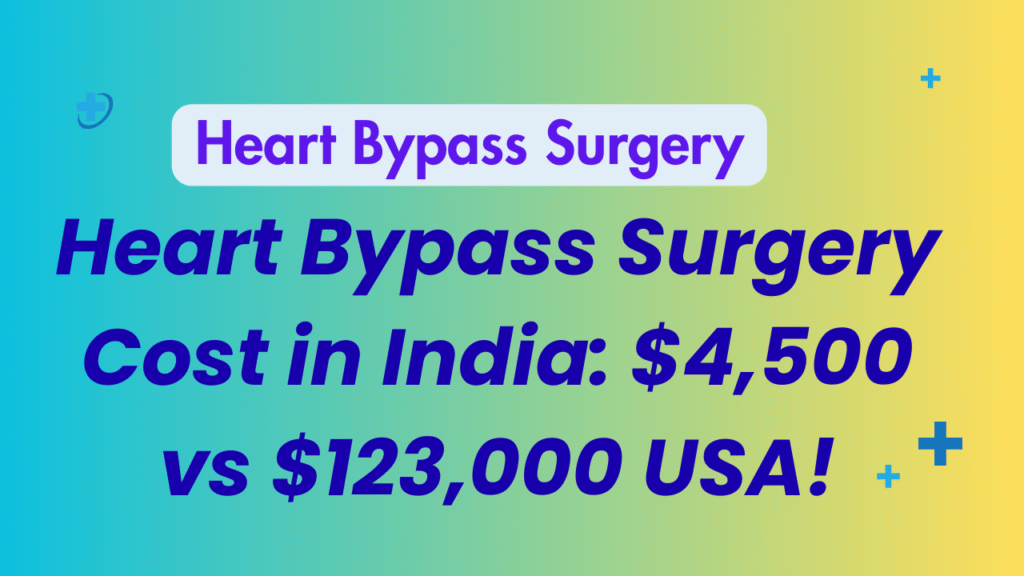
Heart Bypass Surgery Cost in India: $4,500 vs $123,000 USA
Why thousands of patients from the USA, UK, and Australia choose India for heart bypass surgery: India has revolutionized global cardiac care by combining internationally trained cardiac surgeons who completed fellowships at Cleveland Clinic, Mayo Clinic, and Harvard Medical School with JCI-accredited cardiac hospitals featuring cutting-edge technology—hybrid operation theaters, advanced heart-lung machines, robotic-assisted surgery systems, and 24/7 cardiac ICU monitoring—delivering heart bypass surgery outcomes with 98-99% success rates matching America’s premier cardiac centers, all while charging $4,500-$8,000 compared to $70,000-$150,000 in USA, £25,000-£50,000 in UK, and AUD $50,000-$100,000 in Australia. These dramatic 85-95% cost reductions don’t reflect inferior cardiac care but rather fundamental healthcare system advantages including lower operational costs (hospital expenses 70-85% less than Western countries), elimination of insurance bureaucracy adding 35-45% administrative overhead to American healthcare, transparent direct-pricing models without surprise billing endemic to US hospitals, high-volume cardiac centers performing 10,000-60,000 procedures annually creating exceptional surgical expertise through repetition, and favorable currency exchange rates amplifying purchasing power for international patients.
How India delivers world-class heart bypass surgery at fraction of Western costs while maintaining superior outcomes: India’s cardiac excellence stems from rigorous medical education producing over 5,000 cardiac surgeons and 15,000 cardiologists with extensive training, combined with premier cardiac hospitals like Fortis Escorts Heart Institute (99.83% success rate, 28,000+ heart surgeries), Apollo Heart Institute (99.6% success rate, 200,000+ cardiac surgeries), and Narayana Health (99%+ success rate, 60,000+ annual cardiac procedures) achieving clinical outcomes exceeding many Western institutions while serving patients from 140+ countries. The cardiac surgery India infrastructure utilizes identical surgical techniques, prosthetic heart valves from Edwards Lifesciences and Medtronic, coronary stents from Boston Scientific and Abbott, and heart-lung bypass machines from Terumo and LivaNova as American cardiac centers, with board-certified cardiac surgeons performing 200-500 CABG procedures annually compared to 50-150 for typical US cardiac surgeons, creating volume-expertise advantages translating to refined surgical technique, faster recovery protocols, and lower complication rates. India’s CABG surgery India price of $4,500-$8,000 includes comprehensive packages covering pre-operative cardiac evaluation (EKG, echocardiogram, angiography, stress tests), complete surgical procedure (3-5 vessel bypass with saphenous vein or arterial grafts), 5-7 day hospital stay with 3-5 days ICU monitoring, all medications (antibiotics, cardiac drugs, pain management), cardiac rehabilitation guidance, follow-up consultations, and complete medical documentation—services costing $70,000-$150,000 in USA where itemized hospital bills frequently shock patients with $50,000+ facility fees, $30,000+ surgeon charges, $15,000+ anesthesia costs, and $25,000+ ICU charges creating financial devastation for uninsured and underinsured Americans facing life-threatening cardiac disease.
Understanding Heart Bypass India Cost: Complete Breakdown
CABG Surgery India Price: Comprehensive Cost Analysis
Coronary Artery Bypass Grafting (CABG) Cost in India:
- Standard triple bypass: $4,500-$6,500 (₹3,75,000-₹5,40,000)
- Quadruple bypass (4 vessels): $5,000-$8,000 (₹4,15,000-₹6,65,000)
- Off-pump CABG (beating heart): $5,500-$8,500 (₹4,60,000-₹7,00,000)
- Minimally invasive CABG: $6,000-$9,000 (₹5,00,000-₹7,50,000)
- Redo CABG (repeat bypass): $7,000-$12,000 (₹5,80,000-₹10,00,000)
United States CABG Cost:
- Triple/Quadruple bypass: $70,000-$150,000 (average $123,000)
- Facility fees alone: $50,000-$80,000
- Surgeon fees: $20,000-$40,000
- Anesthesia charges: $5,000-$15,000
- ICU costs: $15,000-$35,000
- Total with complications: $200,000-$300,000+
United Kingdom CABG Cost:
- NHS waiting time: 6-18 weeks for non-emergency cases
- Private bypass surgery: £25,000-£50,000 ($30,000-$60,000)
- London private hospitals: £35,000-£55,000 premium pricing
Australia CABG Cost:
- Public hospital waiting time: 4-12 weeks category 2 urgency
- Private cardiac surgery: AUD $50,000-$100,000 ($33,000-$66,000)
- Out-of-pocket after insurance: AUD $15,000-$35,000 typical
Savings Analysis:
- USA patients save: $62,000-$142,000 (85-95%) even including travel
- UK patients save: £17,000-£42,000 (68-84%) for private care
- Australian patients save: AUD $42,000-$92,000 (84-92%)
What’s Included in Heart Bypass India Cost
Comprehensive Pre-Operative Services:
- Complete cardiac evaluation by cardiologist and cardiac surgeon
- Electrocardiogram (EKG/ECG) documenting heart rhythm abnormalities
- Echocardiogram assessing valve function, heart chamber sizes, ejection fraction
- Cardiac stress test evaluating exercise tolerance and ischemia
- Coronary angiography confirming blockage locations and severity
- Chest X-rays and pulmonary function tests
- Complete blood work including cardiac enzymes, lipid panels, kidney function
- Anesthesia consultation and surgical risk assessment
- Pre-operative optimization (medication adjustments, cardiac stabilization)
Surgical Procedure Components:
- Cardiac surgeon fees for complete CABG procedure (3-6 hour surgery)
- Anesthesiologist fees and anesthetic medications
- Operation theater charges with cardiac bypass equipment
- Heart-lung bypass machine operation by trained perfusionists
- Harvesting of saphenous vein grafts from leg or radial artery from arm
- Coronary artery bypass grafting to 3-5 vessels as needed
- Surgical supplies, instruments, sutures, and cardiac-specific equipment
- Intraoperative monitoring with advanced cardiac equipment
- Blood products if transfusion required (uncommon in routine cases)
Hospital Stay and ICU Care:
- Cardiac ICU admission immediately post-surgery (3-5 days typical)
- Continuous cardiac monitoring (telemetry, arterial lines, central lines)
- Ventilator support first 4-12 hours post-surgery
- 24/7 cardiac nursing care with 1:1 or 1:2 nurse-patient ratios
- Private hospital room after ICU transfer (2-3 days)
- All meals for patient and one companion
- Hospital amenities (gown, linens, basic supplies)
Post-Operative Medications and Care:
- Cardiac medications (beta-blockers, ACE inhibitors, statins, antiplatelet drugs)
- Pain management medications (opioids transitioning to oral analgesics)
- Antibiotics preventing surgical site infections
- Blood thinners preventing clot formation
- Wound care supplies and dressing changes
- Chest tube management and removal
- Daily wound checks by surgical team
- Cardiac rehabilitation initiation with physical therapy
- Follow-up consultations before discharge
- Discharge summary and complete medical records
- Post-discharge medication supply (2-4 weeks)
Additional Services:
- Airport pickup and drop-off services
- Visa documentation assistance
- International patient coordinator throughout stay
- Language interpretation if needed
- 24/7 emergency contact numbers
- Telemedicine follow-up consultations (3-6 months)
City-Wise Heart Bypass Surgery Cost in India
Delhi NCR (Fortis Escorts, Max, Medanta):
- CABG cost: $5,500-$8,000 (₹4,50,000-₹6,50,000)
- Highest concentration of JCI-accredited cardiac centers
- International airport connectivity (9-hour direct flights from London)
- Medical tourism infrastructure well-established
Bangalore (Narayana Health, Manipal):
- CABG cost: $4,500-$7,000 (₹3,75,000-₹5,80,000)
- Narayana Health: India’s highest cardiac surgery volumes (10,000+ annually)
- Dr. Devi Shetty’s pioneering affordable cardiac care model
- Pleasant year-round climate supporting recovery
Chennai (Apollo Hospitals):
- CABG cost: $5,000-$7,500 (₹4,15,000-₹6,20,000)
- Apollo Heart Institute: 200,000+ cardiac surgeries performed
- 99.6% success rate with extensive international patient experience
- Traditional medical tourism destination (30+ years serving foreigners)
Mumbai (Multiple Premier Centers):
- CABG cost: $6,000-$8,500 (₹5,00,000-₹7,00,000)
- Asian Heart Institute and Fortis Hospital leadership
- Cosmopolitan infrastructure with luxury recovery options
- Direct international flights from USA, UK, Middle East
Hyderabad (CARE Hospitals, Yashoda):
- CABG cost: $4,800-$7,200 (₹4,00,000-₹6,00,000)
- Competitive pricing with quality cardiac programs
- Growing medical tourism infrastructure
- Emerging cardiac care excellence
Cardiac Surgery India: Why 85-95% Cost Savings
Structural Healthcare Advantages Creating Affordability
Dramatically Lower Hospital Operational Costs (70-85% Reduction):
Indian cardiac hospitals operate with substantially reduced overhead across every category. A state-of-the-art 500-bed cardiac hospital in Bangalore occupies land costing ₹50-100 crore (£5-10 million) versus equivalent cardiac center real estate in Boston costing $150-300 million—representing 20-30x land cost differences. Monthly facility operational expenses including utilities, maintenance, security, and administrative overhead range ₹3-5 crore (£300,000-£500,000) for premier Indian cardiac hospitals versus $5-10 million for comparable American facilities—a 10-15x differential.
Staff salary patterns compound these advantages. Experienced cardiac nurses with 5-10 years ICU experience earn ₹40,000-₹70,000 (£400-£700 / $500-$850) monthly in India versus $6,000-$9,000 in USA, £3,500-£5,500 in UK, and AUD $6,500-$9,500 in Australia—representing 7-12x salary differences for equivalent qualifications and expertise. Perfusionists (heart-lung machine operators), cardiac technicians, respiratory therapists, physical therapists, and administrative staff follow similar ratios creating foundational labor cost advantages.
Medical equipment represents identical capital investments globally—a $500,000 heart-lung bypass machine costs the same whether purchased in Delhi or New York. However, Indian hospitals depreciate equipment over dramatically higher patient volumes (Narayana Health performs 10,000 adult cardiac operations annually versus 500-1,500 at typical US cardiac centers) reducing per-patient costs by 5-7x. This volume advantage extends to operating room utilization, ICU bed turnover, and facility efficiency maximizing return on infrastructure investments.
Elimination of Insurance Bureaucracy (35-45% Cost Reduction):
American cardiac hospitals employ armies of billing specialists, insurance coordinators, coding experts, claims processors, and denial management teams handling pre-authorizations, coverage determinations, itemized billing, claims submissions, appeals processing, and payment reconciliation. A typical 500-bed US cardiac hospital employs 150-250 billing and insurance staff with annual payroll of $15-25 million, costs ultimately transferred to patients through inflated pricing. Additional expenses include electronic health record systems optimized for billing complexity, compliance departments navigating insurance regulations, and revenue cycle management software tracking payment flows.
UK’s NHS bureaucracy and private insurance coordination, plus Australia’s Medicare and private health fund administration, create similar though less extreme overhead. Indian cardiac surgery operates on streamlined direct-pricing models: patients receive comprehensive written quotations specifying total costs ($4,500-$8,000 for CABG), pay directly via bank transfer or credit card, and receive complete treatment without claims processing, network restrictions, or surprise billing. This transparency eliminates 35-45% administrative overhead plaguing Western cardiac care economics.
Competitive Market Dynamics Driving Fair Pricing:
India’s cardiac surgery landscape features hundreds of accredited cardiac centers concentrated in Delhi NCR (15+ JCI/NABH cardiac hospitals), Bangalore (12+ premier centers), Chennai (10+ established programs), Mumbai (10+ facilities), and other metros. When 10-15 world-class cardiac hospitals compete within single metropolitan area, market forces favor patients through competitive pricing, quality differentiation, technology investments, and service innovation rather than monopolistic pricing power.
Contrast this with American cardiac surgery markets where 1-3 major hospital systems dominate most cities, enabling pricing power disconnected from costs. Studies document 300-500% profit margins on cardiac surgery procedures—operations costing hospitals $25,000-35,000 (surgeon salaries, supplies, facility costs, overhead) billed to patients at $100,000-150,000. Indian cardiac hospitals operate on healthier 20-35% margins, focusing on volume, international reputation, and outcomes excellence rather than maximum profit extraction per procedure.
High-Volume Surgical Excellence Creating Efficiency:
Narayana Health Bangalore performs over 10,000 adult cardiac operations and 5,500 pediatric cardiac surgeries annually, making it one of world’s highest-volume cardiac programs. Apollo Heart Institute completed 200,000+ cardiac surgeries over 35 years, averaging 5,700+ annually. Fortis Escorts Heart Institute performed 28,000+ heart surgeries establishing exceptional track record. These volumes create multiple advantages: cardiac surgeons perform 200-500 CABG procedures annually (versus 50-150 for typical US surgeons) developing exceptional technical mastery, refined judgment managing complications, and superior outcomes through repetition; standardized protocols and care pathways eliminate variability and optimize resource utilization; bulk purchasing of surgical supplies, prosthetics, and medications at negotiated pricing; justified investments in cutting-edge technology that remains underutilized at low-volume Western centers; and comprehensive cardiac teams (surgeons, cardiologists, anesthesiologists, perfusionists, nurses) working together daily developing seamless coordination improving efficiency and safety.
This volume-expertise-efficiency cycle characterizes India’s premier cardiac centers, differentiating them from Western hospitals where cardiac surgeons maintain general cardiovascular practices performing occasional CABG procedures alongside valve surgery, thoracic surgery, and vascular surgery lacking specialization depth and volume advantages.
Transparent Direct Pricing vs American Surprise Billing:
Indian cardiac hospitals provide comprehensive written cost estimates before admission specifying: CABG surgery total cost $5,500, itemized breakdown (surgeon fee $1,800, hospital charges $2,500, ICU costs $800, medications $400), inclusions clearly listed, potential additional costs if complications arise, and payment terms (typically 50% advance, 50% at discharge). Patients know exact financial obligation before proceeding, enabling informed decisions and accurate budgeting.
American cardiac surgery billing remains intentionally opaque with surprise bills arriving months post-discharge. Patients receive separate invoices from: hospital facility ($50,000-80,000), cardiac surgeon ($20,000-40,000), anesthesiologist ($5,000-15,000), perfusionist ($3,000-8,000), cardiologist consultants ($2,000-5,000 each), radiologists interpreting scans ($1,000-3,000), pathologists ($500-2,000), and durable medical equipment ($2,000-5,000)—creating billing nightmare with total costs often 50-100% higher than pre-surgical estimates. This “surprise billing” epidemic affects 1 in 5 American cardiac surgery patients, causing financial devastation and bankruptcy.
Quality Standards Exceeding Many Western Institutions
Success Rates Matching Cleveland Clinic and Mayo Clinic:
Fortis Escorts Heart Institute achieves 99.83% overall cardiac surgery success rate performing 28,000+ heart surgeries, matching outcomes at America’s top-ranked Cleveland Clinic (99.5% success) and Mayo Clinic (99.3% success). Apollo Heart Institute reports 99.6% success rate across 200,000+ cardiac procedures, surpassing many US cardiac centers averaging 97-98% success rates. Narayana Health maintains 99%+ CABG success rate despite increasing case complexity and accepting higher-risk patients other institutions decline.
These exceptional outcomes reflect: high surgical volumes creating expertise through repetition, rigorous patient selection and pre-operative optimization, multidisciplinary cardiac teams with seamless coordination, advanced technology and monitoring reducing complications, comprehensive post-operative protocols minimizing infections and cardiac events, and continuous quality improvement analyzing outcomes and refining practices.
Mortality rates for CABG surgery under 1% at premier Indian cardiac centers compare favorably to US national average of 1.5-2.5% mortality, with considerable variation across American hospitals (low-volume centers report 3-5% mortality while high-volume university hospitals achieve 0.8-1.2%). India’s top cardiac programs consistently perform at the elite tier of global cardiac surgery.
Identical International Medical Equipment and Technology:
Indian cardiac hospitals utilize the same advanced equipment as Western institutions: heart-lung bypass machines from Terumo (Japan), Sorin/LivaNova (Italy), or Medtronic (USA) performing cardiopulmonary bypass during surgery; intraoperative transesophageal echocardiography from Philips or GE Healthcare assessing cardiac function real-time; cardiac anesthesia monitoring systems from Philips IntelliVue or GE Carescape tracking hemodynamics continuously; electrosurgical units and cardiac surgical instruments from manufacturers like Medtronic, Edwards Lifesciences, and Karl Storz; and hybrid operation theaters combining surgical and catheterization lab capabilities enabling minimally invasive procedures and emergency interventions.
Prosthetic materials match Western standards: saphenous vein grafts harvested using endoscopic vein harvesting systems minimizing leg incisions, internal mammary artery grafts considered gold standard for left anterior descending coronary bypass, radial artery grafts for additional revascularization if needed, and identical suture materials, hemostatic agents, and surgical supplies from international manufacturers.
The $70,000-150,000 cost difference American patients experience reflects markup, overhead, and billing complexity rather than technology or equipment superiority. The same Terumo heart-lung machine, Edwards lifesciences surgical instruments, and Medtronic monitoring equipment operate in Narayana Health Bangalore and Cleveland Clinic—cost variations stem from surrounding healthcare economics, not clinical capabilities.
JCI Accreditation Ensuring International Standards:
Joint Commission International (JCI) accreditation represents healthcare quality’s gold standard, requiring rigorous evaluation of: infection control protocols (sterilization, hand hygiene, antibiotic prophylaxis, surgical site infection surveillance), medication management (ordering, storing, administering, monitoring with error prevention), patient safety (surgical timeouts, specimen labeling, fall prevention, pressure ulcer prevention), surgical care standards (preoperative assessment, informed consent, anesthesia protocols, post-operative monitoring), emergency preparedness (cardiac arrest responses, mass casualty planning, equipment maintenance), and continuous quality improvement (outcomes tracking, complication reviews, performance benchmarking).
JCI-accredited Indian cardiac hospitals including Fortis network, Apollo hospitals, Medanta, and select Narayana facilities meet identical standards as top American cardiac centers. Independent international auditors conduct on-site evaluations every 3 years verifying compliance with 1,300+ quality standards, providing international patients confidence that Indian facilities match home country expectations regarding safety, quality, and clinical excellence.
NABH (National Accreditation Board for Hospitals) provides India-specific accreditation based on international benchmarks, while ISO 9001 quality management certification validates standardized processes and continuous improvement cultures.
Premier Cardiac Surgery India Hospitals
Fortis Escorts Heart Institute, New Delhi
Cardiac Surgery Excellence:
- Success rate: 99.83% overall cardiac surgery success
- Experience: 55,000+ angiographies and angioplasties, 28,000+ heart surgeries
- International recognition: Medical Tourism Association awarded Best Hospital for Interventional Cardiology (2023)
- Specialization: Complex CABG, valve surgery, aortic procedures, heart failure management
CABG Surgery India Price:
- Triple/Quadruple bypass: $5,500-$8,000
- Off-pump beating heart surgery: $6,500-$9,000
- Minimally invasive CABG: $7,000-$9,500
Technology and Infrastructure:
- 14 cardiac catheterization labs with advanced imaging
- 6 cardiac operation theaters with hybrid capabilities
- 110-bed cardiac ICU with 24/7 monitoring
- Dedicated heart failure and transplant programs
- Robotic-assisted cardiac surgery availability
International Patient Services:
- Dedicated international patient department with coordinators
- Visa assistance and documentation support
- Airport transfers and accommodation arrangements
- Multilingual staff (English, Arabic, Russian, French)
- Telemedicine follow-up for 6-12 months post-surgery
Patient Outcomes:
Successfully performed 28,000+ heart surgeries considered unfeasible at other institutions, establishing reputation for accepting complex high-risk cases declined elsewhere while maintaining 99.83% success rate. This willingness to treat challenging patients (elderly, diabetic, poor cardiac function, previous surgeries) while maintaining exceptional outcomes distinguishes Fortis Escorts as global cardiac surgery leader.
Apollo Heart Institute (Multiple Locations)
Cardiac Surgery Leadership:
- Success rate: 99.6% for cardiac surgeries
- Experience: 200,000+ cardiac surgeries, 300,000+ angioplasties over 35 years
- Total operations: 152,000+ heart operations documented
- Global reach: Treating patients from 140+ countries with comprehensive international infrastructure
CABG Surgery Cost:
- Standard bypass surgery: $5,000-$7,500
- Multi-vessel CABG: $6,000-$8,500
- All-inclusive packages with accommodation available
Locations and Specializations:
- Apollo Hospitals Chennai: Flagship cardiac program, 35+ years international experience
- Indraprastha Apollo Delhi: Advanced cardiac care in North India hub
- Apollo Hospitals Bangalore: Tech city cardiac excellence
- Apollo Hospitals Hyderabad: Comprehensive cardiac services
Technology Advantages:
- Advanced cardiac imaging (3D echo, cardiac CT, cardiac MRI)
- Minimally invasive cardiac surgery programs
- Robotic-assisted procedures for select cases
- Heart transplant capabilities at select locations
- Comprehensive cardiac rehabilitation centers
International Patient Infrastructure:
Apollo’s 35+ years serving international patients created sophisticated medical tourism ecosystem: seamless visa processing assistance with government connections, direct partnerships with international insurance companies (some policies recognize Apollo for coverage), comprehensive pre-arrival consultations via telemedicine, dedicated international patient lounges with business centers, multiple language interpretation services (20+ languages), cultural sensitivity training for medical and nursing staff, and long-term follow-up protocols with global patient management systems.
Narayana Health, Bangalore
Revolutionary Affordable Cardiac Care Model:
- Success rate: 99%+ for bypass surgery despite increasing complexity
- Volume leadership: 60,000+ cardiac procedures annually (10,000 adult, 5,500 pediatric)
- Specialized procedures: 400+ aortic surgeries, 2,600+ valve repairs, 150+ TAVI, 25 heart transplants yearly
- Founder: Dr. Devi Shetty, internationally renowned cardiac surgeon pioneering affordable excellence
Heart Bypass India Cost (Most Affordable):
- CABG surgery: $4,500-$6,500 (India’s lowest pricing maintaining quality)
- High-volume efficiency enables aggressive pricing
- Government partnerships serving economically disadvantaged patients subsidized by international patients
The Narayana Health Model:
Dr. Devi Shetty’s vision combines: exceptional surgical volumes creating cost efficiencies (10,000 cardiac surgeries annually vs 500-1,500 at typical US hospitals), lean operations eliminating waste and unnecessary expenses, standardized care pathways reducing variability and improving outcomes, training programs producing skilled cardiac surgeons and teams, affordable pricing making cardiac care accessible to India’s masses while attracting international patients, and quality outcomes matching world’s best cardiac centers proving affordable and excellent aren’t contradictory.
This model influenced global healthcare thinking, with Dr. Shetty consulting for governments worldwide seeking to replicate India’s affordable excellence approach. His demonstration that high-volume, high-quality, low-cost cardiac surgery is achievable challenges Western healthcare assumptions that quality requires premium pricing.
International Patient Value:
American, British, and Australian patients benefit from Narayana’s efficiency: lowest cardiac surgery pricing in India ($4,500-6,500 for CABG) with outcomes matching Cleveland Clinic, experienced cardiac surgeons performing 200-400 procedures annually developing exceptional expertise, comprehensive packages including all services without hidden costs, and proven track record with 60,000+ annual procedures documenting consistent quality.
Asian Heart Institute, Mumbai
Premium Mumbai Cardiac Care:
- High success rates in complex cardiac surgeries
- Specializations: CABG, minimally invasive surgery, interventional cardiology
- Highly skilled cardiologists and cardiac surgeons with international training
- State-of-the-art technology supporting advanced procedures
CABG Cost in Mumbai:
- Bypass surgery: $6,000-$8,500
- Mumbai premium positioning with luxury recovery environment
- Coastal location enabling beach recovery after discharge
Patient-Centric Approach:
Mumbai’s cosmopolitan sophistication translates to enhanced patient services: international-standard hospitality with luxury private rooms, multi-cuisine dining accommodating dietary preferences (Western, Middle Eastern, Asian), concierge services arranging sightseeing and shopping during recovery, proximity to 5-star hotels for extended family accommodation, and English-speaking environment minimizing communication barriers.
Manipal Hospitals, Bangalore
Comprehensive Cardiac Program:
- Premier medical institute with top cardiac surgery department
- State-of-the-art infrastructure and experienced surgeons
- Remarkable success rates in complex surgeries including CABG, valves, congenital defects
CABG Surgery Pricing:
- Standard bypass: $5,000-$7,000
- Competitive Bangalore market pricing
- Pleasant climate supporting comfortable recovery
Patient-Centric Cardiac Care:
Manipal emphasizes: detailed pre-operative counseling ensuring informed decisions, family involvement in treatment planning and education, comprehensive cardiac rehabilitation programs optimizing recovery, and long-term follow-up protocols maintaining patient connections years post-surgery.
CABG Surgery India: Procedure Details and Recovery
Understanding Coronary Artery Bypass Grafting
What is CABG Surgery:
Coronary artery bypass grafting creates new pathways for blood flow around blocked coronary arteries supplying heart muscle. Cardiac surgeons harvest healthy blood vessels—typically saphenous vein from leg, internal mammary artery from chest wall, or radial artery from arm—and attach them to coronary arteries beyond blockages, restoring blood supply to oxygen-starved heart tissue.
When CABG Surgery Needed:
- Severe multi-vessel coronary disease: Three major coronary arteries showing 70%+ blockages
- Left main coronary artery disease: Critical blockage in artery supplying large heart portion
- Failed angioplasty: Previous stent procedures unsuccessful or unsuitable
- Diabetes with coronary disease: CABG outcomes superior to stenting in diabetics with multi-vessel disease
- Heart failure with ischemia: Reduced pumping function from blocked arteries requiring revascularization
CABG Surgical Approaches Available in India
Standard On-Pump CABG (Most Common):
Heart stopped using cardioplegia solution (potassium-based preservation), heart-lung bypass machine maintains circulation and oxygenation during surgery (1-2 hours cardiac arrest), surgeon operates on motionless heart enabling precise graft anastomosis, 3-5 vessels bypassed typically, and proven long-term outcomes with 50+ years clinical experience.
Off-Pump CABG (Beating Heart Surgery):
Heart continues beating during surgery using stabilization devices, avoids heart-lung machine potentially reducing stroke risk and inflammation, technically demanding requiring exceptional surgical skill, suitable for 60-70% of patients (anatomy-dependent), slightly higher cost ($5,500-8,500) reflecting surgical complexity, and reduced transfusion requirements and faster recovery in select patients.
Minimally Invasive CABG:
Smaller incisions (3-4 inches) between ribs avoiding full sternotomy, robotic-assisted or thoracoscopic techniques, typically single-vessel bypass (left anterior descending via internal mammary artery), reduced pain and faster recovery (3-4 weeks vs 6-8 weeks), higher cost ($6,000-9,000) reflecting advanced technology, and suitable for limited disease patterns.
Hybrid Coronary Revascularization:
Combines minimally invasive CABG (surgical bypass of left anterior descending) with percutaneous coronary intervention (stents in other vessels), reduces surgical trauma while achieving complete revascularization, tailored approach for patients with mixed disease patterns, and growing adoption at advanced Indian cardiac centers.
CABG Surgery Timeline in India
Pre-Operative Phase (Days 1-3):
Day 1 – Arrival and Initial Assessment:
Airport pickup by hospital coordinator, hotel check-in and rest (international patients typically arrive 2-3 days before surgery), evening hospital visit for registration and preliminary assessment if feeling comfortable. Many patients rest completely first day recovering from long international flights (9-17 hours from USA/UK/Australia).
Day 2 – Comprehensive Cardiac Evaluation:
Morning hospital arrival for detailed assessments: cardiac surgeon consultation reviewing medical history, previous cardiac events (heart attacks, angina), current symptoms, medications, and surgical risks; cardiologist evaluation assessing overall cardiac function and operative candidacy; complete physical examination; and extended consultation discussing surgical approach (on-pump vs off-pump), graft options (veins vs arteries), recovery expectations, potential complications, and answering patient/family questions.
Diagnostic testing: electrocardiogram (EKG) documenting baseline heart rhythm, chest X-ray assessing lung condition and heart size, echocardiogram measuring ejection fraction and valve function, blood work (complete blood count, metabolic panel, coagulation studies, cardiac enzymes, lipid panel), pulmonary function tests if lung disease history, and carotid ultrasound if stroke risk factors (assesses neck artery blockages potentially complicating surgery).
Review of coronary angiography images (performed in home country or repeated in India if recent angiogram unavailable) identifying blockage locations, severity, and optimal bypass targets. Surgical planning determining number of grafts needed (triple bypass, quadruple bypass), graft conduit selection (saphenous vein, internal mammary artery, radial artery), and surgical approach (on-pump vs off-pump, conventional vs minimally invasive).
Day 3 – Pre-Operative Preparation:
Anesthesia consultation with cardiac anesthesiologist: reviewing medical history particularly previous anesthesia experiences, medications requiring continuation or discontinuation, allergies, discussing anesthesia plan (general anesthesia with endotracheal intubation, arterial line monitoring, central venous access, epidural pain management), explaining post-operative expectations (ventilator support 4-12 hours, pain management strategies, ICU experience), and addressing patient concerns and questions.
Pre-operative optimization: cardiac medications adjusted (continuing beta-blockers and statins, stopping blood thinners like clopidogrel 5-7 days before surgery while continuing aspirin, ACE inhibitors adjusted based on blood pressure), smoking cessation reinforcement (critical for healing), diabetes management optimization (target glucose 100-140 mg/dL), and infection prevention (special antimicrobial shower solution prescribed for morning of surgery).
Surgical consent signing after thorough discussion of: procedure steps and techniques, expected benefits (angina relief, heart attack prevention, improved survival), potential risks and complications (infection 1-2%, stroke 1-2%, death under 1% at premier centers, bleeding requiring transfusion 5-10%, atrial fibrillation 20-30%, kidney injury 2-5%, wound infection 1-3%), alternative treatments (medical management, angioplasty with stents), and recovery timeline and restrictions.
Family counseling preparing loved ones for post-operative appearance (chest tubes, IV lines, ventilator, monitoring leads, swelling), expected ICU duration (3-5 days), visiting policies, communication protocols, and discharge planning.
Surgery Day (Day 4):
Morning Preparation (6:00-8:00 AM):
Hospital admission to surgical floor, NPO (nothing by mouth) since midnight preventing aspiration risk, antimicrobial shower removing skin bacteria, IV line placement for medications and fluids, pre-operative medications (antibiotics preventing infection, anxiolytics reducing stress, aspirin or heparin for cardiac protection), final vital signs assessment, meeting with surgical team (cardiac surgeon, anesthesiologist, perfusionist, OR nurses) confirming patient identity and planned procedure.
Surgical Procedure (3-6 Hours Total):
Transfer to cardiac operating room (8:00-9:00 AM typical start), anesthesia induction with monitoring line placement (arterial line measuring beat-to-beat blood pressure, central venous line for medications and monitoring, endotracheal intubation for ventilation, urinary catheter measuring urine output, temperature probe), surgical preparation (chest and leg/arm hair clipping, iodine-based antiseptic application, sterile draping), and surgical timeout (final verification of patient identity, procedure planned, antibiotic administration, equipment functionality).
Median sternotomy (breastbone divided vertically enabling heart access), pericardium (heart sac) opened exposing heart, and graft harvesting begins (saphenous vein removed from leg via long incision or endoscopic technique, internal mammary artery dissected from chest wall, radial artery harvested from arm if needed).
Heparinization (blood thinning preventing clotting during bypass), cannulation (tubes placed in heart connecting to bypass machine), initiation of cardiopulmonary bypass (heart-lung machine takes over circulation and oxygenation), aortic cross-clamping (stopping blood flow to heart), cardioplegia administration (cold potassium solution stopping heart and protecting muscle during arrest), and heart arrest (1-2 hours motionless period enabling grafting).
Coronary bypass grafting (surgeon attaches vein or artery grafts to coronary arteries beyond blockages using microscopic sutures creating 1-2mm connections, typically 3-5 grafts performed addressing all significant blockages), completion of distal anastomoses (graft connections to coronary arteries), and rewarming patient preparing for bypass separation.
Removal of aortic cross-clamp (blood flow returns to heart), heart reanimation (spontaneous beating resumes or defibrillation applied), completion of proximal anastomoses (attaching vein graft other ends to aorta creating blood source), separation from cardiopulmonary bypass (heart now pumping independently supporting circulation), decannulation (removing bypass machine tubes), heparin reversal (protamine neutralizing blood thinners), hemostasis (controlling bleeding from surgical sites), chest tube placement (draining blood and fluid from chest), pacing wire placement (temporary pacemaker if needed), and sternal closure (wires bringing breastbone together, skin closure with sutures or staples).
Immediate Post-Operative Period (ICU Days 1-5):
ICU Day 1 (Surgery Evening/Night):
Transfer to cardiac ICU with patient sedated and ventilated, intensive monitoring (continuous EKG, arterial blood pressure, central venous pressure, cardiac output, oxygen saturation, urine output), ventilator support maintaining breathing (4-12 hours typical before extubation when patient awake and stable), chest tubes draining blood and fluid (300-500ml first day normal), IV medications supporting blood pressure and heart function (inotropes like dobutamine if needed, vasopressors if blood pressure low), pain management (IV narcotics, epidural if placed), and frequent assessments by ICU nurses (every 15-30 minutes) and physicians.
Family brief bedside visits (10-15 minutes every few hours) with preparation for patient appearance (intubated, multiple lines and tubes, swelling, pale color all normal post-operative findings).
ICU Day 2-3:
Gradual improvement with patient awakening, ventilator weaning and extubation (removal of breathing tube typically within 12-24 hours when patient breathing independently, alert, and hemodynamically stable), chest tube removal (when drainage minimal, typically day 2-3), beginning oral intake (ice chips, sips of water progressing to clear liquids then regular diet), pain management transition to oral medications, cardiac medications restarted (beta-blockers, ACE inhibitors, statins, antiplatelet drugs), sitting at bedside with physical therapy assistance, and monitoring for complications (arrhythmias particularly atrial fibrillation affecting 20-30% patients, managed with medications or cardioversion).
ICU Day 3-5:
Progressive mobilization (standing at bedside, walking short distances in ICU with assistance), advancement of diet to regular cardiac-healthy meals, continued monitoring with gradual reduction in invasive lines (arterial line removed, central line removed), transfer preparation when stable (no arrhythmias, independent breathing, adequate pain control, walking with assistance), and family education regarding post-discharge care.
Hospital Ward Recovery (Days 6-8):
Transfer to step-down cardiac unit or private room, continued physical therapy (walking hallways 3-4 times daily with gradually increasing distance, stair climbing practice preparing for home), cardiac rehabilitation education (exercise guidelines, activity progression, dietary counseling emphasizing heart-healthy eating with low sodium and saturated fat), wound care instruction (sternotomy incision and leg/arm donor sites heal over 2-3 weeks, daily inspection for infection signs, showering instructions), medication management (discharge prescription review, importance of adherence, side effects monitoring), and discharge planning (follow-up appointment scheduling, medical record preparation, travel clearance for international patients).
Discharge (Day 7-10):
Final assessments (chest X-ray confirming lung expansion, EKG documenting heart rhythm, blood work checking for anemia or infection), discharge summary preparation (surgical report, hospital course, medication list, activity restrictions, warning signs requiring medical attention), prescription medications for 3-6 months (antiplatelet drugs preventing graft clotting, beta-blockers reducing heart rate and blood pressure, ACE inhibitors protecting heart function, statins lowering cholesterol aggressively, diuretics if fluid retention), follow-up planning (cardiologist visit 2 weeks, cardiac surgeon visit 6 weeks, cardiac rehabilitation referral), and international travel clearance (typically safe 10-14 days post-surgery for stable patients, medical documentation for airlines).
Recovery Timeline and Expectations
Immediate Recovery (Weeks 1-2):
Hospital discharge day 7-10 for international patients (ensuring stability before long flights), gradual energy improvement with fatigue common first 2-3 weeks (cardiac surgery extremely taxing on body requiring recovery time), sternotomy healing (breastbone takes 6-8 weeks complete healing, avoid lifting over 5-10 pounds, no pushing/pulling/twisting movements stressing chest), leg or arm graft donor site healing (typically 2-3 weeks with minimal discomfort), walking progression (starting 5-10 minutes 2-3 times daily, increasing by 1-2 minutes daily as tolerated, goal 30 minutes continuous walking by week 3-4), appetite return (initially poor, gradually improving over 2-3 weeks), and mood fluctuations (post-operative depression common affecting 20-40% patients, typically resolves over 4-6 weeks).
Warning signs requiring immediate medical attention: fever over 100.4°F (infection indicator), increasing chest wound redness, swelling, or drainage (sternal wound infection serious complication), severe chest pain (distinguish from surgical pain which improves daily vs cardiac pain requiring evaluation), shortness of breath at rest or with minimal activity (heart failure or pneumonia), irregular heartbeat or palpitations (arrhythmia potentially requiring treatment), and leg swelling or calf pain (DVT risk post-surgery).
Intermediate Recovery (Weeks 2-6):
Gradual independence in daily activities (showering, dressing, light meal preparation), continued walking progression reaching 30-45 minutes daily, return to light activities (reading, computer work, watching TV without restrictions), driving possible week 3-4 when off narcotic pain medications and chest comfortable (sudden braking maneuver doesn’t cause severe pain), flying internationally cleared 10-14 days post-surgery for stable patients (wear compression stockings, walk airplane aisles hourly, stay hydrated preventing DVT), and appetite normalizing with gradual weight gain recovering surgical losses.
Sternal precautions continue until 6-8 week follow-up: no lifting over 10 pounds, no pushing/pulling heavy objects, no reaching overhead with arms, no twisting torso movements, and no driving over rough roads (bumps transmit forces to healing sternum). Most patients feel 60-70% normal by week 6 with continued gradual improvement thereafter.
Long-Term Recovery (Months 2-6):
Sternal healing complete by 8 weeks enabling return to most activities, cardiac rehabilitation program (supervised exercise sessions 2-3 times weekly for 12 weeks optimizing cardiovascular fitness, education on heart-healthy lifestyle, psychosocial support), gradual return to work (desk jobs 6-8 weeks, physically demanding jobs 3-4 months after medical clearance), resumption of sexual activity (typically 4-6 weeks when comfortable with exertion equivalent to climbing two flights of stairs), full energy restoration (most patients feel 90-100% normal by 3-4 months), and emotional recovery (post-operative depression typically resolves, some patients experience PTSD from ICU experience benefiting from counseling).
Lifelong Cardiac Health Management:
Medication adherence critical for graft longevity (antiplatelet drugs like aspirin or clopidogrel preventing graft clotting, statins maintaining low cholesterol delaying new blockages, beta-blockers and ACE inhibitors protecting heart function), aggressive risk factor modification (smoking cessation absolutely essential—continued smoking causes 50% graft failure within 5-7 years, LDL cholesterol target under 70 mg/dL through diet and medications, blood pressure control under 130/80 mmHg, diabetes management with HbA1c under 7%, weight management achieving healthy BMI), regular exercise (150 minutes weekly moderate aerobic activity, strength training 2-3 times weekly), heart-healthy diet (Mediterranean diet proven beneficial, emphasizing fruits, vegetables, whole grains, fish, nuts, olive oil while limiting red meat, processed foods, saturated fats, sodium), stress management, and regular cardiology follow-up (annual visits minimum, stress tests or imaging monitoring for new blockages).
CABG graft longevity: Internal mammary artery grafts (gold standard for left anterior descending bypass) remain patent 90-95% at 10 years and 80-85% at 20 years, saphenous vein grafts show 60-70% patency at 10 years declining to 40-50% at 15 years, and overall patient survival significantly improved compared to medical management alone (5-year survival 90%+ post-CABG vs 70-75% with medication only for severe coronary disease).
Planning Your Cardiac Surgery India Journey
Pre-Departure Preparation (4-6 Weeks Before)
Comprehensive Cardiac Documentation:
Gather complete cardiac records from USA, UK, or Australian cardiologist including: coronary angiography reports with images or CD/DVD documenting blockage locations and severity (essential for Indian surgical planning), echocardiography reports measuring ejection fraction (pumping function) and valve assessment, EKGs showing heart rhythm and previous heart attack evidence, stress test results demonstrating exercise capacity and ischemia, previous cardiac interventions (stent procedures, prior surgeries), current medications with dosages (cardiac drugs particularly important), and cardiologist referral letter recommending bypass surgery with clinical rationale.
Medical history documentation: previous heart attacks with dates and treatments, diabetes management (HbA1c results), hypertension control, cholesterol levels, kidney function tests, lung disease if present, peripheral vascular disease, stroke history, and bleeding disorders or clotting abnormalities.
Virtual Consultation with Indian Cardiac Surgeon:
Premier Indian cardiac hospitals offer free video consultations enabling pre-travel evaluation. Schedule 45-60 minute consultation via Zoom, WhatsApp video, or hospital telemedicine platform. During consultation: share angiography images with surgeon reviewing blockage patterns, discuss symptoms (angina frequency, exercise limitations, medication effectiveness), review surgical candidacy and risk assessment, understand proposed surgical approach (on-pump vs off-pump, number of grafts anticipated, arterial vs vein grafts), receive detailed cost estimate with itemized breakdown, clarify recovery timeline and travel clearance expectations, and assess communication quality and surgeon rapport.
Quality cardiac surgeons provide: honest risk assessment acknowledging your specific factors (age, diabetes, kidney function, previous surgeries increasing complexity), detailed explanation of surgical technique with visual aids, realistic outcome expectations avoiding unrealistic promises, transparent discussion of potential complications, and patient testimonials from international patients (particularly those from your country).
E-Medical Visa Application:
Apply for India’s e-Medical visa 3-4 weeks before travel (processing typically 48-72 hours but allow buffer). Hospital international patient coordinator assists with required invitation letter on official letterhead specifying: your name and passport details, proposed cardiac procedure (coronary artery bypass grafting), treating cardiac surgeon name and credentials, expected duration (typically 14-21 days for CABG including recovery), hospital contact information, and official stamp with authorized signature.
E-Medical visa cost $80, provides 60-day validity with triple entry allowing flexibility if complications require extended stay or staged procedures. Medical attendant visas available for up to 2 companions (spouse, adult children) traveling with patient for support, requiring same $80 fee and proof of relationship to patient.
Insurance and Financial Planning:
Review insurance coverage for international cardiac surgery (most USA commercial insurance and Medicare don’t cover foreign treatment, though medical tourism insurance riders available through some employers or private policies). Purchase comprehensive medical travel insurance covering: cardiac procedure complications requiring extended treatment, emergency medical care for unrelated issues, emergency medical evacuation if life-threatening complications (rare but essential coverage), trip cancellation/interruption for medical reasons, and lost luggage affecting medical supplies.
Financial preparation: confirm hospital payment terms (typically 50% advance via international wire transfer 5-7 days before admission, 50% at discharge via credit card or bank transfer), budget for accommodation and meals beyond hospital stay (post-discharge recovery 5-7 days before flight home), allocate emergency funds (20% above estimated costs for unexpected complications or extended stays), and organize payment mechanisms (credit cards with sufficient limits, international ATM access, foreign currency exchange).
Health Optimization Before Travel:
Achieve optimal health before surgery maximizing success and minimizing complications. Diabetes control: HbA1c under 7% ideally (6.5% optimal), requiring 6-8 weeks medication adjustment if currently elevated, as high glucose impairs wound healing and increases infection risk 2-3x. Smoking cessation: Absolutely critical—stop tobacco 4+ weeks before surgery (nicotine constricts blood vessels impairing healing, increases lung complications, and dramatically raises graft failure risk). Weight management: Even 10-20 pound loss if significantly overweight reduces surgical stress and improves recovery. Dental care: Complete any needed dental work 3-4 weeks before surgery (dental infections can seed heart post-operatively), professional cleaning removing bacteria source. Medication optimization: Continue cardiac medications unless instructed otherwise, ensure blood pressure well-controlled (under 140/90), and stop blood thinners like clopidogrel 5-7 days before surgery while continuing aspirin (surgeon provides specific instructions).
Physical conditioning: Regular walking 20-30 minutes daily improves cardiovascular fitness, lung function, and leg strength beneficial for post-operative recovery. Practice deep breathing exercises (incentive spirometer if available) strengthening lungs and preparing for post-operative pulmonary care preventing pneumonia.
During Your Stay (2-3 Weeks)
Week 1: Pre-Operative Assessment and Surgery
Days 1-3 follow pre-operative timeline detailed previously (arrival, comprehensive cardiac evaluation, pre-surgical preparation). Day 4 surgery day with 3-6 hour procedure. Days 5-7 intensive ICU recovery with ventilator weaning, progressive mobilization, and complication monitoring.
Week 2: Hospital Recovery and Discharge
Days 8-10 transfer to private room with continued physical therapy, dietary advancement, and medication adjustments. Day 10-12 discharge preparation with final assessments, education, and coordination. Many international patients discharge day 10-12 to nearby hotel or hospital guesthouse for additional 5-7 days monitored recovery before international flight clearance.
Week 3: Post-Discharge Recovery and Travel Clearance
Outpatient follow-up visits assessing sternotomy healing, cardiac function, and complication screening. Gentle activities (walking, light sightseeing with rest periods) as tolerated. Follow-up echocardiogram and EKG confirming cardiac improvement and surgical success. Medical clearance for international travel typically granted day 14-21 when stable, sternum healing well, and no complications. Physician letter for airline documenting medical clearance and any special accommodation needs (wheelchair assistance, priority boarding).
Accommodation Strategy for Cardiac Patients
Hospital Guesthouses (Preferred for Cardiac Patients):
Many premier Indian cardiac hospitals operate on-site or adjacent guesthouses specifically for recovering cardiac patients and families. Benefits include: proximity to hospital (5-minute walk) enabling rapid access if concerns arise, nursing staff available for basic monitoring (blood pressure checks, wound inspection), cardiac-friendly meals prepared understanding dietary restrictions, other cardiac patients creating peer support and shared experiences, and cost-effective pricing (₹1,500-3,000 / $18-36 / £15-30 per night).
Narayana Health, Apollo, Fortis, and Medanta all offer guest accommodation with advance booking through international patient coordinators.
Hotels Near Hospitals (3-4 Star Range):
Select hotels within 10-15 minutes of hospital prioritizing: elevator access to avoid stairs during sternal precautions, air conditioning maintaining comfortable temperature (Indian climate often hot), restaurant or room service providing cardiac-healthy meal options (low sodium, low fat requests accommodated), 24-hour front desk assistance, and safe quiet neighborhood supporting rest and recovery.
Cost: ₹3,000-6,000 ($36-72 / £30-60) per night for comfortable 3-4 star hotels. Companion can stay same room typically without additional charge.
Partner Hotels with Medical Packages:
Some hospitals partner with nearby hotels offering medical tourism packages: discounted rates for cardiac patients (20-30% off standard rates), hospital transfer services for follow-up appointments, cardiac-healthy meal options on menus, and medical coordination assisting with concerns.
Flight Planning for Post-CABG Travel
When Safe to Fly After Heart Surgery:
International travel typically cleared 10-21 days post-CABG depending on recovery progress and complications. Cardiac surgeons assess: sternotomy stability (coughing, sudden movements don’t cause severe pain or instability), independent mobility (can walk aircraft aisle without severe shortness of breath), stable cardiac rhythm (no uncontrolled arrhythmias), adequate oxygen saturation at rest (over 90% on room air), and resolution of major complications (infections, fluid accumulation, kidney problems must be stable or resolved before travel).
Most stable patients receive flight clearance day 14-16, with conservative approaches waiting full 21 days ensuring robust healing before long-haul flights. Obtain written medical clearance from cardiac surgeon on hospital letterhead for airline documentation.
Flight Booking Strategies:
Book flexible or refundable tickets accommodating potential delays from complications (5-10% patients experience minor setbacks extending stay 3-7 days). Choose direct flights when possible minimizing total travel time and connection stress (London to Delhi direct 9 hours, New York to Delhi direct 14-15 hours preferable to 18-22 hour connecting itineraries). Request aisle seats enabling frequent walking without disturbing other passengers (critical for DVT prevention). Consider premium economy or business class if budget permits, as lie-flat seats or extra space enhances comfort during long recovery flights.
Wheelchair assistance: Request from airline and airport given recent major surgery, even if able to walk independently (conserves energy for flight itself). Pre-boarding accommodation allows settling without gate crowd stress.
DVT Prevention During Flights:
Deep vein thrombosis (blood clots in legs) risk elevated post-cardiac surgery, particularly during long immobile flights. Prevention strategies: wear compression stockings (TED hose or flight socks) from hospital discharge through flight arrival, continue prescribed blood thinners without interruption, walk airplane aisle every 60-90 minutes when seated (even 2-3 minute walks maintain circulation), perform ankle pumps and leg exercises while seated (calf raises, foot circles), stay very well hydrated throughout flight (avoid alcohol and caffeine which dehydrate), and avoid crossing legs during flight (restricts circulation).
Carry cardiac medications in hand luggage with prescriptions and hospital documentation, ensuring 2-3 day extra supply beyond expected flight duration in case of delays.
Frequently Asked Questions
How much do I actually save with heart bypass surgery in India?
USA patients save $62,000-$142,000 on CABG surgery costing $70,000-$150,000 in America versus $4,500-$8,000 in India, representing 85-95% savings even including flights ($1,200-$1,500), accommodation ($800-$1,200 for 3 weeks), and expenses ($500-$800). UK patients save £17,000-£42,000 versus private UK costs of £25,000-£50,000. Australian patients save AUD $42,000-$92,000 versus private costs of AUD $50,000-$100,000. Total India costs including all travel average $7,000-$11,000 versus USA’s $100,000-150,000 median, delivering life-saving accessibility for uninsured and underinsured patients.
Is heart bypass surgery in India as safe as USA or UK?
Yes, premier Indian cardiac centers achieve 98-99% success rates matching Cleveland Clinic and Mayo Clinic outcomes. Fortis Escorts reports 99.83% success performing 28,000+ surgeries, Apollo achieves 99.6% across 200,000+ procedures, and Narayana Health maintains 99%+ despite accepting high-risk cases. JCI-accredited facilities meet identical safety standards as top American cardiac centers. Success stems from high surgical volumes (Indian surgeons perform 200-500 CABG yearly vs 50-150 for US surgeons), internationally trained teams, same equipment and techniques, and rigorous quality protocols. Choose accredited hospitals with published outcomes and experienced surgeons ensuring optimal safety.
How long do I need to stay in India for bypass surgery?
Plan 2-3 weeks total: pre-operative assessment and preparation (2-3 days), surgery day, ICU recovery (3-5 days), hospital ward recovery (3-5 days), discharge to hotel recovery (5-7 days), and final follow-up before travel clearance. Medical clearance for international flights typically granted day 14-21 when stable, sternum healing well, and no complications. E-Medical visa’s 60-day validity accommodates longer stays if complications arise. Some patients extend stays for tourism after week 3-4 when comfortable walking and sightseeing.
What if I have complications after returning home?
Premier Indian cardiac hospitals provide comprehensive telemedicine follow-up via video consultations enabling continued communication with cardiac surgeon and cardiologist. Complete surgical documentation (operative reports, discharge summaries, EKGs, echo results, medication lists) enables USA/UK/Australian cardiologists to provide coordinated ongoing care following Indian protocols. Medical travel insurance covers complication management. Reputable hospitals honor commitments to patients requiring re-hospitalization within warranty periods. Emergency 24/7 helplines connect you with Indian cardiac teams for urgent consultations. Most complications manifest during hospital stay under direct supervision enabling immediate intervention. Long-term issues (graft problems months/years later) managed by local cardiologists using standard cardiac care protocols.
Do Indian cardiac surgeons have proper training and credentials?
Yes, leading Indian cardiac surgeons hold: MCh (Master of Chirurgiae) cardiac surgery specialization requiring 6 years post-MBBS training including 3 years general surgery plus 3 years cardiothoracic surgery, international fellowships at Cleveland Clinic, Mayo Clinic, Harvard Medical School, Johns Hopkins, and leading European centers, board certifications from Indian medical councils with rigorous examination requirements, memberships in prestigious organizations (Society of Thoracic Surgeons, European Association for Cardio-Thoracic Surgery, Asian Society for Cardiovascular Surgery), and publication records in international cardiac surgery journals. Many trained abroad before returning to India, bringing Western expertise to affordable Indian pricing. Verify surgeon credentials during consultations, reviewing training background, years of experience, annual CABG volumes, and published outcomes.
What heart conditions can be treated in India?
India offers complete cardiac surgery spectrum: coronary artery bypass grafting (CABG) for blocked arteries, heart valve replacement (mechanical or biological valves) and repair, minimally invasive valve surgery including TAVR, aortic surgery (aneurysm repair, dissection management), congenital heart defect repair (pediatric and adult), heart transplantation at select centers, arrhythmia surgery (Maze procedure, ablations), heart failure surgeries (ventricular assist devices, cardiac resynchronization), combined procedures (CABG plus valve, multiple valves), and redo cardiac surgeries. Virtually any cardiac procedure available in USA, UK, or Australia is available in India at premier centers, often with superior expertise given high surgical volumes.
Are cardiac medications and supplies same quality as Western countries?
Yes, prosthetic heart valves from Edwards Lifesciences (USA), Medtronic (USA), St. Jude Medical (USA), and Sorin (Italy), coronary stents and interventional devices from Boston Scientific, Abbott, Medtronic, and Terumo, surgical supplies and equipment from international manufacturers meeting FDA and CE mark standards, and cardiac medications including both international brands and high-quality Indian generic equivalents at dramatically lower costs. Post-operative cardiac drugs (beta-blockers, statins, ACE inhibitors, antiplatelet drugs) cost 70-90% less in India than USA while meeting identical quality specifications. Complete medication supply for 3-6 months included in treatment packages or available at Indian pharmacies at fraction of Western costs.
Can I choose specific cardiac surgeon in India?
Yes, reputable hospitals allow patients to research and select specific cardiac surgeons based on credentials, experience, success rates, and patient reviews. Request surgeon curriculum vitae during virtual consultations detailing training background (where did they study, which international centers for fellowships), years of cardiac surgery experience and CABG specialization, annual surgical volumes (surgeons performing 200+ CABG yearly have exceptional expertise), complication rates and success statistics, research publications and academic appointments, and patient testimonials from international patients. Many Indian cardiac surgeons maintain online profiles with detailed backgrounds. Quality hospitals support informed patient choices rather than arbitrary surgeon assignment.
What’s included in heart bypass cost packages?
Standard CABG packages include: comprehensive pre-operative cardiac evaluation (consultations, EKG, echo, blood work, chest X-ray), complete surgical procedure (surgeon fees, anesthesia, operating room, heart-lung bypass machine, surgical supplies), saphenous vein or arterial graft harvesting, 5-7 day hospital stay (3-5 days cardiac ICU, 2-3 days private room), all in-hospital medications and supplies, cardiac nursing care 24/7, dietary meals cardiac-healthy, wound care and chest tube management, physical therapy and cardiac rehabilitation initiation, follow-up consultations before discharge, complete medical documentation, airport transfers, and international patient coordination. Potential additional costs: blood transfusions if needed (uncommon), extended ICU beyond 5 days for complications, cardiac procedures beyond CABG (valve replacement, arrhythmia ablation), and post-discharge hotel accommodation (patient responsibility).
How do Indian cardiac surgery outcomes compare to USA?
Premier Indian cardiac centers match or exceed USA outcomes: Fortis Escorts 99.83% success vs Cleveland Clinic 99.5% and USA national average 97.5%, Apollo 99.6% success across 200,000+ procedures exceeding many US programs, Narayana Health 99%+ despite accepting higher-risk patients other institutions decline, mortality under 1% vs USA average 1.5-2.5% (wide variation 0.8-5% across American hospitals), and infection rates under 1% meeting or exceeding US benchmarks. Success reflects high-volume expertise (Indian surgeons perform 3-4x more CABG yearly than US counterparts), rigorous protocols standardizing care, multidisciplinary teams with seamless coordination, and continuous quality improvement analyzing outcomes. Choose accredited hospitals with published success rates and experienced teams ensuring optimal outcomes matching world’s best cardiac programs.
India’s transformation into the world’s leading cardiac surgery destination reflects revolutionary convergence of life-saving accessibility and clinical excellence, with heart bypass India cost of $4,500-$8,000 versus USA’s prohibitive $70,000-$150,000 making CABG surgery achievable for millions who face insurmountable financial barriers in Western healthcare systems while delivering 98-99% success rates matching
Want to Learn More About Medical Tourism?
Explore in-depth guides, destination insights, treatment comparisons, and expert-written resources to help you make informed decisions about medical tourism worldwide.
Know More About Medical Tourism