
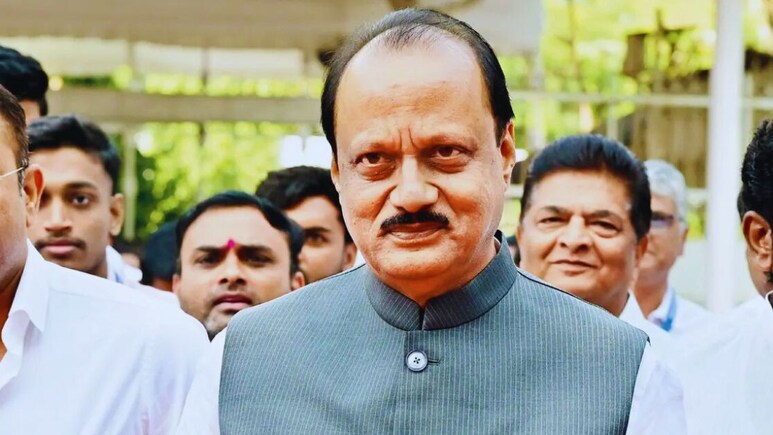
On January 28, 2026, a chartered aircraft carrying Maharashtra Deputy Chief Minister and Nationalist Congress Party (NCP) leader Ajit Pawar crashed while attempting an emergency landing near Baramati airport in Pune district, Maharashtra. Officials and media reports confirm that Ajit Pawar died in the crash along with five others aboard the aircraft.
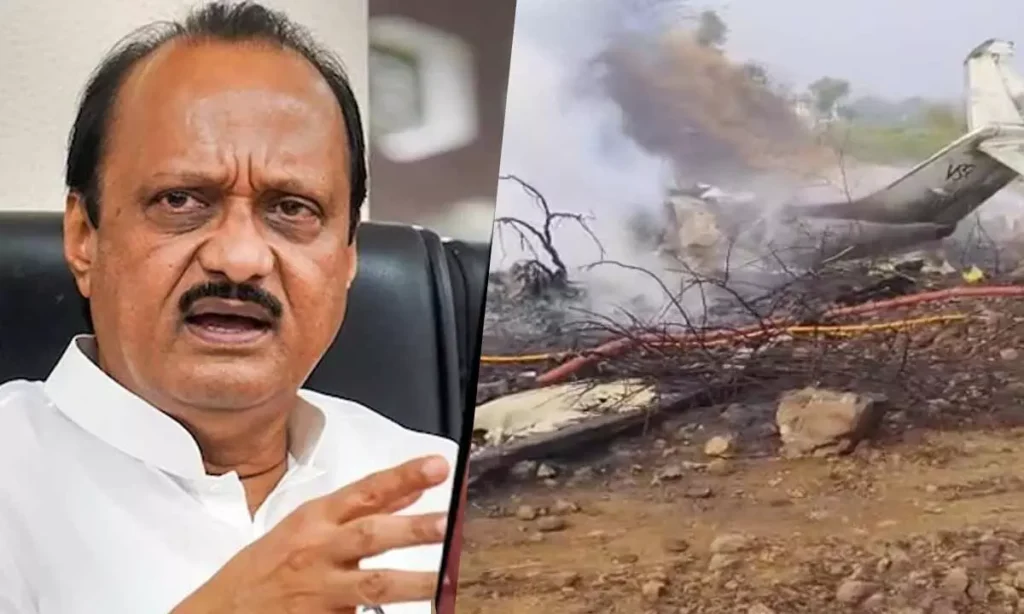
The aircraft, identified as a Learjet 45 (registration VT-SSK), departed from Mumbai early Wednesday morning and was en route to Baramati for scheduled public and political engagements when the accident occurred around approximately 9 a.m. IST. Initial reports suggest the aircraft encountered loss of control during the landing phase, leading to a crash-landing near the runway area with visible fire and debris at the site.
According to the Directorate General of Civil Aviation (DGCA) and multiple news agencies, all on board perished in the accident. The victims include Ajit Pawar, two crew members (pilot-in-command and first officer), and other personnel such as security staff and assistants. There are visuals of the wreckage showing structural breakage and smoke, indicating a severe impact.
Eyewitnesses and local responders reported thick smoke, scattered debris, and fire at the crash site, prompting a large emergency response from fire services, police, and medical teams. Nearby hospitals were alerted to receive casualties, though subsequent reports confirmed there were no survivors from the crash.
Ajit Pawar, aged in his mid-60s, was a senior leader in Maharashtra’s political landscape, serving as Deputy Chief Minister and head of his NCP faction. He was scheduled to attend several political events in Baramati, a region long associated with his political influence, at the time of the flight. His sudden death represents a major loss for the state’s governance and party leadership ahead of ongoing local elections.
Political leaders and parties have expressed shock and grief over the tragedy, with senior figures from across Maharashtra and national politics announcing condolences. Family members and party colleagues are reported to be traveling to Baramati to oversee arrangements and address the aftermath.
The DGCA has launched an investigation to determine the cause of the crash, including technical failure, weather conditions, or any procedural issues during landing. Authorities are expected to release further details as the inquiry progresses.
Key Facts at a Glance:
Date & Time: January 28, 2026, around 9 a.m. IST
Location: Baramati, Pune district, Maharashtra
Victims: Ajit Pawar + 5 others (crew and staff)
Aircraft: Learjet 45 (VT-SSK)
Cause: Under investigation (loss of control on landing)
Authority: DGCA examining crash circumstances
Here’s a detailed timeline of events for the plane crash involving Maharashtra Deputy Chief Minister Ajit Pawar on January 28, 2026, constructed from multiple verified live news updates and reports:
(All times approximate and IST — Indian Standard Time)
~8:45 a.m. — Departure from Mumbai: The chartered Learjet carrying Ajit Pawar and others takes off from Mumbai airport heading to Baramati for scheduled public engagements and campaign events. Initial live feeds report the plane was en route to several planned appearances in the region.
~9:00 a.m. — Approach to Baramati: As the aircraft nears Baramati airport in Pune district, it prepares to land. Live news indicates the aircraft is attempting to descend and execute the landing.
~9:02 a.m. — Landing Attempt: The plane reportedly begins its landing and experiences loss of balance/control while on final approach or immediately prior to touchdown. Multiple sources describe the aircraft becoming unstable during the landing phase.
~9:05 a.m. — Crash-Landing: The plane crash-lands near the runway at Baramati airport, skids off course, and collides with the ground. Eyewitness accounts and initial visuals show smoke and fire from the wreckage and debris scattered around.
Shortly After — Emergency Response Activated: Local emergency teams, including fire services, police, and medical responders, are dispatched. Hospitals are put on alert to receive the injured. However, soon after the crash, officials confirm that all aboard have died — including Ajit Pawar and five others (pilots and accompanying personnel).
~9:20 a.m. — DGCA Confirmation: The Directorate General of Civil Aviation (DGCA) and police confirm the fatalities and begin documenting the immediate crash scene for investigation.
~9:30 a.m. — Family and Political Response: News arrives that Ajit Pawar’s family — including wife and children — and other senior political colleagues are preparing to travel to Baramati following the crash.
Post-Crash — State Reaction: Maharashtra and national political leaders express shock and grief. Several state functions and political meetings are reported postponed or canceled as details continue to emerge.
Ongoing: The DGCA investigation is expected to analyze flight data, pilot communication, weather conditions, and aircraft maintenance logs to determine the precise cause of the crash.
How the Investigation Will Be Conducted (DGCA + AAIB Framework)
When a serious aviation accident occurs in India like the Baramati crash, several structured steps are triggered under India’s aviation safety regulations and international norms to determine how and why the crash happened — with a focus on preventing similar future incidents rather than assigning blame.
Notification & Immediate Actions
Within 24 hours of the accident being notified, all relevant parties — including the aircraft operator, crew representatives, andAir Traffic Control — must report the occurrence to the DGCA (Directorate General of Civil Aviation) and the designated investigation authority. Upon notification, the primary investigative authority, the AAIB (Aircraft Accident Investigation Bureau), is informed and mobilised to take charge of technical fact-finding.
On-Site Evidence Collection
The next step is dispatching a team of investigators to the crash site without delay to:
• Document physical evidence: This includes wreckage distribution, impact signatures, fire damage patterns, runway condition, and ground marks.
• Secure Flight Data and Cockpit Voice Recorders: Known as black boxes, these devices record flight parameters, radio communication, and cockpit audio critical to understanding aircraft behaviour before and during the crash. These are priority evidence sources.
• Take witness statements: Interviews are conducted with ATC personnel, ground crews, first responders, and others who saw or heard events leading to the accident.
Technical Analysis & Reconstruction
Once evidence is collected, technical specialists analyse:
• Flight Data Recorder (FDR) data: Parameters such as altitude, speed, control inputs, and system behaviour are reconstructed.
• Cockpit Voice Recorder (CVR): Audio from pilots and cockpit warnings helps indicate human responses, alerts, and timeline of events.
• Component analysis: Engines, hydraulics, avionics, control surfaces, and structural elements are examined to check for pre-impact failure, malfunction, or wear patterns.
Regulatory and Legal Framework
The Aircraft (Investigation of Accidents and Incidents) Rules, 2025 apply to all aircraft accident investigations in India. Under these rules, the primary goal of the investigative process is safety improvement, not punishment. The rules also stipulate that pilots or operators must report accidents promptly and that the investigation proceeds transparently to prevent future incidents.
Timelines and Reporting
• Preliminary Report: Within about 30 days of the accident, an initial report including immediate findings, known facts, and early hypotheses is typically produced. However, India’s regulatory framework does not rigidly bind this timeline by law, though the ICAO standard strongly encourages it.
• Final Report: A comprehensive final report with causal factors, safety recommendations, and detailed analysis is usually expected within up to 12 months, though complex cases sometimes take longer depending on the nature of evidence and reconstruction challenges.
Safety Recommendations
Once the investigation identifies risk factors — whether technical, procedural, weather-related, or human factors — findings are published along with safety recommendations. These can lead to:
• Revised operating procedures or pilot training changes.
• Maintenance protocol adjustments for similar aircraft.
• Airport runway or navigational system improvements.
Role of International Standards
India’s investigation process aligns with ICAO (International Civil Aviation Organization) Annex 13 guidelines, meaning results and safety enhancements are shared internationally where appropriate to enhance global aviation safety.
In the specific context of the Ajit Pawar plane crash at Baramati: local aviation investigators will follow this detailed investigative path. Early emphasis is on recovering flight recorders and securing the scene, while longer-term work will involve deep analysis of technical and operational factors to establish why the aircraft lost control during its landing approach.
FAQ: Ajit Pawar Plane Crash Investigation Explained
Q1. What exactly happened in the Ajit Pawar plane crash?
The chartered aircraft carrying Maharashtra Deputy Chief Minister Ajit Pawar crashed while attempting an emergency landing near Baramati airport on January 28, 2026. The plane reportedly lost control during the landing phase, veered off the runway area, and broke apart after impact. All six people on board, including Ajit Pawar, died in the accident.
Q2. Where did the plane take off from and where was it going?
The aircraft had departed from Mumbai in the morning and was headed to Baramati in Pune district, where Ajit Pawar was scheduled to attend political and public engagements.
Q3. What type of aircraft was involved?
The aircraft was a Learjet 45, a twin-engine business jet commonly used for chartered and VIP travel. Such aircraft are typically operated by experienced crews and maintained under strict aviation rules.
Q4. Who is investigating the crash?
The investigation is being led by India’s Aircraft Accident Investigation Bureau (AAIB) under the Directorate General of Civil Aviation (DGCA). This is the standard authority responsible for probing all major aviation accidents in India.
Q5. What does an aviation crash investigation focus on?
Investigators focus on technical factors (aircraft systems, engines, controls), human factors (pilot actions, decision-making), environmental conditions (weather, visibility), and operational elements (runway condition, air traffic control communication). The goal is to identify causes and prevent future accidents, not to assign blame.
Q6. Will black boxes be recovered, and why are they important?
Yes. Investigators prioritize recovering the Flight Data Recorder (FDR) and Cockpit Voice Recorder (CVR), commonly called black boxes. These devices record flight parameters and cockpit conversations, providing critical insight into what happened in the final moments before the crash.
Q7. How long will the investigation take?
A preliminary report is usually released within a few weeks, outlining known facts and early findings. A final, detailed investigation report can take several months to up to a year, depending on the complexity of the case.
Q8. Could weather or runway conditions have played a role?
At this stage, authorities have not confirmed a specific cause. Weather conditions, runway length or surface issues, technical malfunction, or pilot response during landing are all possibilities that investigators will examine.
Q9. What happens after the investigation is completed?
Once completed, the final report will include safety recommendations. These may lead to changes in aircraft maintenance rules, pilot training procedures, or airport safety measures to reduce the risk of similar accidents in the future.
Q10. Why is this crash considered significant nationally?
Apart from being a fatal aviation accident, the death of a serving Deputy Chief Minister makes this incident politically and administratively significant. It has immediate implications for Maharashtra’s governance, political leadership, and ongoing electoral activities.
