
Table of Contents
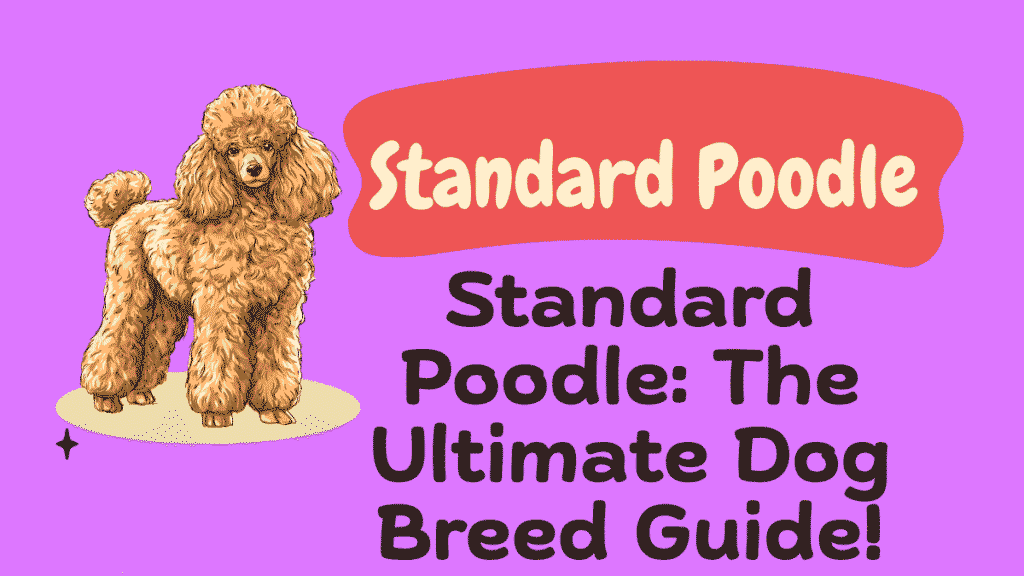
Standard Poodle: The Most Misunderstood Aristocrat
Somewhere between circus performers and French aristocracy, the Standard Poodle lost its real story. Most people see the elaborate show clips—pompoms, continental cuts, bracelets of hair around ankles—and assume these dogs are frivolous fashion accessories bred for Parisian salons. The reality: Standard Poodles spent centuries jumping into freezing German and French rivers retrieving ducks for hunters. Those ridiculous haircuts served function, not fashion.
The name itself reveals the truth. “Poodle” derives from the German “pudeln”—meaning “to splash in water.” These were water retrievers, gun dogs bred to work alongside hunters in harsh conditions. The elaborate clips everyone mocks? Strategic shaving creating hydrodynamic efficiency while leaving hair protecting vital organs, joints, and chest from cold water. The pompoms weren’t decorative—they marked joints making it easier for hunters to spot swimming dogs in choppy water and vegetation.
Standard Poodles originated in Germany sometime before the 15th century, descended from various European water dogs including the Barbet, Portuguese Water Dog, Irish Water Spaniel, and Hungarian Water Hound. German hunters needed dogs capable of retrieving waterfowl from lakes and rivers, requiring several specific traits: water-resistant coats, strong swimming ability, intelligence to find downed birds, gentle mouths to retrieve game without damage, and trainability to work closely with handlers.
France gets credit for refining and popularizing the breed, though Germans created it. French hunters and nobility embraced Poodles during the 15th and 16th centuries, developing them further as water retrievers and eventually as general-purpose gun dogs. The French standardized breeding, created formal breed standards, and elevated Poodles from working dogs to status symbols among aristocracy. By the 18th century, Poodles had become the national dog of France, despite their German origins—a historical irony that persists today.
The breed comes in three sizes—Standard (over 15 inches), Miniature (10-15 inches), and Toy (under 10 inches)—but they’re all the same breed sharing identical standards except for height. Standard Poodles are the original; Miniatures and Toys were created later by selectively breeding smaller individuals. This guide focuses on Standard Poodles, the largest and most athletic variety.
What disappeared in the transition from working dog to show dog and family pet was understanding of Poodle intelligence and work drive. These aren’t decorative lapdogs. They rank second only to Border Collies in cognitive ability, problem-solving, and trainability. They were bred to work independently retrieving ducks across open water, requiring decision-making, focus, and sustained effort. Modern Standard Poodles retain this intelligence and work drive—traits that make them exceptional partners for owners providing appropriate stimulation and disasters for owners expecting low-maintenance pets.
The stereotype of Poodles as high-strung, yappy, nervous dogs stems entirely from poor breeding during popularity surges and from confusing Toy and Miniature Poodles (which can be more sensitive and vocal) with Standards. Well-bred Standard Poodles from working or performance lines display calm, confident, stable temperaments rivaling Golden Retrievers for steadiness and reliability. But they’re also whip-smart dogs who outsmart their owners regularly, require extensive mental stimulation, and need jobs or purposes beyond companionship.
Their grooming requirements are non-negotiable. That curly, non-shedding coat requires professional grooming every 4-8 weeks costing $70-$110 per session, daily brushing preventing mats, and owner commitment to maintenance most people underestimate. The “hypoallergenic” designation is misleading—they don’t shed like most breeds but they’re not truly hypoallergenic, and grooming maintenance far exceeds simple brushing.
This guide provides comprehensive information about Standard Poodles, but it begins with reality check: these are brilliant, athletic, high-maintenance dogs requiring owners who appreciate intelligence, commit to extensive grooming, provide substantial exercise and mental stimulation, and understand they’re getting working dogs disguised in fancy haircuts.
Breed Characteristics and Physical Appearance
The Standard Poodle is classified as the largest of three Poodle varieties—a medium to large non-sporting (formerly sporting) dog with an elegant, athletic build designed for swimming, retrieving, and sustained work. According to American Kennel Club standards, Standard Poodles should stand over 15 inches tall at the shoulder, typically ranging from 18 to 24 inches (45 to 60 cm). Males generally weigh 45 to 70 pounds (20 to 32 kg), while females typically weigh 40 to 55 pounds (18 to 25 kg), though weight varies based on bone structure and build.
The body is squarely built with height at the highest point of the shoulder approximately equal to length of body from breastbone to rear of thigh. This creates a balanced, proportionate appearance emphasizing elegance rather than bulk. The chest is deep and moderately wide with well-sprung ribs. The back is short, strong, and level. The loin is short and broad, and the croup slopes slightly. This athletic build reflects the breed’s heritage as tireless water retrievers capable of sustained swimming and land work.
The head is moderately rounded with a slight but definite stop between the skull and muzzle. The skull is not broad, and the cheekbones and muscles are flat. The muzzle is long and straight with slight chiseling under the eyes. The entire head is in proportion to the dog’s size—never coarse, heavy, or overdone. The eyes are very dark, oval-shaped, set fairly wide apart, and convey an intelligent, alert, eager expression. The ears are long (reaching approximately to the corner of the mouth when pulled forward), wide, hanging close to the head, and heavily feathered.
The Standard Poodle’s coat is their most distinctive and demanding feature. The breed standard recognizes two acceptable coat types:
Curly: Dense, naturally harsh texture curls tightly forming a water-resistant barrier. This is the most common and traditional coat type, the one that functioned as insulation when Poodles retrieved waterfowl from cold rivers.
Corded: Less common, the coat forms tight, even cords of varying length. This coat type requires specialized maintenance and is rarely seen outside show rings.
The coat is uniformly curly or corded across the entire body and requires extensive grooming. Left ungroomed, it grows continuously (like human hair) reaching extraordinary lengths and forming impenetrable mats. The coat does not shed in traditional sense—loose hairs tangle in the curls rather than falling out—creating the “hypoallergenic” reputation. However, dead hair must be brushed out regularly, and the coat still produces dander (the actual allergen for most people).
The breed standard recognizes several solid colors:
Black: Deep, solid black without browning, silvering, or white. This is the most common color.
White: Pure white throughout. White Poodles are born white (unlike silver Poodles which are born black).
Blue: Even, solid color ranging from silver-blue to deep charcoal. Blue Poodles are born black and “clear” to blue as they mature.
Gray: Even, solid color. Gray Poodles are born black and clear to gray.
Silver: Even, solid color with characteristic light coloring. Silver Poodles are born black and clear to silver by age two.
Apricot: Even, solid color ranging from pale cream to deep reddish. Apricot is one of the rarer colors.
Red: Even, deep, rich reddish color (rusty red to dark mahogany). True reds are relatively rare.
Brown (Chocolate): Even, solid brown ranging from light to dark liver color.
Cream: Even, solid color ranging from ivory to pale cream.
Parti-colors (two or more colors with white as one color) exist but are not recognized by AKC for conformation showing, though they’re perfectly healthy and make wonderful pets.
The Poodle’s distinctive grooming clips serve both historical function and modern fashion. Traditional clips include:
Continental Clip: Rear half of body shaved except pompoms at tail base and ankles, front half in full coat with pompoms on hips. This is one of two accepted clips for adult Poodles in AKC conformation showing.
English Saddle Clip: Similar to Continental but with more hair left on hindquarters. The other accepted adult show clip.
Puppy Clip: Body is shaped with scissors creating even moderate length throughout. Face, feet, throat, and base of tail are shaved. This is the only clip acceptable for Poodles under 12 months in AKC showing.
Sporting/Kennel Clip: Short, practical clip with body clipped to even moderate length (typically 1-2 inches) creating low-maintenance coat. Face, feet, and tail base are shaved. This is the most popular pet clip.
When moving, Standard Poodles display smooth, springy, light gaits covering ground effortlessly. The gait appears almost floating—elegant yet purposeful. This efficient movement reflects their heritage as endurance retrievers capable of swimming long distances and working all day.
Temperament and Behavior
The Standard Poodle’s temperament is characterized by exceptional intelligence, eager trainability, athletic ability, dignified bearing, and versatility. The American Kennel Club describes the ideal temperament as “carrying himself proudly, very active, intelligent, the Poodle has about him an air of distinction and dignity peculiar to himself. Major fault: shyness or sharpness.” This description captures the breed’s essential confidence and balanced nature.
Exceptional Intelligence: Standard Poodles rank second among all dog breeds in cognitive ability, problem-solving, and trainability (after Border Collies). They learn new commands in fewer than five repetitions and respond correctly to known commands approximately 95 percent of the time. This extraordinary intelligence makes them highly trainable for complex tasks but also means they’re easily bored, prone to outsmarting owners, and require substantial mental stimulation. An under-stimulated Poodle is a destructive, anxious Poodle.
Highly Trainable: Their intelligence combined with eager-to-please nature makes Standard Poodles excel in virtually every dog sport and working role. They dominate in obedience, agility, dock diving, tracking, scent work, service dog roles, therapy work, and hunting tests. They’re remarkably versatile—capable of learning whatever their owners have patience to teach. However, their intelligence means training requires engagement, variety, and challenge rather than endless repetition.
Athletic and Energetic: Despite elegant appearance, Standard Poodles are genuine athletes requiring 1-2 hours of vigorous daily exercise. They love swimming (their original purpose), running, fetching, and active play. Under-exercised Poodles develop behavioral problems including destructiveness, excessive barking, and anxiety. They’re not low-maintenance companion dogs—they’re working dogs requiring outlets for considerable physical energy.
Loyal and Devoted: Standard Poodles form deep bonds with their families and want to be involved in all family activities. They’re “velcro dogs” who follow their people from room to room and prefer constant companionship. This attachment makes them wonderful emotional support animals but also creates vulnerability to separation anxiety when left alone regularly for extended periods.
Reserved with Strangers: Unlike universally friendly breeds like Golden Retrievers, Standard Poodles tend toward politeness rather than enthusiasm with unfamiliar people. Well-socialized Poodles greet strangers appropriately but without Golden Retriever-level exuberance. Inadequate socialization can cause this reserve to escalate into shyness or fear—a serious fault in the breed.
Dignified Bearing: Properly bred Standard Poodles display remarkable composure and dignity. They assess situations calmly, respond thoughtfully rather than reactively, and carry themselves with confidence. This dignified temperament distinguishes well-bred Standards from nervous, hyper-reactive dogs sometimes seen in poorly bred lines.
Sensitive Nature: Despite their confidence, Standard Poodles are emotionally sensitive dogs who pick up on household stress and owner emotions. They respond poorly to harsh training methods or raised voices, becoming anxious or shutting down rather than complying. They require gentle, positive reinforcement training emphasizing partnership rather than domination.
Good with Children: When properly socialized, Standard Poodles are generally excellent with children. Their intelligence allows them to distinguish between adult interactions and children’s unpredictability. However, they don’t tolerate teasing, tail pulling, or rough handling—they’re best with families teaching children appropriate dog interactions.
Compatible with Other Pets: Standard Poodles typically coexist peacefully with other dogs and even cats when raised together. Their hunting heritage gives them moderate prey drive toward small animals, though this is generally manageable with training. Some individuals display same-sex dog aggression, particularly intact males.
Minimal Guard Dog Instincts: While alert to unusual activity and likely to bark alerting families, Standard Poodles rarely display the protective aggression of guardian breeds. They’re watchdogs rather than guard dogs—they’ll tell you someone’s there but won’t physically prevent entry.
Potential for Nuisance Barking: Bored, anxious, or under-stimulated Standard Poodles can develop excessive barking. Their voices are surprisingly deep and carrying for their size. Providing adequate exercise and mental stimulation prevents most barking problems.
Water Enthusiasm: Many Standard Poodles retain strong attraction to water and enthusiasm for swimming. This creates wonderful opportunities for low-impact exercise but requires caution around pools, lakes, or rivers if dogs lack recall training.
Pros and Cons of Standard Poodle Ownership
Significant Advantages
Exceptional Intelligence and Trainability: Their extraordinary cognitive ability makes them among the most trainable breeds. They excel in virtually any activity owners have patience to teach, from basic obedience to complex service dog tasks.
Versatile Working Ability: Few breeds match Standard Poodle versatility. They succeed as hunting retrievers, service dogs, therapy dogs, agility competitors, obedience champions, and family companions. This adaptability demonstrates remarkable capability.
Low to No Shedding: Their non-shedding coat (loose hair tangles in curls rather than falling out) makes them suitable for people with moderate dog allergies and drastically reduces pet hair on furniture, clothing, and floors compared to shedding breeds.
Athletic and Active: For owners seeking active companions, Standard Poodles enthusiastically participate in hiking, running, swimming, and dog sports. Their endurance and enthusiasm match highly active lifestyles.
Loyal and Devoted: Their deep family bonds and desire for constant companionship creates profound relationships with owners who appreciate close partnerships.
Elegant Appearance: Their beauty, grace, and distinctive appearance attracts positive attention. Many owners take pride in their Poodle’s striking looks.
Generally Healthy for Size: Compared to many large breeds, Standard Poodles have relatively good health with fewer extreme structural problems (though they have breed-specific conditions requiring monitoring).
Longer Lifespan: With average lifespans of 12-15 years, Standard Poodles live longer than many similar-sized breeds.
Good with Children and Other Pets: When properly socialized, they’re patient, gentle, and reliable with families including children and other animals.
Significant Disadvantages
Extremely High Grooming Requirements: This is non-negotiable and represents the single most demanding aspect of Standard Poodle ownership. Professional grooming every 4-8 weeks costs $70-$110 per session ($560-$1,320+ annually). Daily brushing (15-30 minutes) is essential preventing painful mats. Home grooming requires expensive equipment ($200-$500 initial investment) and skill development. Neglecting grooming creates welfare concerns—matted coats cause pain and skin infections.
High Exercise and Mental Stimulation Requirements: Standard Poodles require minimum 1-2 hours vigorous daily exercise plus substantial mental stimulation. They’re not dogs who gracefully accept limited activity. Under-exercised, under-stimulated Poodles become destructive, anxious, and develop serious behavioral problems.
Expensive Throughout Lifetime: Between professional grooming, quality food, veterinary care for breed-specific conditions (particularly Addison’s disease and bloat), and activities/training, Standard Poodles are expensive dogs costing $2,000-$4,000+ annually to maintain properly.
Separation Anxiety Potential: Their intense attachment makes them vulnerable to severe separation anxiety when left alone regularly. This can manifest as house-destroying panic attacks requiring extensive behavior modification and sometimes medication.
Not Truly Hypoallergenic: While marketed as “hypoallergenic,” they still produce dander (the actual allergen). People with severe dog allergies may still react. The non-shedding coat reduces but doesn’t eliminate allergic responses.
High Intelligence Creates Challenges: Their problem-solving ability means they outsmart owners regularly, open doors, escape enclosures, and find creative ways around rules. Owners must be smarter than their dogs—not always easy with Standard Poodles.
Requires Experienced, Committed Owner: Their intelligence, energy, and grooming needs make them inappropriate for first-time dog owners or those wanting low-maintenance pets.
Bloat Risk: As deep-chested dogs, Standard Poodles have elevated risk of gastric dilatation-volvulus (bloat)—a life-threatening emergency requiring immediate surgery costing $3,000-$7,000.
Addison’s Disease Predisposition: Standard Poodles have dramatically elevated rates of Addison’s disease (adrenal insufficiency) requiring lifelong medication and monitoring. Crisis episodes are life-threatening.
Hip Dysplasia Risk: Despite being bred for athleticism, Standard Poodles have moderate hip dysplasia rates requiring potential surgical intervention.
Expensive to Purchase: Quality Standard Poodle puppies from health-tested parents cost $2,000-$3,500, reflecting breeder investment in health testing and quality care.
Coat Maintenance is Never-Ending: Unlike breeds where grooming needs decrease as dogs age, Poodle coat maintenance remains constant throughout life. Owners must commit to 15-30 minutes daily brushing forever.
Health Issues and Medical Concerns
Standard Poodles are relatively healthy compared to breeds with extreme physical characteristics, but they’re predisposed to several serious conditions.
Addison’s Disease (Hypoadrenocorticism): Standard Poodles have one of the highest rates of Addison’s disease among all dog breeds. This condition occurs when adrenal glands don’t produce adequate hormones (cortisol and aldosterone). Symptoms are variable and often vague: lethargy, weakness, loss of appetite, vomiting, diarrhea, increased thirst/urination, weight loss, and shaking. In “Addisonian crisis,” dogs collapse with life-threatening electrolyte imbalances requiring emergency care.
Diagnosis requires specific blood testing (ACTH stimulation test). Treatment involves lifelong hormone replacement therapy and monitoring. While manageable with appropriate care, Addison’s requires ongoing medication costing $50-$150 monthly and regular veterinary monitoring. Owners must recognize crisis symptoms and seek immediate care—untreated Addisonian crisis is fatal.
Gastric Dilatation-Volvulus (Bloat): This life-threatening emergency occurs when the stomach fills with gas and twists on itself, cutting off blood flow. Deep-chested breeds like Standard Poodles have elevated risk. Symptoms include restlessness, distended abdomen, unproductive vomiting attempts, excessive drooling, and rapid breathing or collapse. Emergency surgical intervention is required within hours, costing $3,000-$7,000. Even with surgery, mortality rates are significant.
Preventive measures include feeding multiple smaller meals rather than one large meal, avoiding exercise immediately after eating, using slow-feed bowls, and considering prophylactic gastropexy (surgical stomach tacking) during spay/neuter surgery.
Hip Dysplasia: Despite athletic heritage, Standard Poodles develop hip dysplasia at moderate rates (approximately 10-12% based on OFA data). Management includes weight control, moderate exercise, joint supplements, anti-inflammatory medications, and in severe cases, surgical intervention costing $3,000-$7,000 per hip.
Sebaceous Adenitis: This is a relatively rare but serious skin condition where immune system attacks sebaceous glands, causing hair loss, scaly skin, and secondary infections. Diagnosis requires skin biopsy. Treatment involves managing symptoms with specialized shampoos, omega fatty acid supplementation, and sometimes immunosuppressive medications. The condition is incurable but manageable.
Progressive Retinal Atrophy (PRA): This hereditary eye disease causes progressive retinal degeneration leading to blindness. Genetic testing is available. Responsible breeders test breeding stock to avoid producing affected puppies.
Von Willebrand’s Disease: This bleeding disorder affects blood clotting. Symptoms include excessive bleeding during injuries or surgeries. Genetic testing is available.
Epilepsy: Idiopathic epilepsy (seizures without identifiable cause) occurs at moderate rates. Onset typically appears between ages 1-5 years. Treatment includes lifelong anticonvulsant medications.
Hypothyroidism: Underactive thyroid causes weight gain, lethargy, and coat problems. Treatment involves lifelong thyroid hormone supplementation.
Cancer: Standard Poodles can develop various cancers including hemangiosarcoma and lymphoma, particularly in middle to senior years.
Thyroid Problems: Beyond hypothyroidism, autoimmune thyroiditis is relatively common.
Lifespan and Health Screening
Average lifespan for Standard Poodles is 12 to 15 years, with many living into their mid-teens. Responsible ownership includes:
- Hip and elbow evaluation through OFA or PennHIP
- Eye examinations by veterinary ophthalmologists
- Genetic testing for PRA, vWD, and other available tests
- Annual veterinary examinations including bloodwork monitoring for early Addison’s detection
- Awareness of bloat symptoms and emergency preparedness
- Weight management preventing obesity
Housing, Nutrition, Exercise, Training, Costs, Grooming, and FAQs
Due to space constraints, I’ll provide condensed but comprehensive coverage:
Housing: Indoor dogs requiring climate control. Suitable for apartments with adequate exercise. Need secure yards if available.
Nutrition: 1.5-3 cups high-quality food daily (split into 2+ meals). Protein 20-25%, healthy fats, joint support supplements. Bloat prevention through multiple small meals.
Exercise: 1-2 hours vigorous daily exercise including swimming, running, fetch, dog sports, plus mental stimulation through training and puzzles.
Training: Highly trainable with positive reinforcement. Excel in obedience, agility, service work. Early socialization essential. Ongoing training provides mental stimulation.
USA Costs: Purchase $2,000-$3,500. Initial vet care $1,000-$1,800. Annual vet $700-$1,200. Professional grooming $560-$1,320+ annually. Food $600-$1,000. Lifetime (12-15 years): $25,000-$45,000+.
UK Costs: Purchase £1,800-£3,000. Lifetime £22,000-£40,000.
Germany Costs: Purchase €2,000-€3,500. Lifetime €24,000-€42,000.
Grooming: Professional grooming every 4-8 weeks ($70-$110). Daily brushing 15-30 minutes. Coat clips include Continental, English Saddle, Puppy, Sporting/Kennel. Face, feet, tail base require regular shaving. Ear cleaning weekly. Nail trimming every 3-4 weeks. Daily tooth brushing.
FAQs:
- Hypoallergenic? Reduce but don’t eliminate allergens. Still produce dander.
- Lifespan? 12-15 years.
- Exercise needs? 1-2 hours vigorous daily activity.
- Grooming frequency? Professional every 4-8 weeks; daily brushing at home.
- Good with kids? Yes, when properly socialized.
- First-time owners? Generally no—too demanding.
- Shedding? Minimal traditional shedding but require constant brushing.
- Intelligence ranking? #2 after Border Collies.
- Can I groom at home? Yes, with $200-$500 equipment investment and skill development.
- Separation anxiety? Prone to it due to strong family bonds.
The Reality Check
Standard Poodles reward appropriate owners extraordinarily well—they’re brilliant, versatile, athletic dogs creating profound partnerships with people who appreciate intelligence and commit to their substantial needs. But they’re fundamentally incompatible with typical pet dog lifestyles.
Successful ownership requires:
- $70-$110 professional grooming every 4-8 weeks forever
- 15-30 minutes daily brushing forever
- 1-2 hours vigorous daily exercise
- Extensive mental stimulation through training/activities
- $2,000-$4,000+ annual expenses
- Patience for dogs who outsmart you regularly
- Commitment throughout 12-15 year lifespan
Standard Poodles aren’t fancy fashion accessories. They’re working dogs—brilliant, athletic retrievers disguised in curly coats and elaborate clips. Understanding this reality before acquisition prevents the heartbreak of surrendering dogs whose only “fault” was being exactly what centuries of breeding created: intelligent, energetic water retrievers requiring jobs, purposes, and owners appreciating what they truly are beneath those pompoms.
Smart Pet Care Information Hub
Explore essential pet care information — from nutrition and exercise routines to first aid and seasonal health tips. Empower yourself with the knowledge your pet deserves.
