
Table of Contents
Soccer Knee Injury Prevention
Knee injuries are one of the most common and frustrating challenges soccer players face. Whether it’s a torn ACL, meniscus damage, or simple overuse pain, knee problems can sideline athletes for weeks—or even months. Since soccer involves constant sprinting, quick pivots, sudden stops, and powerful kicks, the knees absorb tremendous stress. Protecting them isn’t just about avoiding injuries; it’s about ensuring long-term performance and a healthy career in the sport.
Why Soccer Players Are Prone to Knee Injuries
The dynamic movements in soccer put unique pressure on the knee joints. Sprinting and sudden direction changes strain ligaments, while tackling and jumping add extra load. Common soccer-related knee injuries include:
- ACL (Anterior Cruciate Ligament) Tears: Often caused by sudden pivots or awkward landings.
- Meniscus Tears: A result of twisting the knee under pressure.
- Patellar Tendonitis: Pain from repetitive jumping and kicking.
- Overuse Injuries: Gradual wear from long training sessions without proper recovery.
Tips to Protect Your Knees on the Field
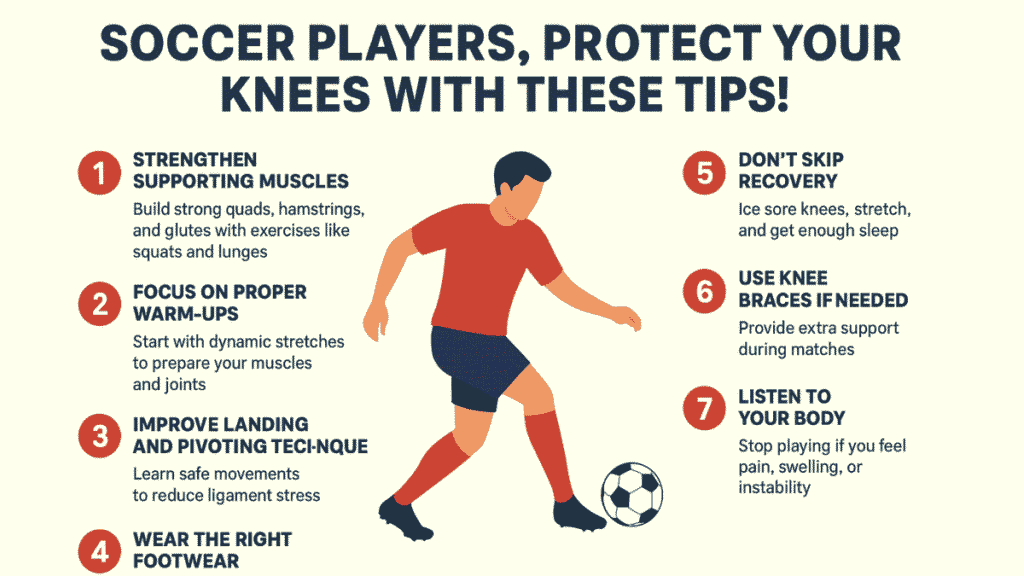
1. Strengthen Supporting Muscles
Strong quadriceps, hamstrings, and glutes act as shock absorbers for your knees. Exercises like squats, lunges, and single-leg balance drills build stability. Incorporating resistance band work can also improve muscle balance and reduce strain.
2. Focus on Proper Warm-Ups
Cold muscles are more injury-prone. Start every session with dynamic stretches—high knees, butt kicks, and side shuffles. A good warm-up increases blood flow and prepares joints for intense activity.
3. Improve Landing and Pivoting Technique
Learning how to land softly after a jump and pivot with control reduces ligament stress. Coaches often use agility ladder drills and controlled plyometric training to help players master safe movements.
4. Wear the Right Footwear
Soccer shoes must provide grip without locking the foot unnaturally. The wrong studs on wet or dry surfaces increase the risk of slipping or twisting your knee.
5. Don’t Skip Recovery
Recovery is as important as training. Ice sore knees after tough games, stretch after practices, and get enough sleep. Foam rolling and light yoga sessions can also aid muscle recovery.
6. Use Knee Braces if Needed
For players recovering from injury or prone to instability, knee braces or sleeves provide extra support. They won’t make you invincible but can reduce strain during matches.
7. Listen to Your Body
Many players try to push through pain, which can make small issues worse. If you feel sharp pain, swelling, or instability, stop playing and seek medical advice before returning.
Mental Side of Knee Protection
Injuries don’t just affect the body—they test mental resilience. Fear of re-injury can hold players back. Visualization, confidence-building exercises, and working with sports psychologists can help athletes regain trust in their bodies after recovery.
FAQs on Knee Protection for Soccer Players
Q1: How can young soccer players prevent knee injuries?
Focusing on proper technique, strengthening muscles early, and not overtraining are the best preventive measures.
Q2: Are ACL injuries preventable?
While not 100% preventable, structured training programs that improve balance, core strength, and landing techniques significantly reduce the risk.
Q3: Should players always wear knee braces?
Not necessarily. Braces are useful for players with past injuries or weakness, but strong muscles and good movement habits are more effective in the long run.
Q4: What recovery foods help knee health?
Anti-inflammatory foods like salmon, spinach, berries, and turmeric support joint recovery. Staying hydrated is equally important.
Q5: When should I see a doctor about knee pain?
If pain persists beyond a few days, if swelling occurs, or if the knee feels unstable, it’s best to get it checked immediately.
